Understanding natural vs organic cat food can feel confusing at first, especially with so many labels competing for attention. Many cat owners assume these terms mean the same thing, but they actually represent different standards and benefits. Knowing the difference helps you make smarter decisions that directly impact your cat’s health and well-being.
At a glance, both options appear healthier than conventional cat food. However, when you look closer, important distinctions emerge in sourcing, processing, and certification. Because of this, learning about natural vs organic cat food allows you to choose a diet that aligns with your cat’s specific needs and your own expectations.
What Natural Cat Food Really Means
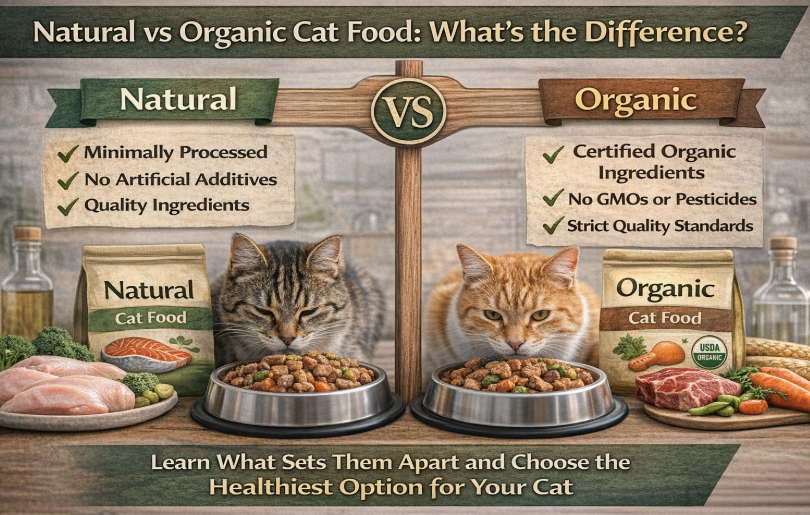
When exploring natural vs organic cat food, it helps to start with the definition of natural. Natural cat food generally focuses on ingredients that are minimally processed and free from artificial additives. This includes avoiding synthetic colors, flavors, and preservatives.
However, the term “natural” is not always strictly regulated. As a result, some products labeled as natural may still contain lower-quality ingredients. Therefore, reading the ingredient list becomes essential when evaluating options.
Natural food typically prioritizes real meat, healthy fats, and simple ingredients. These elements support digestion, energy, and overall health. While not perfect, a well-chosen natural diet can still offer significant benefits compared to heavily processed alternatives.
What Organic Cat Food Actually Includes
Organic food follows stricter standards, which is a key part of the natural vs organic cat food comparison. To qualify as organic, ingredients must be grown without synthetic pesticides, fertilizers, or genetically modified organisms.
In addition, organic certification often requires humane animal treatment and environmentally responsible practices. This means organic cat food not only focuses on nutrition but also on how ingredients are produced.
Because of these stricter guidelines, organic food tends to be more consistent in quality. However, it can also be more expensive. Therefore, understanding the value behind the label helps you decide if it fits your priorities.
Key Differences in Ingredients and Sourcing
One of the most important aspects of natural vs organic cat food is ingredient sourcing. Natural food emphasizes fewer additives, while organic food emphasizes how ingredients are grown and processed.
For example, natural food may include high-quality meat but not necessarily organic sources. On the other hand, organic food ensures that ingredients meet strict farming standards. This distinction plays a major role in overall quality.
In addition, organic products often avoid antibiotics and growth hormones in animal sources. This can appeal to owners who want a cleaner, more controlled diet for their cats. Meanwhile, natural foods may still offer good nutrition but without these guarantees.
Processing Methods and Nutritional Impact
Processing methods also highlight the difference between natural vs organic cat food. Natural food aims to reduce artificial intervention, but it may still undergo standard processing techniques.
Organic food, however, must follow specific guidelines during production. These processes help preserve ingredient integrity while maintaining certification standards. As a result, organic food often retains more of its original quality.
That said, both types can provide balanced nutrition when chosen carefully. The key is to look beyond labels and focus on overall composition. A well-balanced diet matters more than any single label.
Cost Considerations and Value
Cost is another factor in the natural vs organic cat food decision. Organic food typically comes at a higher price due to stricter production requirements. These include certified farming practices and quality control measures.
Natural food, while often more affordable, can still provide excellent nutrition. The difference lies in sourcing rather than basic ingredient quality. Therefore, your budget plays a role in determining the best option.
However, higher cost does not always guarantee better results. Evaluating ingredient lists and nutritional balance remains essential. In many cases, a high-quality natural product can be just as effective as an organic one.
Which Option Is Better for Your Cat
When comparing natural vs organic cat food, there is no one-size-fits-all answer. The best choice depends on your cat’s health, preferences, and dietary needs. Both options can support a healthy lifestyle when selected carefully.
For example, cats with sensitivities may benefit from cleaner, organic ingredients. Meanwhile, other cats may thrive on a well-balanced natural diet. Observing your cat’s response helps guide your decision.
In addition, consulting a veterinarian can provide valuable insight. Professional advice ensures your cat receives proper nutrition regardless of the label you choose.
Common Misconceptions About Labels
Many misunderstandings exist around natural vs organic cat food. One common misconception is that natural automatically means high quality. While it can, this is not always the case.
Similarly, organic does not guarantee perfect nutrition. Even organic food must be balanced to meet your cat’s needs. Therefore, focusing on overall composition is more important than relying solely on labels.
Marketing can also create confusion. Terms like “premium” or “holistic” often appear alongside natural or organic claims. However, these words are not always regulated, so they should not be your main decision factor.
How to Read Labels Effectively
Learning to read labels is essential when navigating natural vs organic cat food. Start by examining the first few ingredients, as they make up the majority of the product. High-quality protein should always come first.
Next, look for clear and specific ingredient names. Avoid vague terms that do not indicate the source. Transparency is a strong indicator of quality.
Additionally, check for certification labels on organic products. These confirm that the food meets established standards. Without certification, claims of being organic may not be reliable.
Transitioning Between Food Types
If you decide to switch between natural vs organic cat food, do so gradually. Sudden changes can upset your cat’s digestive system and lead to resistance.
Begin by mixing a small amount of the new food with the current diet. Over time, increase the proportion while reducing the old food. This method helps your cat adjust comfortably.
During the transition, monitor your cat’s response. Healthy signs include stable energy, normal digestion, and consistent appetite. If issues arise, slow the process and give your cat more time.
Long-Term Health Benefits
Both options in the natural vs organic cat food comparison can offer long-term benefits. Improved digestion, better coat quality, and increased energy are common outcomes of higher-quality diets.
In addition, reducing exposure to artificial additives can support overall wellness. Cats that eat cleaner diets often show fewer sensitivities and more stable health.
Consistency also plays a role. Maintaining a balanced diet over time helps prevent nutritional gaps. Whether you choose natural or organic, commitment to quality makes the biggest difference.
Conclusion
Choosing between natural vs organic cat food does not have to be complicated. By understanding the differences in sourcing, processing, and certification, you can make informed decisions that support your cat’s health. Both options offer benefits, but the best choice depends on your priorities and your cat’s individual needs.
While labels provide guidance, the true value lies in ingredient quality and nutritional balance. With careful selection and consistent feeding, you can create a diet that promotes long-term wellness and a happier life for your cat.
FAQ
- Is organic cat food always better than natural options?
Not necessarily, as both can be healthy depending on ingredient quality and nutritional balance. - Can natural cat food still contain additives?
Yes, some natural foods may include certain additives, so checking labels is important. - Why is organic cat food more expensive?
Higher production standards and certification processes increase the overall cost. - How can I tell if my cat prefers one type of food?
Observe eating habits, energy levels, and overall health after introducing a new diet. - Should I switch my cat’s diet often?
No, consistent feeding with a balanced diet is usually best for long-term health.