
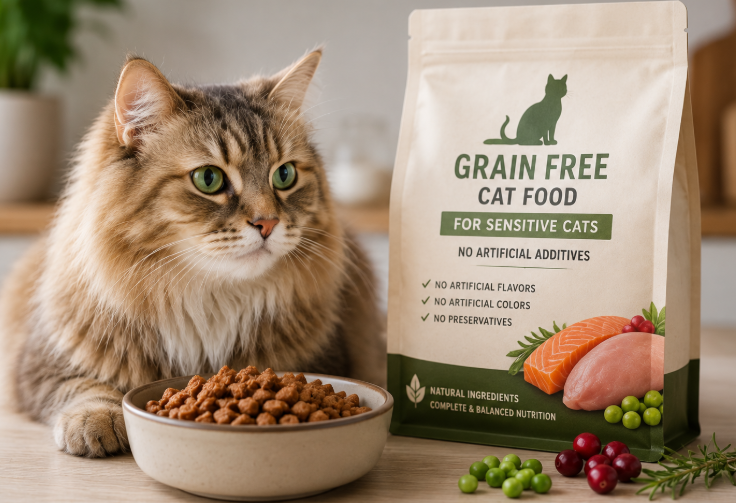
Sensitive cats often struggle with ingredients that other pets tolerate without difficulty. Digestive discomfort, skin irritation, excessive grooming, and inconsistent stool quality can all signal that a dietary change may help. For many owners, choosing cat food without additives becomes an important step toward improving daily comfort and supporting long-term health. While every cat has unique nutritional needs, a simpler diet often makes it easier to identify potential triggers and create a feeding routine that supports digestive balance.
Many commercial cat foods contain flavor enhancers, artificial colors, preservatives, and other ingredients designed to improve shelf life or appearance. Although these ingredients are approved for use in pet food, some sensitive cats appear to respond better when meals contain fewer unnecessary additions. As a result, many owners now seek products with short ingredient lists and clearly defined protein sources.
The term natural pet food can mean different things depending on the manufacturer. Therefore, it helps to look beyond marketing claims and focus on the ingredient panel. Foods that emphasize quality animal protein, balanced nutrition, and limited extras often appeal to owners who want a cleaner feeding approach. When selecting cat food without additives, understanding what belongs in the bowl is just as important as knowing what does not.
Cats are obligate carnivores. Their bodies rely heavily on nutrients derived from animal-based proteins. Because of this, the quality of the primary ingredients matters significantly. A food built around identifiable meat sources may support healthy digestion more effectively than formulas filled with unnecessary fillers and artificial ingredients.
For sensitive cats, dietary reactions do not always appear immediately. Sometimes symptoms develop gradually over weeks or months. Consequently, owners may overlook the connection between nutrition and health. Monitoring changes in appetite, coat condition, energy levels, and litter box habits can provide valuable clues about whether a current diet is truly suitable.
Why Sensitive Cats Benefit From Simpler Ingredients
A simpler ingredient list often helps reduce the number of variables that could contribute to digestive upset. While not every additive causes problems, sensitive cats may benefit from foods that focus on essential nutrients rather than cosmetic enhancements.
One reason many owners choose cat food without additives is the desire to eliminate artificial colors. Cats do not care whether kibble appears red, green, or brown. Coloring agents are generally added for human appeal rather than feline benefit. Therefore, removing them rarely affects nutritional value.
Artificial flavor enhancers represent another concern for some pet owners. Although these ingredients can increase palatability, they are not always necessary when a food already contains high-quality protein sources. Many premium products rely on natural meat flavors instead of synthetic alternatives.
Preservatives also receive considerable attention. Modern pet food requires some form of preservation to remain safe and stable. However, many manufacturers now use naturally derived preservation methods rather than older synthetic options. As a result, consumers have more choices than ever before.
When evaluating cat food without additives, it helps to examine the entire formula rather than focusing on a single ingredient. Nutritional balance remains essential. A food free from artificial ingredients still needs adequate protein, fat, vitamins, and minerals to support overall health.
Digestive sensitivity varies widely among cats. Some react to specific proteins, while others struggle with certain grains or plant ingredients. Consequently, there is no universal solution. The goal is to identify foods that provide complete nutrition while minimizing potential triggers.
Veterinarians frequently recommend keeping a food journal when introducing a new diet. Recording meals and symptoms can reveal patterns that might otherwise go unnoticed. Furthermore, detailed observations help guide future dietary decisions.
The digestive system depends on consistency. Frequent food changes may create unnecessary stress, especially for sensitive pets. Therefore, once a suitable option is found, maintaining a stable feeding routine often supports better results. Many owners notice improvements after switching to cat food without additives, particularly when the transition occurs gradually.
Hydration also plays an important role. Wet food formulas often contain significantly more moisture than dry kibble. Consequently, they may help support urinary health and overall hydration. Sensitive cats sometimes benefit from a combination of wet and dry food, depending on their individual needs and preferences.
Another advantage of simpler diets is transparency. Ingredient labels become easier to understand when they contain recognizable components. This clarity allows owners to make informed decisions and monitor potential sensitivities more effectively.
What to Look for When Choosing a Quality Formula
Finding the right food requires more than avoiding artificial ingredients. Nutritional quality should remain the primary focus. A well-balanced diet supports digestion, healthy muscles, immune function, and overall vitality.
When comparing products, start with the protein source. High-quality animal proteins should appear near the top of the ingredient list. Chicken, turkey, salmon, duck, and other clearly identified meats often indicate a stronger nutritional foundation. In contrast, vague ingredient descriptions provide less transparency.
Many owners searching for cat food without additives also prefer limited-ingredient recipes. These formulas contain fewer components, making it easier to identify potential food sensitivities. While limited ingredients do not guarantee success, they can simplify the process of dietary evaluation.
Reading the guaranteed analysis provides additional insight. Protein and fat levels should align with the needs of your cat’s age, activity level, and health status. Kittens, adults, and seniors often require different nutritional profiles. Therefore, life-stage appropriateness deserves careful attention.
Reputable manufacturers typically provide detailed information about ingredient sourcing and quality control practices. Transparency often reflects a commitment to product consistency. As a result, researching the company behind the food can be just as important as reviewing the label itself.
Owners should also consider texture preferences. Some cats strongly favor pâté-style foods, while others prefer shredded or minced options. Dry kibble remains popular as well. Selecting a texture your cat enjoys increases the likelihood of long-term acceptance.
The best cat food without additives should provide complete and balanced nutrition according to recognized nutritional standards. Eliminating unnecessary ingredients is beneficial only when essential nutrients remain adequately represented.
Price often influences purchasing decisions. Fortunately, high-quality options exist across a range of budgets. More expensive products are not automatically superior. Instead, ingredient quality, nutritional balance, and suitability for your cat should guide the final choice.
Transitioning gradually helps prevent digestive upset. Mixing small amounts of the new food with the current diet allows the digestive system to adapt. Most experts recommend making the change over seven to ten days. However, highly sensitive cats may require a slower schedule.
Monitoring your cat during the transition period remains important. Positive signs include normal appetite, consistent energy levels, healthy stools, and reduced digestive discomfort. If significant symptoms develop, consulting a veterinarian is advisable.
Owners frequently discover that cat food without additives supports more predictable digestion. Although results vary, many sensitive cats appear to thrive when unnecessary ingredients are reduced and high-quality nutrition takes center stage.
Common Ingredients Sensitive Cats May Struggle With
Not every sensitivity involves additives alone. Some cats react to proteins, grains, or other ingredients that are perfectly safe for most animals. Therefore, identifying the true cause of symptoms may require patience and observation.
Protein sensitivities represent one of the more common dietary challenges. Chicken, beef, fish, and dairy products can occasionally trigger reactions in certain cats. In these situations, a novel protein source may provide relief. Duck, rabbit, venison, or other alternative proteins sometimes work well.
Artificial colors and flavorings often receive attention because they serve limited nutritional purposes. Consequently, many owners choose cat food without additives as part of a broader effort to simplify the diet and reduce potential irritants.
Fillers may also contribute to digestive discomfort in some pets. While not inherently harmful, excessive amounts of low-value ingredients can affect digestibility. High-quality formulas generally prioritize nutrient-dense components over inexpensive fillers.
Food sensitivities can manifest in several ways. Chronic itching, recurrent ear issues, vomiting, gas, and loose stools are among the most common signs. However, these symptoms can also result from unrelated health conditions. Therefore, veterinary guidance remains valuable when concerns arise.
Elimination diets often help identify problematic ingredients. During this process, cats consume carefully selected foods for several weeks while symptoms are monitored. Although the approach requires commitment, it can provide useful answers.
Many owners report improvements after introducing cat food without additives, particularly when artificial colors and flavor enhancers are removed. Nevertheless, success depends on the specific needs of the individual cat. What works well for one pet may not produce the same outcome for another.
Environmental factors can also influence symptoms. Stress, seasonal allergies, and household changes sometimes mimic food-related issues. Consequently, evaluating overall health rather than focusing solely on nutrition is important.
Maintaining regular veterinary checkups supports long-term wellness. Routine examinations help identify underlying conditions that may affect digestion, skin health, or appetite. Nutrition works best when combined with comprehensive preventive care.
For households with multiple cats, feeding management becomes especially important. Each animal may respond differently to the same food. Separate feeding areas can help owners monitor individual eating habits and detect changes more easily.
Consistency remains one of the greatest advantages of a carefully selected diet. Once a suitable cat food without additives has been identified, maintaining that routine often promotes digestive stability and reduces unnecessary disruptions.
Many owners notice gradual improvements rather than dramatic overnight changes. Healthier stools, reduced stomach upset, and better coat condition may develop over several weeks. Patience often plays a key role in evaluating results accurately.
The growing popularity of cleaner ingredient lists has expanded the range of available products. Today, consumers can find wet foods, dry foods, and limited-ingredient formulas designed specifically for sensitive cats. This variety makes it easier to match nutrition with individual needs.
Choosing cat food without additives ultimately reflects a desire to provide straightforward, high-quality nutrition. While no single diet guarantees perfect health, reducing unnecessary ingredients may help create a more comfortable feeding experience for many sensitive cats.
A thoughtful approach to nutrition can make a meaningful difference in your cat’s daily life. Sensitive cats often benefit from diets that emphasize quality protein, balanced nutrition, and ingredient transparency. By selecting cat food without additives, owners may reduce potential dietary triggers and support digestive comfort. The process requires observation, patience, and sometimes professional guidance. However, the effort often leads to a healthier, happier companion. When nutrition aligns with your cat’s individual needs, mealtime becomes more than a routine. It becomes an important part of long-term wellness and overall quality of life.
FAQ
1. What ingredients should sensitive cats avoid?
Sensitive cats may react to certain proteins, artificial colors, flavor enhancers, or specific fillers. Identifying individual triggers is often necessary.
2. Is a limited-ingredient diet better for digestive issues?
Many cats benefit from limited-ingredient formulas because they reduce the number of potential dietary triggers and simplify monitoring.
3. How long does it take to see results after changing food?
Some improvements appear within a few weeks, while others may take longer. Consistent feeding and careful observation are important.
4. Can wet food help cats with food sensitivities?
Wet food may support hydration and digestion. However, ingredient quality remains more important than the food format alone.
5. Should I consult a veterinarian before changing diets?
Yes. Veterinary guidance can help identify underlying health concerns and ensure the new diet meets your cat’s nutritional needs.