
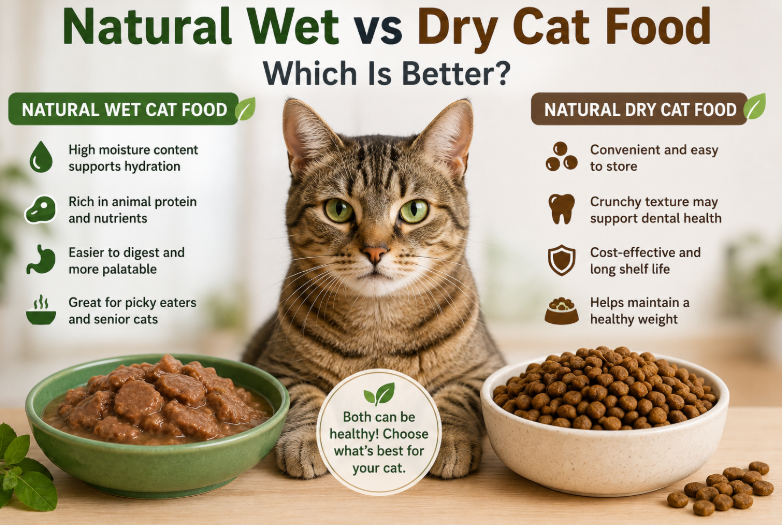
Choosing the right food for a cat can feel overwhelming, especially when faced with countless products claiming to be healthy, natural, and nutritionally complete. Among the most common questions pet owners ask is whether wet food or dry food is the better choice. The answer is not always simple because each option offers distinct advantages and potential drawbacks. Understanding the differences can help owners make more informed feeding decisions based on their cat’s unique needs. For many households, evaluating natural wet dry cat food options is an important step toward supporting long-term feline health.
Cats are obligate carnivores, which means they require nutrients primarily found in animal-based ingredients. Regardless of whether food comes in a can or a bag, quality ingredients remain the foundation of a healthy diet. However, moisture content, calorie density, convenience, cost, and feeding habits all influence which option may work best. Therefore, comparing wet and dry food involves much more than simply reading a label.
Many owners assume one choice is automatically superior. In reality, both forms of food can support good health when they contain quality ingredients and meet nutritional standards. The key is understanding how each type contributes to a cat’s overall well-being.
Understanding Wet and Dry Cat Food
Before comparing benefits, it helps to understand the basic differences between the two. Wet food typically contains between 70 and 80 percent moisture. Dry food, by contrast, usually contains only 6 to 10 percent moisture. This distinction alone has a significant impact on hydration and feeding behavior.
When evaluating natural wet dry cat food, ingredient quality should remain a primary focus. Natural products generally emphasize recognizable ingredients, fewer artificial additives, and higher-quality protein sources. While moisture levels differ greatly, both food types can contain nutritious animal proteins, healthy fats, vitamins, and minerals.
Manufacturing methods also vary. Wet food undergoes a cooking and sealing process that helps preserve moisture and flavor. Dry food is typically produced through extrusion, creating the crunchy kibble texture that many cats enjoy. These production methods influence shelf life, convenience, and nutritional characteristics.
Cats often develop preferences based on texture. Some strongly prefer moist foods, while others enjoy crunchy kibble. Consequently, feeding success sometimes depends on individual taste rather than nutritional considerations alone.
Hydration Benefits of Wet Food
One of the strongest arguments in favor of wet food involves hydration. Cats naturally have a low thirst drive because their ancestors obtained much of their water from prey. As a result, many domestic cats do not drink enough water throughout the day.
This is where natural wet dry cat food comparisons often favor wet food. The high moisture content helps increase total daily water intake without requiring additional drinking. Consequently, wet food may support urinary tract health and help maintain healthy kidney function.
Hydration becomes particularly important for older cats and those prone to urinary issues. Increased moisture can help dilute urine and support normal urinary tract function. Therefore, many veterinarians recommend wet food for cats with certain medical conditions.
Additionally, wet food often contains fewer calories per ounce because water adds volume without increasing calorie content. This characteristic may help cats feel satisfied while consuming fewer calories overall.
Many cats find wet food highly appealing due to its aroma and texture. Because cats rely heavily on smell when choosing food, the stronger scent of wet food can encourage eating, especially in picky eaters.
The Convenience of Dry Food
Despite the hydration advantages of canned diets, dry food remains extremely popular. Convenience is one of the biggest reasons. Dry food is easy to store, simple to measure, and can remain available for longer periods without spoiling.
When comparing natural wet dry cat food, convenience often becomes a deciding factor for busy owners. Dry food allows for free-feeding in some households, although portion control remains important. In addition, kibble generally costs less per serving than wet food.
Storage is another benefit. Dry food requires no refrigeration until the package is opened, and even then, it remains easy to manage. This practicality appeals to many pet owners who need flexible feeding solutions.
Furthermore, some cats enjoy the crunchy texture of kibble. While dry food does not replace dental care, chewing may provide minor mechanical cleaning benefits compared to softer foods. However, regular dental care remains essential regardless of diet type.
Dry food also offers variety. Many premium manufacturers now produce natural kibble formulas that emphasize high-quality proteins and limited artificial ingredients.
Nutritional Differences That Matter
Nutrition ultimately matters more than moisture alone. High-quality ingredients should take priority when evaluating any feeding option. A premium wet food generally provides better nutrition than a low-quality dry food. Likewise, a well-formulated kibble may outperform a poorly balanced canned diet.
This is why natural wet dry cat food discussions should focus on ingredient quality rather than format alone. Cats require adequate protein, essential fatty acids, vitamins, minerals, and amino acids such as taurine. These nutrients can be delivered through either wet or dry products.
Protein content deserves particular attention. Since cats rely heavily on animal proteins, foods with clearly identified meat sources often provide superior nutritional value. Owners should look for named proteins such as chicken, turkey, salmon, or beef rather than vague ingredient descriptions.
Carbohydrate content frequently differs between wet and dry foods. Many wet foods contain fewer carbohydrates than traditional kibble. Consequently, some owners prefer wet diets for cats requiring tighter calorie management or specialized nutrition.
Nevertheless, modern natural dry foods have improved significantly. Many now feature higher protein levels and reduced carbohydrate content compared to older formulas.
Cost Considerations for Cat Owners
Budget often influences feeding decisions. Wet food generally costs more than dry food when comparing equivalent calorie intake. Therefore, households with multiple cats may find dry food more economical.
The financial aspect of natural wet dry cat food selection should not be ignored. While everyone wants the best nutrition possible, feeding plans must remain sustainable over time. A moderately priced quality food that fits the budget often works better than an expensive product that cannot be maintained consistently.
Some owners choose a mixed feeding approach. Combining wet and dry food can provide hydration benefits while helping control costs. This strategy allows cats to enjoy the advantages of both feeding styles.
Long-term health considerations may also influence value. While higher-quality foods sometimes cost more upfront, they may support better overall wellness. Consequently, many owners view premium nutrition as an investment in preventive care.
Ultimately, the best feeding plan balances nutritional quality, affordability, convenience, and the individual needs of the cat.
When Wet Food May Be the Better Choice
Certain situations make wet food particularly beneficial. Cats with urinary tract concerns often benefit from increased moisture intake. Likewise, older cats sometimes find wet food easier to chew and digest.
During discussions about natural wet dry cat food, veterinarians frequently recommend wet diets for cats with reduced thirst drive. Since hydration supports many bodily functions, additional moisture can provide meaningful benefits.
Cats recovering from illness may also prefer wet food because its aroma stimulates appetite. In addition, cats experiencing dental discomfort often find softer foods easier to consume.
Weight management can be another factor. The lower calorie density of many wet foods may help some cats feel fuller while consuming fewer calories.
However, these advantages do not automatically mean wet food is best for every cat. Individual circumstances always matter.
When Dry Food May Be the Better Choice
Dry food may work exceptionally well for healthy cats that maintain good hydration habits. Owners who need convenient feeding schedules often find kibble easier to manage.
In the ongoing natural wet dry cat food debate, dry food frequently appeals to households seeking practicality. Travel, storage, and portioning become simpler when using kibble.
Multi-cat homes may also benefit from the convenience of dry feeding. In addition, some cats simply prefer crunchy textures and show greater enthusiasm for kibble than canned products.
High-quality natural dry foods can provide complete and balanced nutrition when chosen carefully. Therefore, owners should not assume dry food is automatically inferior.
The best choice depends on how well the food meets the cat’s nutritional needs while fitting the owner’s lifestyle.
Can You Feed Both Wet and Dry Food?
Many veterinarians support combination feeding because it offers flexibility and balance. This approach allows cats to receive additional moisture from wet food while benefiting from the convenience of kibble.
A mixed feeding plan often represents a practical solution when comparing natural wet dry cat food options. Owners can provide wet meals once or twice daily while offering measured portions of dry food at other times.
Combination feeding also introduces greater variety. Different textures and flavors can help prevent boredom while supporting consistent eating habits.
Portion control remains important, however. Calories from both food types should be considered to prevent excessive weight gain. Careful measurement helps maintain healthy body condition over time.
For many households, combining both options creates a balanced approach that satisfies nutritional, financial, and practical needs.
Conclusion
The question of whether wet or dry food is better does not have a universal answer. Both options offer benefits, and each comes with limitations. The most important factor is choosing a nutritionally complete product made with quality ingredients that supports your cat’s specific needs.
When evaluating natural wet dry cat food, consider hydration, ingredient quality, convenience, cost, health status, and personal preference. Wet food excels in moisture content and palatability, while dry food offers affordability and convenience. For many cats, a combination of both provides the best of both worlds.
Ultimately, the ideal diet is one that your cat enjoys, tolerates well, and can be maintained consistently. By focusing on nutrition first and format second, you can make confident feeding choices that support long-term feline health and happiness.
FAQ
1. Is canned food healthier than kibble for cats?
Not necessarily. Both can be healthy if they contain quality ingredients and provide complete, balanced nutrition.
2. Do cats need wet food every day?
Many benefit from daily wet food because it increases moisture intake, but some healthy cats thrive on quality dry diets.
3. Can I mix both feeding styles together?
Yes. Many owners successfully combine wet and dry foods to provide variety and balance.
4. Which option is better for hydration?
Wet food generally provides significantly more moisture and helps increase total water intake.
5. How do I choose the best diet for my cat?
Focus on ingredient quality, nutritional completeness, health needs, and your cat’s individual preferences.