
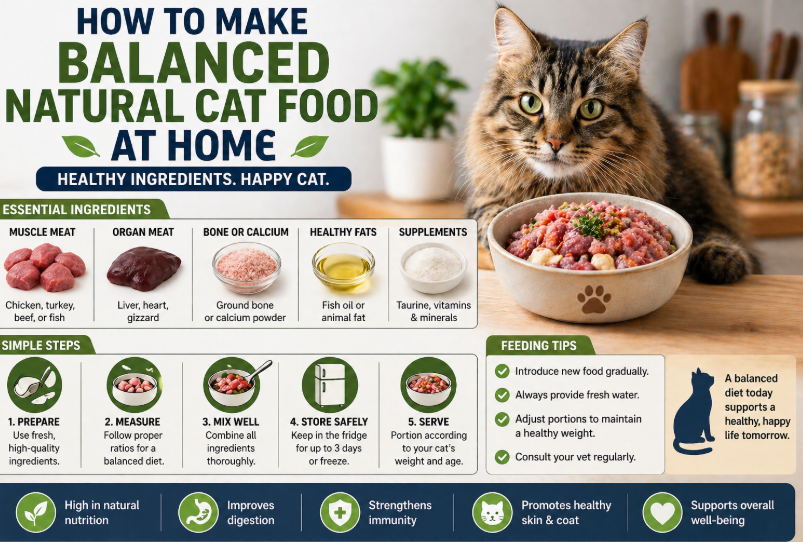
Learning how to make balanced natural cat food at home can feel overwhelming at first, yet it becomes much easier once you understand the basics. Many cat owners are turning to homemade meals because they want more control over ingredients and quality. When you focus on balanced natural cat food, you are not just avoiding harmful additives, you are actively supporting your cat’s long-term health.
Cats have very specific nutritional needs, so preparation requires careful planning. While natural ingredients can offer benefits, balance is what truly matters. By understanding how to combine proteins, fats, vitamins, and minerals correctly, you can create meals that are both safe and nourishing.
Why Balanced Nutrition Matters For Cats
Balanced nutrition is essential because cats are obligate carnivores. Their bodies depend heavily on animal protein, which provides the amino acids needed for survival. When you prepare balanced natural cat food, you ensure your cat receives the nutrients required for energy, muscle maintenance, and organ function.
Without proper balance, even natural meals can lead to deficiencies. For example, taurine is a critical nutrient that supports heart and eye health. If it is missing, serious problems may develop over time. Because of this, focusing on balanced natural cat food helps prevent long-term health risks.
In addition, a properly balanced diet supports digestion, immune strength, and overall vitality. These benefits highlight why balance should always come before trends.
Essential Ingredients For Homemade Cat Food
When preparing balanced natural cat food, selecting the right ingredients is the foundation of success. High-quality animal protein should always be the main component. Chicken, turkey, beef, and fish are common options that provide essential nutrients.
Healthy fats are equally important. They supply energy and support skin and coat health. Sources such as fish oil or animal fat can help maintain proper balance. However, portions must be controlled carefully.
In addition, small amounts of organ meat provide vital vitamins and minerals. Liver, for example, is rich in nutrients that support overall health. Combining these ingredients correctly ensures that your balanced natural cat food meets nutritional requirements.
Understanding Nutrient Balance In Homemade Meals
Creating balanced natural cat food is not just about using good ingredients. It also involves maintaining the correct ratios of nutrients. Protein should make up the majority of the meal, while fats provide energy and support body functions.
Calcium is another critical element. Cats require a proper calcium-to-phosphorus ratio to maintain bone health. This is often achieved by including ground bone or appropriate supplements.
Vitamins and minerals must also be considered. Without them, the diet may lack essential components needed for long-term health. Because of this, many owners consult guidelines or professionals to ensure their balanced natural cat food is complete.
How To Prepare Balanced Meals Safely
Food safety plays a major role when making balanced natural cat food at home. Raw ingredients must be handled carefully to prevent contamination. Washing hands, cleaning surfaces, and storing food properly are all essential steps.
Cooking methods also matter. Some owners choose lightly cooked meals to reduce bacteria while preserving nutrients. Others prefer raw diets but follow strict hygiene practices. Each approach requires attention to detail.
Portion control is another important factor. Feeding the correct amount helps maintain a healthy weight and prevents overeating. By focusing on safety and consistency, you can make balanced natural cat food that supports your cat’s well-being.
Common Mistakes To Avoid When Making Cat Food
Many beginners make mistakes when trying to create balanced natural cat food. One of the most common errors is skipping supplements. Even high-quality ingredients may not provide all required nutrients without additional support.
Another mistake involves using too many plant-based ingredients. While small amounts may be acceptable, cats primarily need animal protein. Excess plant material can reduce nutritional value.
In addition, sudden diet changes can cause digestive upset. Gradual transitions help your cat adjust to new food. Avoiding these mistakes ensures that your balanced natural cat food remains safe and effective.
How To Transition Your Cat To Homemade Food
Transitioning to balanced natural cat food should be done slowly. Start by mixing a small portion of homemade food with your cat’s current diet. Over time, gradually increase the new food while reducing the old one.
This method allows your cat to adapt to new flavors and textures. It also helps prevent digestive issues that may occur with sudden changes. Consistency during this process is key.
In addition, observing your cat’s behavior and digestion helps you track progress. Positive signs include improved energy and appetite. A gradual transition ensures long-term success with balanced natural cat food.
Benefits Of Homemade Natural Cat Food
There are several advantages to preparing balanced natural cat food at home. One of the biggest benefits is control over ingredients. You can avoid fillers, artificial additives, and low-quality components.
Another benefit is improved digestion. Many cats respond well to simpler, less processed meals. This can lead to better nutrient absorption and overall health.
In addition, homemade food allows customization based on your cat’s needs. Whether your cat requires weight management or specific nutrients, you can adjust the diet accordingly. These benefits make balanced natural cat food an appealing option for many owners.
When To Consult A Veterinarian
While making balanced natural cat food offers benefits, professional guidance is still important. Veterinarians can help ensure that your cat’s diet meets all nutritional requirements. This is especially important for kittens, senior cats, or those with health conditions.
Consulting a professional helps you avoid deficiencies and create a well-rounded plan. They may also recommend supplements or specific feeding strategies.
Reliable resources such as https://www.aafco.org/ and https://www.petmd.com/ provide additional information on cat nutrition. However, personalized advice remains the most effective approach.
Maintaining Long Term Feeding Success
Consistency is essential when feeding balanced natural cat food. Once you establish a routine, it is important to maintain it. Regular feeding times and consistent portions help support digestion and overall health.
Monitoring your cat’s weight, energy, and coat condition provides valuable feedback. These indicators help you adjust the diet as needed. Over time, small improvements lead to long-term success.
In addition, storing food properly ensures freshness and safety. Preparing meals in batches can save time while maintaining quality. By staying consistent, you can continue providing balanced natural cat food effectively.
Conclusion
Making balanced natural cat food at home is a rewarding process that allows you to take control of your cat’s nutrition. While it requires effort and planning, the benefits can be significant. By focusing on proper balance, high-quality ingredients, and safe preparation, you can create meals that support your cat’s health.
The key is consistency and attention to detail. With the right approach, balanced natural cat food becomes a sustainable way to improve your cat’s quality of life. Over time, these efforts can lead to better health, increased energy, and a happier pet.
FAQ
- Is homemade cat food better than commercial food?
It can be beneficial if properly balanced and prepared with correct nutrients. - Can I feed my cat raw meat only?
No, cats need a balanced diet that includes multiple nutrients, not just meat. - How do I know if my cat’s diet is balanced?
Consulting a veterinarian helps ensure all nutritional needs are met. - How long does it take for cats to adjust to new food?
Most cats adjust within one to two weeks with gradual transition. - Do I need supplements for homemade cat food?
In many cases, supplements are necessary to maintain proper balance.