
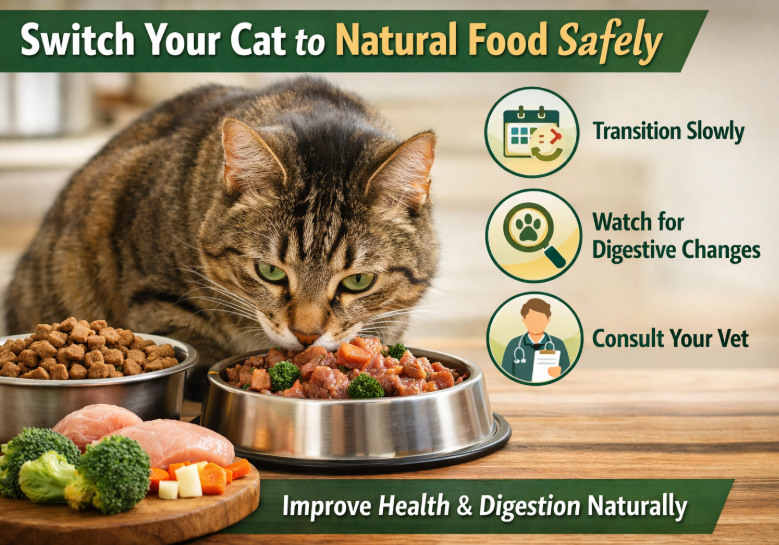
The safest way to switch your cat to natural food is by introducing it slowly over time. Typically, a transition period of 7 to 10 days works well for most cats. During the first few days, mix a small amount of the new food with your cat’s current diet. For instance, start with about 10% natural food and 90% old food.
As the days progress, gradually increase the proportion of natural food while reducing the old food. This method helps your cat’s digestive system adapt without causing unnecessary stress. Additionally, it gives your cat time to get used to the new taste and texture.
If your cat shows signs of digestive upset, slow the process down. There is no need to rush. In fact, some cats may require two weeks or more to fully adjust. The goal is a smooth transition, not a fast one.
Pay Attention to Your Cat’s Response
While you switch your cat to natural food, observation becomes your best tool. Keep an eye on your cat’s appetite, stool quality, and overall behavior. Healthy changes usually include normal stool consistency, steady energy levels, and a willingness to eat.
On the other hand, signs like diarrhea, vomiting, or refusal to eat should not be ignored. If these occur, consider pausing the transition or reverting to a previous ratio of old and new food. Then, once your cat stabilizes, you can try again more slowly.
It’s also helpful to monitor hydration. Some natural diets, especially raw or minimally processed foods, may change how much water your cat consumes. Therefore, always ensure fresh water is available.
Choose the Right Natural Food
Not all natural foods are created equal. Some products labeled as “natural” may still contain unnecessary fillers or low-quality ingredients. For this reason, it’s important to read labels carefully and choose reputable brands.
Look for foods that list high-quality animal protein as the primary ingredient. Additionally, avoid products with excessive grains, artificial preservatives, or vague ingredient descriptions. A well-balanced natural diet should provide complete nutrition, including essential vitamins and minerals.
If you are unsure, consulting a veterinarian can help you select the right option. This step is especially important if your cat has existing health conditions or dietary sensitivities.
Make the Food More Appealing
Sometimes, cats resist new food simply because it smells or tastes unfamiliar. Fortunately, there are simple ways to make natural food more appealing. For example, slightly warming the food can enhance its aroma, making it more attractive to your cat.
You can also try mixing in a small amount of broth or a favorite treat. However, keep these additions minimal to avoid disrupting the balance of the diet. Over time, as your cat becomes more comfortable, you can reduce these enhancements.
Consistency also plays a key role. Feeding your cat at the same times each day helps establish a routine, which can make the transition smoother.
Avoid Common Mistakes During Transition
When trying to switch your cat to natural food, certain mistakes can make the process more difficult. One of the most common errors is switching too quickly. While it may seem convenient, this approach often leads to digestive upset and rejection of the new food.
Another mistake is offering too many different foods at once. Introducing multiple new options can confuse your cat and make it harder to identify what works best. Instead, stick to one new food during the transition period.
Additionally, avoid forcing your cat to eat. If your cat refuses food, give them time and try again later. Forcing the issue can create negative associations, making future attempts even more challenging.
Understand That Every Cat Is Different
Each cat responds differently to dietary changes. Some cats adapt quickly, while others need more time and encouragement. Because of this, it’s important to remain flexible and patient throughout the process.
Age, health, and previous diet all influence how easily a cat adjusts. For example, older cats or those with sensitive stomachs may require a slower transition. Meanwhile, younger cats may adapt more easily but still benefit from a gradual approach.
By respecting your cat’s individual needs, you can create a more positive experience and increase the chances of long-term success.
Long-Term Benefits of a Natural Diet
Once you successfully switch your cat to natural food, the long-term benefits often become more noticeable. Many cat owners report improved digestion, fewer allergies, and better overall health. In addition, natural diets can support a healthy weight and reduce the risk of certain chronic conditions.
Beyond physical health, a balanced diet can also influence behavior. Cats that receive proper nutrition often show increased energy, improved mood, and more consistent eating habits. These changes contribute to a happier and more active pet.
Still, maintaining a natural diet requires consistency. Regular feeding schedules, proper portion sizes, and high-quality ingredients all play a role in sustaining these benefits.
When to Seek Professional Advice
Although many cats transition smoothly, there are times when professional guidance is necessary. If your cat experiences persistent digestive issues, weight loss, or a complete refusal to eat, it’s best to consult a veterinarian.
Additionally, if you plan to prepare homemade natural meals, expert advice is essential. Cats require specific nutrients that can be difficult to balance without proper knowledge. A veterinarian or pet nutritionist can help ensure your cat receives a complete and balanced diet.
Taking this step not only protects your cat’s health but also gives you confidence in your approach.
Conclusion
Choosing to switch your cat to natural food is a meaningful step toward improving your pet’s overall health. However, the key to success lies in patience, consistency, and careful observation. By introducing new food gradually, monitoring your cat’s response, and selecting high-quality options, you can create a smooth and stress-free transition.
While challenges may arise along the way, they are often temporary and manageable. With the right approach, your cat can enjoy the long-term benefits of a natural diet, including better digestion, increased energy, and a healthier lifestyle. Ultimately, the effort you invest today can lead to a happier and more vibrant life for your cat in the years ahead.
FAQ
- How long does it take for a cat to adjust to a new diet?
Most cats adjust within 7 to 10 days, but some may need up to two weeks or longer depending on their sensitivity. - What signs show that my cat is not tolerating the new food?
Look for symptoms like vomiting, diarrhea, lack of appetite, or noticeable changes in behavior. - Can I mix natural food with my cat’s current diet long-term?
Yes, but it’s best to ensure the overall diet remains balanced and nutritionally complete. - Is natural food better for all cats?
While many cats benefit, individual needs vary, so it’s important to choose food based on your cat’s health and lifestyle. - Should I consult a vet before changing my cat’s diet?
Yes, especially if your cat has health issues or specific dietary requirements.