Understanding natural cat food certifications is one of the most effective ways to choose better nutrition for your cat. While many products claim to be natural, those claims do not always reflect true quality. Because of this, certifications provide a more reliable way to evaluate safety, ingredient standards, and nutritional balance. When you understand natural cat food certifications, you can confidently move beyond marketing labels and make smarter feeding decisions.
Many cat owners rely on packaging terms without realizing they are often loosely defined. However, certifications follow clearer standards that help ensure consistency. By learning how to interpret these signals, you gain more control over your cat’s diet and long-term health.
Why Natural Cat Food Certifications Matter For Quality
Natural cat food certifications exist to create trust between brands and pet owners. Without these standards, it would be difficult to verify whether a product truly meets nutritional expectations. Because labels can be misleading, certifications provide a structured way to evaluate food quality.
Additionally, certified products often undergo testing and verification. This reduces the risk of contamination and ensures ingredient accuracy. As a result, natural cat food certifications help protect your cat from low-quality or imbalanced diets.
You can also explore helpful nutrition resources at https://www.aafco.org/ to better understand how standards are applied in pet food manufacturing.
AAFCO Standards And Natural Cat Food Certifications
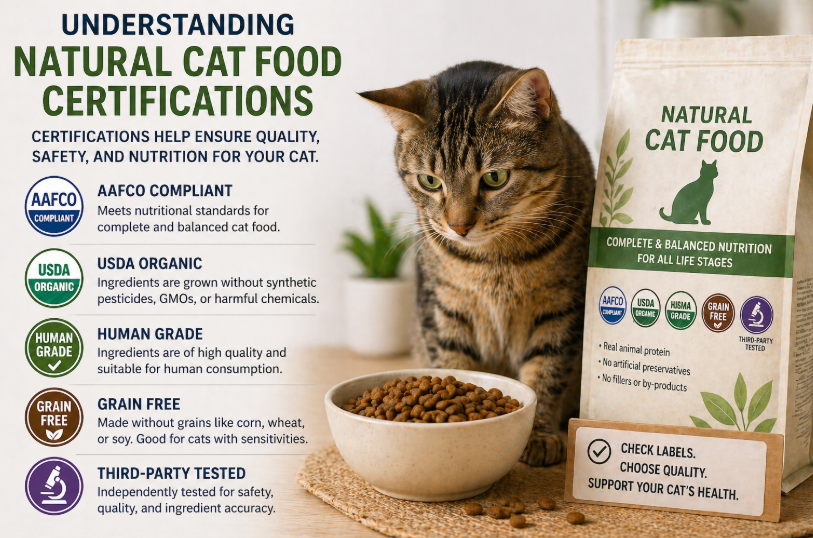
AAFCO plays a major role in natural cat food certifications, even though it does not directly certify products. Instead, it sets guidelines that define complete and balanced nutrition. When a product meets AAFCO standards, it provides the essential nutrients required for a cat’s life stage.
This is important because cats need precise nutrient levels to stay healthy. Protein, taurine, and fatty acids must be present in the correct amounts. Without this balance, even natural food may fail to support overall health.
Understanding AAFCO guidelines helps you interpret labels more effectively. It also allows you to compare products based on real nutritional value instead of marketing claims.
Organic Labels Within Natural Cat Food Certifications
Organic labeling is another element often associated with natural cat food certifications. Organic ingredients are typically produced without synthetic chemicals or genetically modified components. This can reduce exposure to certain additives.
However, organic labeling does not guarantee nutritional completeness. A product can be organic yet still lack essential nutrients if it is not properly formulated. Because of this, organic status should always be evaluated alongside overall balance.
When combined with proper formulation, organic ingredients can support a cleaner and more controlled diet. Still, balance remains the most important factor in any feeding plan.
Ingredient Transparency And Label Clarity
Ingredient transparency is a key factor in evaluating natural cat food certifications. Reliable brands clearly list their ingredients using specific names like chicken or salmon. This allows you to understand what your cat is consuming.
In contrast, vague terms such as “meat meal” or “animal by-products” can make evaluation difficult. While not always harmful, they provide less clarity. Choosing products with clear labeling improves confidence in your decision.
For more guidance on reading labels and choosing better diets, you can visit https://www.wellnessonthegreen.com/ for detailed feeding strategies and insights.
Grain Free And Limited Ingredient Claims Explained
Grain-free and limited ingredient diets are often confused with natural cat food certifications. While these labels can be useful, they are not official certifications. Instead, they describe specific product features.
Grain-free diets remove ingredients like corn or wheat, which may help cats with sensitivities. Limited ingredient diets simplify formulas to reduce potential allergens. However, these features alone do not guarantee overall quality.
It is important to review the full ingredient list and nutritional content. This ensures that the food provides balanced nutrition, regardless of marketing claims.
Third Party Testing And Safety Verification
Third-party testing adds another layer of reliability to natural cat food certifications. Independent organizations may evaluate products for safety, ingredient accuracy, and nutritional content. This helps confirm that the food meets its stated claims.
Products that undergo independent testing are often more trustworthy. They are less likely to contain hidden issues or inconsistencies. This makes third-party verification an important factor when choosing cat food.
In addition, safety checks help prevent contamination. This is especially important for minimally processed or raw diets. By choosing tested products, you reduce potential risks.
How To Interpret Natural Cat Food Certifications Properly
Learning how to read natural cat food certifications is essential for making informed decisions. Start by looking for references to recognized standards such as AAFCO compliance. This indicates that the food meets basic nutritional requirements.
Next, review the ingredient list and guaranteed analysis. These sections reveal the actual composition of the food. Certifications should align with high-quality ingredients and balanced nutrients.
Consistency across the label is also important. Reliable products provide clear and detailed information without relying on vague claims. By combining these steps, you can evaluate food more effectively.
Common Misunderstandings About Certifications
There are several misconceptions about natural cat food certifications. One common belief is that all certified products are superior. While certifications provide guidance, they are only part of the evaluation process.
Another misunderstanding is that labels like “natural” or “holistic” are equivalent to certifications. In reality, these terms may not have strict definitions and should be verified through additional information.
Some owners also assume that higher price means better certification. However, cost does not always reflect quality. Understanding these differences helps you avoid mistakes when choosing food.
Combining Certifications With Veterinary Advice
Natural cat food certifications are valuable, but they should not replace professional guidance. Veterinarians can help you interpret labels and recommend diets based on your cat’s specific needs.
Each cat has unique requirements depending on age, weight, and health status. A certified product may not suit every cat equally. Professional advice ensures that your choice supports overall wellness.
Regular checkups also allow you to monitor your cat’s response to its diet. Adjustments can be made as needed to maintain balance and health.
Long Term Benefits Of Certified Food Choices
Choosing products supported by natural cat food certifications can lead to long-term benefits. Consistent quality helps maintain proper nutrition, which supports digestion, energy, and immune function.
Over time, a balanced diet reduces the risk of chronic conditions. This contributes to a longer and healthier life for your cat. In addition, reliable food choices provide peace of mind for pet owners.
Consistency is essential. Once you find a suitable product, maintaining it helps create stability and predictable results.
Conclusion
Natural cat food certifications provide a reliable framework for evaluating pet food quality. By understanding these standards, you can move beyond marketing claims and focus on real nutritional value. From ingredient transparency to safety testing, certifications help ensure that your cat receives balanced and safe nutrition.
While certifications are important, they work best when combined with proper research and veterinary guidance. This balanced approach allows you to make informed decisions that support long-term health. Ultimately, natural cat food certifications give you the tools to choose better food and create a healthier life for your cat.
FAQ
- What does AAFCO compliance mean?
It means the food meets established nutritional standards for a specific life stage. - Are organic cat foods always better?
Not always, as balance and nutrient content are more important than organic status alone. - What is third-party testing in pet food?
It involves independent evaluation of safety, quality, and ingredient accuracy. - Can I rely only on product labels?
No, it is important to verify claims using certifications and ingredient analysis. - Should I consult a vet before choosing food?
Yes, professional advice helps ensure your cat’s diet is safe and balanced.