Creating a natural cat feeding routine is one of the most effective ways to support your cat’s long-term health and well-being. While many cat owners focus on food quality alone, timing, consistency, and feeding habits play an equally important role. A well-structured routine not only improves digestion but also helps regulate energy levels and behavior.
At first, it’s important to understand that cats thrive on predictability. In the wild, they follow consistent hunting patterns, and that instinct still exists in domestic cats. Because of this, building a natural cat feeding routine that mimics those patterns can lead to noticeable improvements in your cat’s daily life. With the right approach, feeding becomes more than just a task—it becomes part of a balanced lifestyle.
Why Routine Matters More Than You Think
A consistent feeding schedule supports both physical and mental health. When you follow a natural cat feeding routine, your cat begins to anticipate meals, which reduces anxiety and promotes a sense of stability. This predictability often leads to better eating habits and fewer behavioral issues.
In addition, regular feeding times help regulate digestion. The body prepares for food at expected times, which can reduce stomach upset and improve nutrient absorption. As a result, your cat benefits from more efficient digestion and better overall health.
Moreover, routine feeding can prevent overeating. Cats that graze throughout the day may consume more calories than needed. However, structured meals allow you to control portions and maintain a healthy weight more easily.
Choosing the Right Meal Frequency
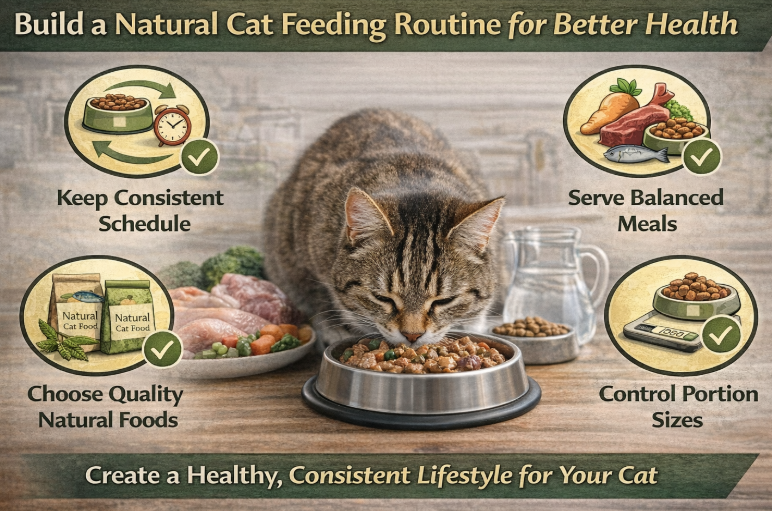
When developing a natural cat feeding routine, deciding how often to feed your cat is essential. Most adult cats do well with two to three meals per day. This schedule closely aligns with their natural hunting instincts, where they would eat multiple small meals.
For example, feeding once in the morning and once in the evening works well for many households. However, adding a small midday meal can further support energy balance. The key is consistency, so choose a schedule that fits your lifestyle and stick to it.
Kittens and senior cats may require different feeding frequencies. Younger cats often need more frequent meals due to higher energy demands, while older cats may benefit from smaller, more frequent portions.
Portion Control and Balanced Nutrition
A natural cat feeding routine is not complete without proper portion control. Even the best food can lead to problems if served in excessive amounts. Therefore, understanding your cat’s nutritional needs is crucial.
Start by following the feeding guidelines provided by your chosen food. Then, adjust portions based on your cat’s activity level, age, and weight. Monitoring your cat’s body condition helps you make accurate adjustments over time.
In addition, ensure the diet is balanced. High-quality protein should form the foundation, while fats provide essential energy. Carbohydrates should remain minimal, as cats do not require large amounts.
Water intake also plays a key role. Always provide fresh water alongside meals to support hydration and digestion.
Creating a Calm Feeding Environment
The environment in which your cat eats can influence its behavior and appetite. A calm and quiet space supports a successful natural cat feeding routine. Cats prefer to eat without distractions or stress, so choose a consistent feeding location.
Avoid placing food bowls near loud appliances or high-traffic areas. Instead, select a peaceful spot where your cat feels safe. This simple change can improve appetite and reduce anxiety during meals.
If you have multiple cats, consider feeding them separately. This prevents competition and ensures each cat eats at its own pace. In turn, this creates a more relaxed feeding experience for everyone.
Timing Meals for Maximum Benefits
Timing is a critical element of any natural cat feeding routine. Feeding your cat at the same times each day helps regulate internal rhythms. As a result, digestion becomes more efficient, and your cat develops predictable habits.
Morning feeding is particularly important, as it provides energy for the day ahead. Evening meals, on the other hand, help satisfy hunger after activity and prepare your cat for rest.
In addition, aligning feeding times with your cat’s natural activity patterns can enhance the routine. Cats are typically more active during dawn and dusk, so feeding during these times often works best.
Transitioning Into a Natural Feeding Routine
If your current feeding habits are inconsistent, transitioning to a natural cat feeding routine should be done gradually. Sudden changes can cause confusion or resistance. Instead, adjust feeding times slowly over several days.
Start by setting fixed meal times and removing free feeding options. Then, introduce structured portions at each meal. Over time, your cat will adapt to the new schedule.
During this transition, observe your cat’s behavior closely. Look for signs of comfort, such as eating calmly and finishing meals. If challenges arise, make small adjustments rather than drastic changes.
Incorporating Natural Food Choices
A natural cat feeding routine works best when paired with high-quality, natural food. This means choosing options that prioritize real ingredients and minimal processing. When combined with a structured schedule, these foods support optimal health.
Introduce natural food gradually if your cat is not used to it. Mixing it with current food allows for a smoother transition. Over time, increase the proportion until your cat fully adapts.
Additionally, consider variety within natural options. Rotating protein sources can prevent boredom and provide a broader range of nutrients. However, introduce new foods one at a time to avoid digestive issues.
Avoiding Common Feeding Mistakes
Even with the best intentions, mistakes can disrupt a natural cat feeding routine. One common error is inconsistency. Skipping meals or changing times frequently can confuse your cat and reduce the effectiveness of the routine.
Another mistake is overfeeding treats. While treats can be useful for training, excessive amounts can interfere with balanced nutrition. Therefore, limit treats and include them as part of the overall diet.
Additionally, avoid reacting too quickly to minor changes in appetite. Cats may occasionally eat less due to normal variations. However, persistent changes should be monitored and addressed if needed.
Long-Term Benefits of a Structured Routine
Once established, a natural cat feeding routine offers long-term benefits that go beyond nutrition. Many cats show improved digestion, leading to fewer stomach issues and more consistent energy levels.
In addition, structured feeding supports weight management. Controlled portions and regular schedules help prevent obesity, which is a common concern in domestic cats.
Behavioral improvements are also common. Cats that follow a routine often display less anxiety and more predictable habits. This creates a calmer household environment and strengthens the bond between you and your pet.
Conclusion
Building a natural cat feeding routine requires patience, consistency, and attention to detail. While the process may take time, the rewards are well worth the effort. By combining structured meal times, proper portion control, and high-quality food, you create a foundation for long-term health.
Over time, your cat will adapt to the routine and begin to thrive. Improved digestion, better energy levels, and a more balanced lifestyle are just some of the benefits. Ultimately, a thoughtful feeding routine is one of the simplest ways to enhance your cat’s quality of life.
FAQ
- How many times a day should I feed my cat?
Most adult cats do well with two to three meals per day, depending on their needs. - Can I still give treats in a structured routine?
Yes, but treats should be limited and included as part of the total daily intake. - What if my cat refuses to follow a schedule?
Gradual adjustments and consistency can help your cat adapt over time. - Is wet food better for a routine than dry food?
Both can work, but wet food often supports better hydration and digestion. - How do I know if my cat is getting the right portion?
Monitor weight, energy levels, and body condition to make adjustments as needed.