
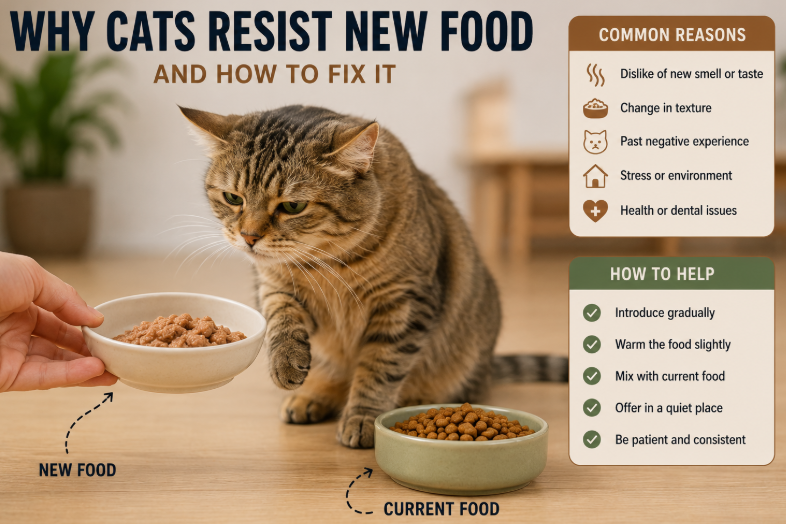
If you have ever tried introducing a different diet, you may have noticed that cats resist new food more often than many other pets. One day your cat seems perfectly content with a meal, and the next day it refuses to touch something new placed in the bowl. This behavior can frustrate even the most patient owners. However, food refusal is often rooted in natural feline instincts rather than stubbornness. Understanding why cats react this way can help you make dietary changes with less stress and better results.
Cats developed as hunters that relied on familiar food sources for survival. Because of this evolutionary history, many cats approach unfamiliar foods with caution. In the wild, eating an unknown food could have carried risks. As a result, domestic cats still show a tendency to prefer foods they already recognize. This behavior, sometimes called food neophobia, explains why many owners discover that cats resist new food even when the new option appears nutritious and appealing.
A cat’s sense of smell also plays a major role in food acceptance. Humans often focus on appearance, but cats rely heavily on scent. Therefore, a food that smells different from what they normally eat may trigger hesitation. Even subtle changes can influence a cat’s willingness to try something unfamiliar.
Texture matters just as much. Some cats strongly prefer pâté-style wet food, while others enjoy chunks, shreds, or dry kibble. Consequently, changing both flavor and texture at the same time can make the transition more difficult. Many owners find that cats resist new food because the texture feels unfamiliar rather than because the ingredients are unsuitable.
Age can influence eating behavior as well. Kittens exposed to a variety of foods often become more adaptable later in life. In contrast, adult cats that have eaten the same diet for years may become highly selective. Their preferences become deeply established, making dietary changes more challenging.
Although resistance is common, it is usually possible to improve acceptance with patience and the right strategy. The key is understanding the factors that influence your cat’s choices and working with those instincts rather than against them.
The Most Common Reasons for Food Refusal
When cats resist new food, owners often assume the food itself is the problem. However, several factors may contribute to the reaction. Identifying the underlying cause makes it easier to find an effective solution.
One common reason is familiarity. Cats often develop strong preferences for specific flavors, aromas, and textures. If a new product differs significantly from the current diet, the cat may hesitate to investigate it. This response is especially common in cats that have consumed the same food for extended periods.
Stress can also affect appetite. Changes in routine, moving to a new home, introducing another pet, or even rearranging furniture can influence eating habits. Therefore, a cat may reject new food simply because other environmental factors are creating anxiety.
Health issues deserve attention as well. Dental discomfort, digestive problems, and illness can reduce interest in food. If a cat suddenly refuses both familiar and unfamiliar meals, a veterinary evaluation may be necessary. While cats resist new food for many harmless reasons, persistent appetite changes should never be ignored.
Temperature can influence food acceptance. Many cats prefer food served at room temperature because it releases stronger aromas. Cold food taken directly from the refrigerator may seem less appealing. Warming wet food slightly often increases interest without changing its nutritional value.
Another factor involves feeding habits. Cats thrive on consistency. When feeding schedules change frequently, some cats become more cautious about eating. Maintaining predictable meal times can help create a positive association with food.
The location of the food bowl matters too. A noisy or high-traffic area may discourage eating. Cats generally prefer calm environments where they feel secure. If mealtime occurs in a stressful setting, acceptance of a new diet may become even more difficult.
Owners sometimes unintentionally reinforce picky behavior. Offering numerous alternatives after a refusal can teach a cat that rejecting food leads to more options. Over time, this pattern may contribute to ongoing selectiveness.
Understanding these factors helps explain why cats resist new food in situations that seem confusing from a human perspective. Often, the issue involves comfort, familiarity, and routine rather than the actual quality of the food.
How to Introduce a New Diet Successfully
Patience is one of the most valuable tools when changing a cat’s diet. Because cats resist new food naturally, gradual transitions usually work better than sudden changes. Rushing the process often creates unnecessary frustration for both the cat and the owner.
The most widely recommended approach involves mixing the current food with the new option. Begin with a small amount of the new food and a larger portion of the familiar food. Over several days, gradually increase the percentage of the new diet while decreasing the old one.
This method allows the cat to become familiar with new aromas and flavors slowly. Additionally, the digestive system has time to adapt. A gradual transition reduces the likelihood of stomach upset while improving acceptance.
When cats resist new food, scent enhancement can sometimes help. Slightly warming wet food releases stronger aromas that may encourage interest. Similarly, adding a small amount of warm water can increase the scent profile without introducing unnecessary ingredients.
Positive associations are important. Offer new foods during calm periods when your cat feels relaxed. Avoid forcing interaction with the food. Instead, allow curiosity to develop naturally. Pressure often creates additional resistance.
Consistency matters throughout the transition. Frequent changes between multiple brands or flavors can confuse the process. Once you begin introducing a new diet, maintain a steady approach unless a health concern arises.
Treats deserve careful consideration. Excessive treats may reduce hunger at mealtime and make dietary transitions more difficult. Limiting treats temporarily can help your cat focus on the primary food source.
Observation remains essential. Monitor appetite, stool quality, energy levels, and overall behavior. Mild hesitation is common. However, complete food refusal for an extended period requires attention. Cats should not go long periods without eating because serious health complications can develop.
Many owners become discouraged when progress appears slow. Yet gradual acceptance often leads to lasting success. Understanding that cats resist new food as part of their natural behavior helps set realistic expectations during the transition process.
Mistakes That Make the Problem Worse
Owners often have good intentions when encouraging dietary changes. However, certain approaches can unintentionally increase resistance. Recognizing these mistakes can improve your chances of success.
One of the most common errors is switching foods too quickly. Abrupt changes create a dramatic difference in scent, flavor, and texture. Consequently, many cats react negatively. Since cats resist new food by nature, sudden transitions rarely produce the desired outcome.
Another mistake involves constantly changing products. If one food is rejected, owners sometimes offer several alternatives immediately. While this approach seems logical, it may reinforce selective eating habits. A consistent plan usually produces better results.
Using food as a bargaining tool can also create challenges. Offering highly enticing treats after a meal refusal may encourage the cat to hold out for preferred options. Over time, this pattern can make balanced nutrition more difficult to maintain.
Ignoring environmental factors represents another common issue. Loud appliances, nearby litter boxes, or frequent interruptions can affect eating behavior. Improving the feeding environment often supports better acceptance of new foods.
Some owners interpret hesitation as complete rejection. In reality, a cautious cat may simply need more exposure. Many cats investigate unfamiliar foods several times before deciding to eat them. Patience allows this process to unfold naturally.
Portion size matters as well. Large servings of unfamiliar food may appear overwhelming. Smaller portions often feel less intimidating and create less waste if the cat remains hesitant.
When cats resist new food, emotional reactions from owners can sometimes add stress. Cats are sensitive to household dynamics. Remaining calm and consistent helps create a more positive feeding experience.
Comparisons between pets can also be misleading. One cat may eagerly accept dietary changes, while another requires weeks to adjust. Individual personality, past experiences, and preferences all influence behavior. Understanding these differences helps owners maintain realistic expectations.
When Food Refusal Signals a Bigger Problem
Most cases of dietary resistance are harmless. However, there are situations where professional guidance becomes important. While cats resist new food for many normal reasons, some symptoms warrant closer attention.
A sudden loss of appetite deserves evaluation, especially if it affects familiar foods as well. Cats that stop eating entirely may face serious health risks. Therefore, prolonged refusal should never be dismissed as simple pickiness.
Weight loss is another warning sign. If your cat appears thinner or loses body condition, nutritional intake may be inadequate. Veterinary assessment can help determine whether an underlying medical issue is contributing to the problem.
Vomiting, diarrhea, excessive drooling, or difficulty chewing may indicate discomfort rather than food preference. In these cases, addressing the medical concern becomes the priority.
Senior cats require special attention because age-related changes can affect appetite. Reduced smell sensitivity, dental issues, and chronic health conditions may influence eating habits. Consequently, older cats sometimes need additional support during dietary transitions.
Behavioral changes should also be monitored. A cat that becomes withdrawn, lethargic, or unusually irritable may be experiencing more than simple food reluctance. Professional evaluation helps rule out potential health concerns.
Fortunately, most healthy cats adapt successfully when owners use gradual, patient methods. Understanding why cats resist new food allows you to distinguish normal caution from signs that require medical attention.
Building long-term flexibility can help prevent future challenges. Offering appropriate variety during early life stages may encourage adaptability later on. Likewise, occasional rotation among suitable foods can reduce dependence on a single flavor or texture.
The goal is not to force change but to create positive experiences with new foods. Cats respond best when transitions respect their natural instincts and preferences. By approaching dietary changes thoughtfully, owners can reduce stress and improve outcomes.
The reason cats resist new food often comes down to instinct, familiarity, and comfort. Their cautious approach to unfamiliar meals reflects natural survival behaviors that have persisted for generations. Although food refusal can feel frustrating, it rarely indicates stubbornness. Instead, it highlights the importance of gradual transitions, consistent routines, and careful observation. By understanding your cat’s preferences and respecting its pace, you can make dietary changes far more successful. With patience, persistence, and a supportive environment, most cats eventually learn to accept new foods and maintain healthy eating habits for years to come.
FAQ
1. Why is my cat refusing a food that seems similar to its current diet?
Even small differences in aroma, texture, or flavor can influence acceptance. Cats often notice changes that humans cannot detect.
2. How long should a diet transition take?
Most cats adjust within seven to ten days. However, highly selective cats may need several weeks.
3. Is it normal for a cat to sniff food and walk away?
Yes. Many cats investigate unfamiliar food multiple times before deciding whether to eat it.
4. Can warming food help encourage eating?
Yes. Slightly warming wet food often enhances aroma, making it more attractive to many cats.
5. When should I contact a veterinarian about appetite changes?
Seek professional advice if your cat refuses food completely, loses weight, shows digestive symptoms, or experiences noticeable behavior changes.