Cat diarrhea after food change is a common issue that many cat owners face, especially when introducing a new diet too quickly. While switching food can improve nutrition, it can also disrupt your cat’s digestive system if not handled properly. Because cats have sensitive stomachs, even a small change in diet can lead to noticeable symptoms like loose stools or digestive discomfort.
To begin with, a cat’s digestive system is adapted to consistency. When you suddenly introduce a new type of food, the gut may struggle to adjust. As a result, cat diarrhea after food change can occur as the body tries to process unfamiliar ingredients. Understanding why this happens helps you take the right steps to prevent and manage the issue effectively.
Why Food Changes Affect Your Cat’s Digestion
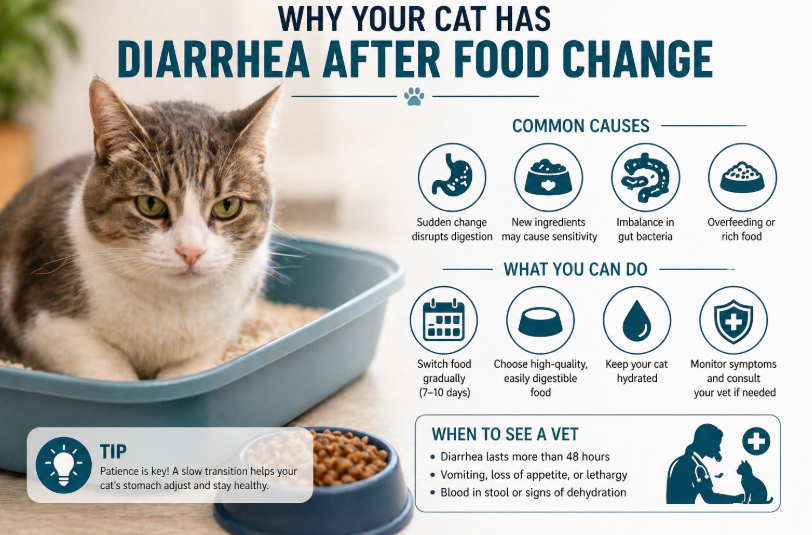
Cats rely on stable gut bacteria to digest food properly. When a new diet is introduced, this balance can be disrupted. Therefore, cat diarrhea after food change often happens because the digestive system needs time to adapt.
For example, different foods contain varying protein sources, fat levels, and ingredients. When these change suddenly, the gut cannot adjust quickly enough. Consequently, this leads to loose stools or temporary digestive upset.
In addition, some cats have more sensitive stomachs than others. These cats are more likely to react strongly to even minor changes. Because of this, gradual transitions are essential when switching diets.
Understanding this process is key to preventing cat diarrhea after food change and ensuring a smoother adjustment period.
Common Causes Of Diarrhea After Switching Food
Several factors can contribute to cat diarrhea after food change, and identifying the cause helps determine the best solution. One of the most common reasons is a sudden transition. When food is changed abruptly, the digestive system does not have enough time to adapt.
Another cause is ingredient sensitivity. Some cats may react negatively to new proteins or additives. For instance, switching from chicken-based food to fish-based food can trigger digestive issues in certain cats.
In addition, differences in fat content can affect digestion. Foods with higher fat levels may be harder to process, leading to loose stools. Similarly, foods with artificial additives or fillers may irritate the digestive system.
Portion size can also play a role. Overfeeding a new food can overwhelm the gut, making symptoms worse. Therefore, understanding these causes helps reduce the risk of cat diarrhea after food change.
How To Transition Food The Right Way
One of the most effective ways to prevent cat diarrhea after food change is to transition gradually. Instead of switching food all at once, introduce the new diet slowly over several days.
Start by mixing a small amount of the new food with your cat’s current food. Over time, increase the proportion of the new food while decreasing the old one. This allows the digestive system to adjust gradually.
Typically, a transition period of seven to ten days works well for most cats. However, sensitive cats may require a longer adjustment period. Observing your cat’s response during this time is important.
In addition, maintaining consistent feeding times helps support digestion. By following a structured approach, you can minimize the chances of cat diarrhea after food change.
Signs That Require Attention
While mild digestive upset is common, certain signs may indicate a more serious issue. Therefore, it is important to monitor your cat closely during a food transition.
If cat diarrhea after food change persists for more than a few days, it may require attention. In addition, symptoms such as lethargy, vomiting, or loss of appetite should not be ignored.
Dehydration is another concern. Frequent diarrhea can lead to fluid loss, which may affect your cat’s overall health. Ensuring access to fresh water is essential during this time.
If symptoms worsen or do not improve, consulting a veterinarian is recommended. Early intervention helps prevent complications and ensures your cat receives proper care.
Choosing The Right Food For Your Cat
Selecting the right food is an important step in preventing cat diarrhea after food change. Not all cat foods are created equal, so choosing high-quality options makes a difference.
Look for foods with simple, recognizable ingredients. Diets that focus on real meat and minimal additives are generally easier to digest. Avoid foods with excessive fillers or artificial ingredients.
In addition, consider your cat’s specific needs. Age, activity level, and health conditions all influence dietary requirements. Choosing a food that matches these needs helps support better digestion.
Gradual experimentation may be necessary to find the best option. By paying attention to your cat’s response, you can identify what works best.
Supporting Your Cat’s Digestive Health
Maintaining a healthy digestive system is key to preventing cat diarrhea after food change. There are several ways to support your cat’s gut health during transitions.
For example, probiotics can help restore the balance of gut bacteria. These supplements support digestion and reduce the likelihood of upset. However, it is best to consult a veterinarian before introducing new supplements.
Hydration is also essential. Providing fresh water ensures that your cat stays hydrated, especially if diarrhea occurs. Wet food can also help increase moisture intake.
In addition, maintaining a calm environment reduces stress, which can impact digestion. Stressful situations can worsen symptoms, so creating a stable routine is beneficial.
By supporting overall digestive health, you reduce the chances of recurring issues.
Common Mistakes Cat Owners Make
Many cat owners unintentionally contribute to cat diarrhea after food change by making avoidable mistakes. One common issue is switching food too quickly without a transition period.
Another mistake is choosing food based solely on price or convenience. Lower-quality options may contain ingredients that irritate your cat’s digestive system. Therefore, quality should always be a priority.
Overfeeding during the transition is another concern. Giving too much new food at once can overwhelm the digestive system. Smaller, controlled portions are more effective.
Ignoring early signs of discomfort is also problematic. Addressing symptoms early helps prevent more serious issues. By avoiding these mistakes, you can better manage cat diarrhea after food change.
Long Term Prevention Strategies
Preventing cat diarrhea after food change requires consistency and careful planning. Once you find a suitable diet, maintaining it helps support stable digestion.
If a change is necessary, always follow a gradual transition process. This minimizes disruption and allows the gut to adapt smoothly. Keeping track of your cat’s response to different foods can also provide valuable insights.
In addition, regular veterinary checkups help monitor your cat’s health. Early detection of digestive issues allows for timely adjustments.
Providing a balanced diet and maintaining routine feeding habits contribute to long term digestive health. These strategies ensure your cat remains comfortable and healthy.
Conclusion
Cat diarrhea after food change is a common but manageable issue that often results from sudden dietary adjustments. By understanding the causes and taking a gradual approach, you can prevent discomfort and support your cat’s digestive health.
While it may take time to find the right balance, the effort is worthwhile. A stable diet, proper transition methods, and attention to your cat’s needs create a strong foundation for long term wellness. In the end, careful planning ensures your cat stays healthy, comfortable, and happy.
FAQ
1. How long does it take for a cat to adjust to new food?
Most cats adjust within seven to ten days, although sensitive cats may need more time.
2. Should I stop the new food if my cat has diarrhea?
If symptoms are mild, slow the transition. If severe, consult a veterinarian before continuing.
3. Can stress cause digestive issues in cats?
Yes, stress can affect digestion and worsen symptoms during a food change.
4. Are certain ingredients more likely to cause problems?
Yes, new proteins, high fat content, and artificial additives can trigger digestive upset.
5. When should I see a vet for digestive issues?
If diarrhea lasts more than a few days or includes other symptoms, seek veterinary advice.