
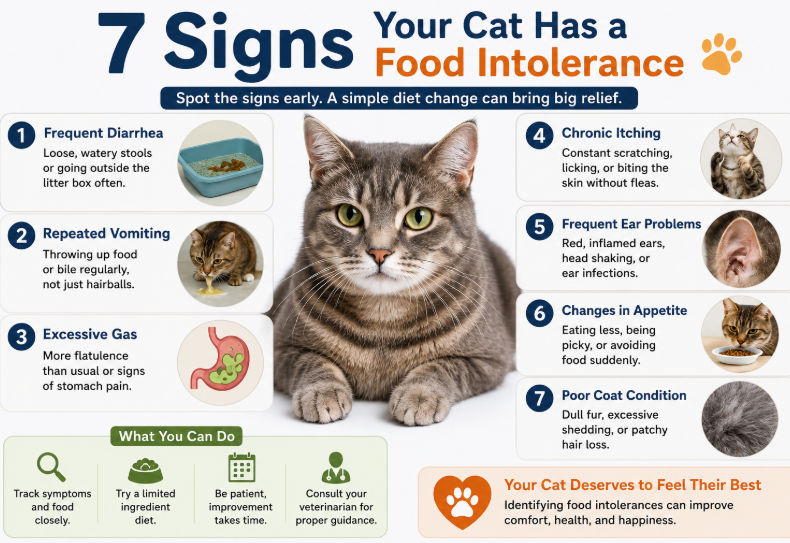
Many cat owners assume that digestive issues or skin problems are simply part of getting older. However, some symptoms may point to an underlying food intolerance. Unlike food allergies, which involve the immune system, food intolerances usually affect digestion and nutrient processing. As a result, symptoms often develop gradually and may become difficult to identify. Understanding common cat food intolerance signs can help owners recognize potential problems before they become more serious.
Food intolerances occur when a cat struggles to digest or process certain ingredients. These reactions can develop over time and may affect cats of any age. In some cases, symptoms appear shortly after eating a specific food. In others, the signs develop slowly and persist for months. Because many conditions produce similar symptoms, identifying a food intolerance often requires careful observation and dietary adjustments.
Recognizing the early warning signs is important because ongoing digestive discomfort can affect overall health and quality of life. Fortunately, many cats experience significant improvement once problematic ingredients are removed from their diets.
1. Frequent Diarrhea
One of the most common cat food intolerance signs is recurring diarrhea. While occasional digestive upset can happen for many reasons, persistent loose stools often suggest that the digestive system is struggling with a specific ingredient.
When food moves too quickly through the intestines, the body cannot absorb water properly. Consequently, stool becomes loose or watery. Cats with food intolerances may experience diarrhea shortly after meals or develop chronic digestive issues that continue for weeks.
In some cases, diarrhea appears only when a particular food is consumed. Therefore, keeping track of dietary changes can help identify patterns. Although occasional episodes may not be alarming, recurring digestive upset should not be ignored.
Hydration becomes especially important when diarrhea occurs frequently. Cats can lose significant amounts of fluid, which may eventually affect their overall health. Therefore, owners should monitor symptoms closely and seek veterinary advice if problems persist.
2. Repeated Vomiting
Occasional hairballs are normal for many cats. However, repeated vomiting often ranks among the most noticeable cat food intolerance signs. When a cat cannot properly process certain ingredients, the stomach may react by expelling its contents.
Some cats vomit shortly after eating, while others experience episodes several hours later. In addition, the frequency can vary significantly. A cat may vomit once a week or several times throughout a month.
Because vomiting has many potential causes, it is important to evaluate the overall situation. If symptoms appear consistently after consuming a specific food, dietary intolerance becomes more likely.
Many owners mistakenly assume that occasional vomiting is normal. While isolated incidents may not indicate a problem, recurring episodes deserve attention. Identifying and eliminating the triggering ingredient often reduces symptoms considerably.
3. Excessive Gas and Digestive Discomfort
Although cats are generally not known for excessive flatulence, persistent gas can signal digestive trouble. Among the lesser-known cat food intolerance signs, increased gas often develops when certain ingredients ferment improperly within the digestive tract.
This fermentation process creates excess gas and may lead to bloating, stomach noises, or visible discomfort. Some cats become restless after meals, while others appear unusually lethargic.
Digestive discomfort may also affect appetite. A cat experiencing frequent bloating may become hesitant to eat or may consume smaller meals than usual. Consequently, owners should pay attention to changes in feeding behavior.
Because digestive symptoms often overlap with other conditions, a thorough evaluation may be necessary. However, recurring gas and abdominal discomfort frequently suggest that dietary ingredients deserve closer examination.
4. Chronic Itching Without Fleas
Many people associate itching with allergies rather than intolerances. Nevertheless, skin problems can occasionally accompany digestive sensitivities. Therefore, persistent scratching is sometimes included among important cat food intolerance signs.
Cats with food-related sensitivities may scratch excessively around the face, neck, ears, or body. In addition, excessive grooming may lead to hair loss or irritated skin. Unlike flea infestations, these symptoms often continue despite appropriate parasite control.
The relationship between food and skin health is complex. Digestive irritation may contribute to inflammation that affects multiple body systems, including the skin. Consequently, chronic itching sometimes improves after dietary adjustments.
Owners should never assume food intolerance is the only cause of skin problems. Environmental allergies, infections, and parasites can produce similar symptoms. However, persistent itching remains a sign worth discussing with a veterinarian.
5. Frequent Ear Problems
Ear issues are often overlooked when evaluating cat food intolerance signs. Yet recurring ear inflammation can occasionally indicate that dietary factors are contributing to ongoing discomfort.
Affected cats may shake their heads, scratch their ears, or develop redness inside the ear canal. In some cases, recurring infections develop despite treatment.
Because ear problems have multiple causes, diagnosis requires careful evaluation. However, some cats experience fewer ear issues after transitioning to diets that eliminate problematic ingredients.
The connection between food sensitivities and ear health is not always obvious. Nevertheless, recurring symptoms that fail to resolve completely may justify a closer look at the diet.
Monitoring both digestive and skin-related symptoms can help identify patterns that point toward food intolerance.
6. Changes in Appetite
A healthy appetite often reflects overall wellness. Therefore, noticeable changes in eating habits can serve as valuable warning signs. Among common cat food intolerance signs, reduced enthusiasm for meals frequently occurs when food causes discomfort.
Cats quickly learn to associate certain foods with unpleasant digestive experiences. As a result, they may begin eating less or refusing meals altogether. Some cats approach the food bowl but hesitate before eating.
In other situations, appetite fluctuates unpredictably. A cat may eat normally one day and show little interest the next. Because appetite changes can signal many health concerns, owners should never dismiss them without investigation.
Food intolerances do not always cause complete food refusal. Instead, subtle reductions in appetite often develop gradually. Therefore, paying attention to eating patterns can reveal important clues.
When appetite changes occur alongside digestive symptoms, evaluating dietary ingredients becomes particularly important.
7. Poor Coat Condition and Excessive Grooming
A healthy coat typically appears smooth, shiny, and well maintained. Consequently, changes in coat quality often indicate underlying health issues. Many veterinarians consider coat problems among potential cat food intolerance signs because nutrition plays a major role in skin and fur health.
Cats experiencing food sensitivities may develop dull fur, increased shedding, or patchy hair loss. Excessive grooming often worsens these problems by causing further irritation.
Nutrient absorption may also decline when digestive problems persist. As a result, the skin and coat may not receive adequate nutritional support. Over time, these deficiencies can affect appearance and comfort.
Although coat issues can stem from many causes, persistent changes should not be ignored. When combined with digestive symptoms, they may suggest that dietary factors deserve attention.
Improved nutrition and elimination of problematic ingredients often lead to healthier skin and coat quality over time.
Why Food Intolerances Can Be Difficult To Identify
Many of the symptoms associated with cat food intolerance signs overlap with other medical conditions. Consequently, diagnosis is rarely straightforward. Parasites, infections, inflammatory diseases, and environmental allergies can all produce similar symptoms.
In addition, reactions may develop gradually rather than immediately. A cat may consume the same food for months before noticeable problems emerge. Therefore, connecting symptoms to specific ingredients can be challenging.
Keeping a food journal often helps. Recording meals, treats, symptoms, and behavioral changes can reveal patterns that might otherwise go unnoticed. Over time, these observations become valuable when discussing concerns with a veterinarian.
Patience remains essential during the diagnostic process. Identifying food intolerances often requires careful elimination diets and consistent monitoring.
Managing Dietary Sensitivities Successfully
Once potential cat food intolerance signs have been identified, management becomes much easier. Most veterinarians recommend elimination diets that remove suspected trigger ingredients while introducing limited or novel protein sources.
During this period, consistency is critical. Even small amounts of treats or table scraps can interfere with results. Therefore, all food sources should be carefully monitored.
Many cats respond well to limited-ingredient diets that simplify nutritional intake. Others benefit from hydrolyzed protein formulas designed specifically for sensitive digestive systems.
Gradual dietary transitions help prevent additional digestive upset. Furthermore, regular veterinary checkups ensure that nutritional needs continue to be met throughout the process.
With proper management, most cats experience noticeable improvements in comfort, digestion, and overall health.
Conclusion
Recognizing cat food intolerance signs can make a significant difference in your cat’s quality of life. Frequent diarrhea, repeated vomiting, excessive gas, chronic itching, recurring ear problems, appetite changes, and poor coat condition all deserve attention when evaluating potential dietary sensitivities.
Because these symptoms often resemble other health issues, careful observation and veterinary guidance remain essential. Fortunately, many cats improve dramatically once problematic ingredients are identified and removed from their diets.
Every cat is unique, and dietary sensitivities vary widely. By paying close attention to symptoms and responding proactively, owners can help their cats enjoy better digestion, greater comfort, and improved long-term health.
FAQ
1. What is the difference between a food intolerance and a food allergy?
A food intolerance usually affects digestion, while a food allergy involves an immune system response.
2. How long does it take to identify a dietary sensitivity?
Many elimination diet trials require several weeks before reliable results become apparent.
3. Can food-related digestive issues develop suddenly?
Yes. Some cats tolerate foods for years before developing sensitivities to certain ingredients.
4. Are skin problems always related to diet?
No. Parasites, infections, and environmental allergies can also cause itching and skin irritation.
5. Should I change my cat’s food without consulting a veterinarian?
It is best to seek professional guidance, especially when symptoms persist or affect overall health.