
Changing a cat’s diet may seem simple, yet many owners quickly discover that it requires patience and planning. The right cat food transition time can make the difference between a smooth adjustment and days of digestive discomfort. Cats often develop strong preferences for certain foods, textures, and flavors. Therefore, introducing a new diet too quickly can lead to loose stools, vomiting, food refusal, or general digestive upset.
Unlike some pets that adapt rapidly to dietary changes, cats tend to be more sensitive. Their digestive systems thrive on consistency, and sudden changes can disrupt the balance of beneficial bacteria in the gut. As a result, veterinarians frequently recommend gradual transitions whenever a new food is introduced. Understanding how long this process should take can help keep your cat comfortable while ensuring they receive the nutrition they need.
The ideal cat food transition time varies slightly depending on the individual animal, but most experts recommend a period of seven to fourteen days. This gradual approach gives the digestive system an opportunity to adapt while reducing the risk of gastrointestinal problems. In many cases, slower transitions are especially beneficial for cats with sensitive stomachs or a history of digestive issues.
Every cat responds differently to dietary changes. Some adapt within a week without any noticeable symptoms. Others may require two weeks or longer before their digestive systems fully adjust. Because of these differences, observing your cat’s response throughout the process remains essential.
Why Cats Need a Gradual Food Transition
Cats are creatures of routine. They often prefer familiar foods and may react negatively when something new suddenly appears in their bowl. Consequently, abrupt dietary changes can create stress while also challenging the digestive system.
A major reason the recommended cat food transition time exists involves the gut microbiome. The digestive tract contains billions of beneficial bacteria that help break down food and absorb nutrients. These microorganisms adapt to the nutrients and ingredients present in a cat’s regular diet. When new ingredients arrive suddenly, the bacterial population may struggle to keep pace.
This disruption can result in excess fermentation, changes in water absorption, and temporary digestive upset. Therefore, a gradual transition allows gut bacteria to adjust naturally. As the digestive system adapts, stool quality typically remains more consistent.
Ingredient differences also play a role. Even foods that appear similar may contain different protein sources, fat levels, fiber contents, or carbohydrate ingredients. These changes can influence digestion and require time for the body to process efficiently.
Furthermore, some cats are naturally cautious about unfamiliar foods. A slow transition encourages acceptance while minimizing resistance. Instead of forcing an immediate switch, owners can gradually introduce the new taste and texture until it becomes familiar.
The recommended cat food transition time supports both digestive health and behavioral adjustment. Together, these factors increase the likelihood of a successful dietary change.
The Standard Seven-to-Fourteen-Day Approach
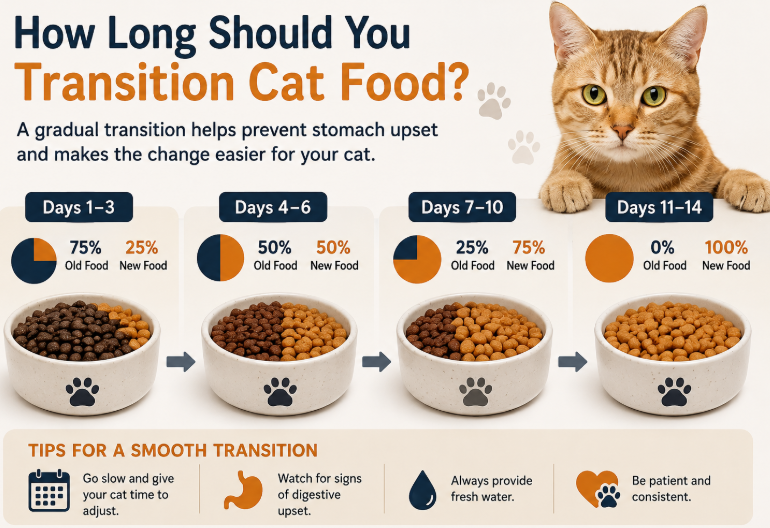
For most healthy adult cats, a seven-to-fourteen-day transition works well. This timeline provides a balanced approach that minimizes digestive stress while allowing adequate adaptation.
A common schedule begins with approximately 75 percent old food and 25 percent new food for the first few days. If no digestive issues occur, owners can gradually move to a 50-50 mixture. After several additional days, the ratio can shift to 25 percent old food and 75 percent new food before finally transitioning completely.
This gradual method respects the natural cat food transition time that many digestive systems require. Rushing the process often increases the likelihood of diarrhea, vomiting, or food refusal. Therefore, patience remains one of the most valuable tools during dietary changes.
Some owners become concerned when their cat seems eager to eat the new food immediately. However, enthusiasm does not necessarily mean the digestive system is ready for a rapid transition. Even when cats enjoy the new diet, their digestive tracts still benefit from a gradual adjustment period.
Monitoring stool consistency provides valuable feedback throughout the process. Firm, normal stools generally indicate that the transition is progressing well. On the other hand, digestive changes may suggest the need to slow down.
Because each cat is unique, the ideal cat food transition time should remain flexible rather than strictly fixed. Paying attention to individual responses often leads to better outcomes.
When a Longer Transition Is Better
Although many cats adjust within two weeks, certain situations call for a slower approach. Cats with sensitive stomachs often benefit from a transition lasting three weeks or more. Likewise, pets with a history of digestive issues may require extra time.
Senior cats frequently need additional support during dietary changes. Their digestive systems may not adapt as quickly as those of younger animals. Therefore, extending the cat food transition time can reduce the risk of gastrointestinal upset.
Cats diagnosed with inflammatory bowel disease, food sensitivities, or chronic digestive conditions also deserve special consideration. In these cases, veterinarians often recommend particularly slow transitions combined with careful monitoring.
A significant ingredient change may justify a longer timeline as well. For example, switching from a poultry-based food to a fish-based formula introduces different proteins and nutrient profiles. Consequently, the digestive system may require additional time to adjust.
Transitioning from dry food to wet food can also produce temporary changes in stool consistency. Since moisture levels differ dramatically between these diets, digestive adaptation may take longer than expected.
Extending the cat food transition time is rarely harmful. In fact, moving more slowly often prevents problems that could otherwise interrupt the process entirely.
Signs Your Cat Is Adjusting Well
Successful transitions typically involve minimal digestive disruption. While minor changes can occur, most cats continue eating normally and maintain healthy energy levels throughout the process.
One positive sign is consistent stool quality. Normal bowel movements indicate that the digestive system is adapting appropriately. Likewise, a stable appetite often suggests that the new food agrees with the cat.
Another indication that the chosen cat food transition time is working involves steady energy levels. Cats that remain playful, alert, and comfortable usually tolerate dietary changes well. In addition, healthy hydration supports digestive adaptation and overall well-being.
Many owners also notice gradual improvements when switching to higher-quality diets. A shinier coat, improved stool consistency, and increased enthusiasm during mealtime may develop over time. However, these benefits often emerge gradually rather than immediately.
Monitoring behavior remains important throughout the process. Cats communicate discomfort through changes in appetite, activity, and litter box habits. Therefore, paying close attention can help identify potential issues before they become serious.
Patience and observation work together to support a successful dietary transition. As long as progress remains steady, most cats eventually adapt without significant complications.
Common Mistakes During Food Changes
One of the most frequent mistakes involves changing foods too quickly. Owners sometimes assume that because the new food is healthier, an immediate switch is beneficial. Unfortunately, rapid changes often trigger digestive upset.
Ignoring the recommended cat food transition time can lead to diarrhea, vomiting, and food refusal. These symptoms may cause owners to abandon the new diet prematurely, even when the food itself is not the problem.
Another mistake involves introducing multiple changes simultaneously. For example, switching food while changing treats, feeding schedules, or household routines can make it difficult to identify the cause of any digestive issues.
Overfeeding during the transition may also create problems. Some owners offer extra portions because the cat appears excited about the new food. However, larger meals can increase digestive stress and contribute to stomach upset.
Failing to monitor water intake represents another common oversight. Proper hydration supports digestion and helps maintain normal bowel function. Consequently, cats should always have access to fresh, clean water.
Understanding these mistakes helps owners use the appropriate cat food transition time more effectively and avoid unnecessary complications.
When To Contact a Veterinarian
Most dietary transitions proceed without major issues. Nevertheless, some symptoms warrant professional attention. Persistent diarrhea, repeated vomiting, or significant appetite loss should never be ignored.
If digestive symptoms continue despite a gradual cat food transition time, an underlying health issue may be involved. Food sensitivities, infections, parasites, or chronic gastrointestinal disorders can produce symptoms similar to those caused by dietary changes.
Blood in the stool, severe lethargy, dehydration, or noticeable weight loss require prompt veterinary evaluation. These signs suggest that the situation extends beyond a routine adjustment period.
Kittens and senior cats deserve particular attention because they can become dehydrated more quickly than healthy adult cats. Early intervention often prevents more serious complications.
Veterinarians can help determine whether symptoms result from the transition itself or another medical condition. In some cases, they may recommend alternative diets or customized transition plans.
Conclusion
The ideal cat food transition time typically ranges from seven to fourteen days, although some cats benefit from a slower approach. Gradual dietary changes allow the digestive system and gut bacteria to adapt comfortably while reducing the risk of diarrhea, vomiting, and food refusal.
Every cat responds differently to new foods. Therefore, careful observation remains essential throughout the process. Monitoring appetite, stool quality, hydration, and behavior provides valuable insight into how well the transition is progressing.
Patience often produces the best results. Rather than rushing the process, allow your cat’s digestive system the time it needs to adjust. By respecting the proper cat food transition time, you can help your feline companion enjoy a healthier diet with minimal discomfort and a much smoother transition overall.
FAQ
1. How many days should a dietary change usually take?
Most healthy cats adjust successfully within seven to fourteen days when the transition is gradual.
2. Can I switch foods overnight if my cat likes the new food?
No. Even if your cat enjoys the new food, the digestive system still benefits from a gradual adjustment period.
3. What should I do if loose stools develop during the process?
Slow the transition and maintain the current food ratio for several days before increasing the amount of new food.
4. Is a longer adjustment period harmful?
Not at all. Many sensitive cats benefit from slower dietary changes that extend beyond two weeks.
5. When should digestive issues be considered serious?
Seek veterinary advice if symptoms include persistent diarrhea, vomiting, blood in the stool, dehydration, or loss of appetite.