If you have recently switched your cat’s diet, you may notice cat diarrhea after food change becoming a sudden issue. While it can be worrying, this reaction is actually quite common. A cat’s digestive system is sensitive, so even small dietary changes can disrupt its balance. Understanding why cat diarrhea after food change happens is essential if you want to help your cat recover quickly and avoid long-term problems.
Cats depend on consistency in their diet. When food changes too quickly, the gut bacteria struggle to adapt. As a result, digestion becomes unstable, leading to loose stools. However, with the right approach, you can correct this issue and support your cat’s digestive health effectively.
Why Sudden Food Changes Affect Digestion
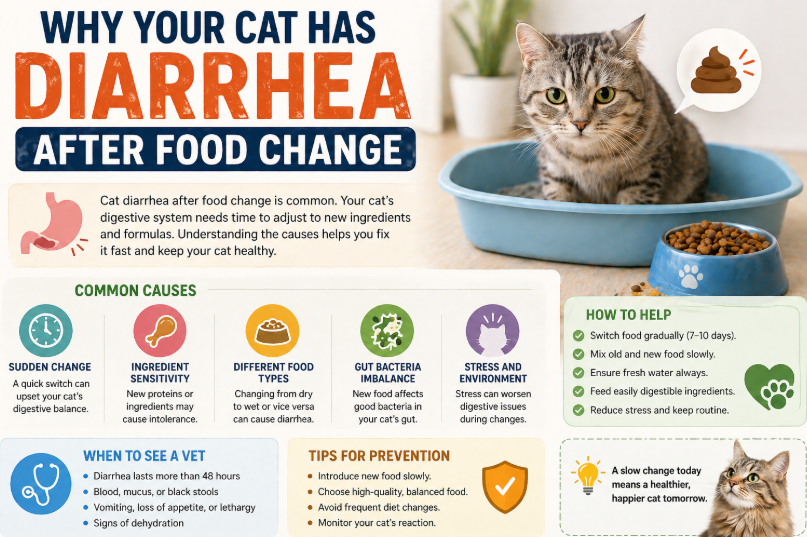
The most common reason for cat diarrhea after food change is a sudden transition. Cats rely on a stable gut microbiome to process food properly. When a new type of food is introduced too quickly, the digestive system cannot adjust in time.
As a result, beneficial bacteria become imbalanced. This disruption causes food to pass through the system faster than normal, leading to diarrhea. In addition, new ingredients may introduce unfamiliar proteins or nutrients that require adaptation.
Because of this, gradual transitions are always recommended. Allowing time for adjustment helps prevent cat diarrhea after food change and keeps digestion stable.
Ingredient Sensitivity And Food Intolerance
Another major cause of cat diarrhea after food change is sensitivity to new ingredients. Some cats react poorly to certain proteins, grains, or additives. Even high-quality food can trigger a reaction if it contains unfamiliar components.
Food intolerance often leads to digestive upset shortly after eating. In addition to diarrhea, symptoms may include gas or mild discomfort. Identifying the triggering ingredient can help resolve the issue.
Switching to simpler, limited-ingredient diets can reduce sensitivity risks. Over time, this approach supports better digestion and minimizes cat diarrhea after food change.
Differences Between Food Types And Formulas
Changing between different food types can also cause cat diarrhea after food change. For example, switching from dry to wet food introduces more moisture, which affects digestion. Likewise, moving from processed to natural diets changes nutrient composition.
Each formula has a unique balance of protein, fat, and fiber. When this balance shifts suddenly, the digestive system may struggle to adapt. This leads to temporary instability.
To reduce the impact, transitions should be done gradually. Mixing old and new food allows the body to adjust more smoothly and reduces the risk of digestive issues.
The Role Of Gut Bacteria In Digestion
Gut bacteria play a key role in preventing cat diarrhea after food change. These microorganisms help break down food and absorb nutrients. When their balance is disrupted, digestion becomes less efficient.
A sudden change in diet can reduce beneficial bacteria while increasing harmful ones. This imbalance leads to symptoms such as diarrhea and discomfort.
Supporting gut health is essential during transitions. Probiotics or fiber-rich foods may help restore balance. Over time, a healthy gut reduces the likelihood of cat diarrhea after food change.
How Stress Can Worsen Digestive Issues
Stress is often overlooked but can contribute to cat diarrhea after food change. Cats are sensitive to environmental changes, and stress can affect digestion directly. Moving homes, new pets, or altered routines may worsen symptoms.
When stress levels rise, the digestive system becomes less stable. This can make it harder for the body to process new food. As a result, diarrhea may persist longer than expected.
Creating a calm feeding environment helps reduce stress. Consistency in routine also supports better digestion and recovery.
How To Transition Food Safely
The best way to prevent cat diarrhea after food change is to transition food slowly. Start by mixing a small amount of new food with the current diet. Gradually increase the new portion over several days.
This process allows the digestive system to adapt without shock. It also helps maintain a stable balance of gut bacteria. Consistency during this period is important.
Monitoring your cat’s response helps you adjust the pace. If symptoms appear, slowing down the transition can reduce discomfort and improve results.
Choosing The Right Food For Sensitive Cats
Selecting the right food is crucial when dealing with cat diarrhea after food change. High-quality options with simple ingredient lists are often easier to digest. Foods that focus on real animal protein support better nutrition.
Avoid products with excessive fillers or artificial additives. These ingredients can irritate the digestive system and prolong symptoms. Instead, choose balanced formulas designed for sensitive stomachs.
For more guidance, you can explore helpful feeding tips at https://www.wellnessonthegreen.com/ to improve your cat’s diet and overall health.
When To Be Concerned About Persistent Symptoms
While cat diarrhea after food change is often temporary, persistent symptoms require attention. If diarrhea lasts more than a few days, it may indicate an underlying issue. Other warning signs include lethargy, weight loss, or dehydration.
In such cases, consulting a veterinarian is essential. Professional evaluation helps identify possible infections, allergies, or digestive disorders. Early intervention prevents complications and supports recovery.
Reliable resources like https://www.petmd.com/ and https://www.aafco.org/ can also provide useful information about cat nutrition and health.
Simple Remedies To Support Recovery
There are several ways to support recovery from cat diarrhea after food change. Feeding smaller, more frequent meals can ease digestion. This reduces strain on the stomach and helps stabilize the system.
Ensuring proper hydration is also important. Water helps maintain balance and prevents dehydration. Wet food can provide additional moisture during recovery.
In addition, maintaining a calm environment supports healing. Reducing stress allows the digestive system to return to normal more quickly.
Long Term Prevention Strategies
Preventing cat diarrhea after food change involves planning and consistency. Always introduce new food gradually and monitor your cat’s response. Avoid frequent diet changes unless necessary.
Maintaining a stable feeding routine helps support digestion. Consistency in portion sizes and meal times reduces stress on the system. Over time, these habits create a more resilient digestive environment.
By focusing on prevention, you can minimize future issues and keep your cat healthy.
Conclusion
Cat diarrhea after food change is a common issue that often results from sudden transitions or ingredient sensitivity. While it can be concerning, it is usually manageable with the right approach. By understanding the causes and making gradual adjustments, you can help your cat recover quickly.
Consistency, quality nutrition, and careful observation are key. With these steps, you can support your cat’s digestive health and prevent future problems. Over time, a stable diet leads to better overall well-being and a happier pet.
FAQ
- How long does diarrhea last after changing cat food?
It usually lasts a few days if the transition is handled properly. - Can switching food too quickly cause stomach issues?
Yes, sudden changes are a common cause of digestive upset. - Should I stop the new food if diarrhea starts?
Sometimes slowing the transition is enough, but monitor your cat closely. - What foods are best for sensitive stomachs?
Simple, high-quality foods with limited ingredients work best. - When should I call a veterinarian?
If symptoms persist or worsen, professional advice is recommended.