
Changing a cat’s diet may seem like a simple task, but many owners quickly discover that it requires patience and planning. Cats often develop strong preferences for certain foods, flavors, and textures. More importantly, their digestive systems can be sensitive to sudden dietary changes. This is why understanding the proper cat food mixing ratio is essential when introducing a new food. A gradual transition can help reduce digestive upset, improve food acceptance, and make the entire process much smoother for both cats and their owners.
Many cats experience diarrhea, vomiting, gas, or temporary appetite changes when a new food is introduced too quickly. While these symptoms are usually mild, they can be uncomfortable and may cause owners to abandon the transition altogether. Fortunately, following a structured feeding plan significantly reduces these risks. A carefully planned food transition allows the digestive system to adapt while helping beneficial gut bacteria adjust to new ingredients.
The ideal cat food mixing ratio depends on several factors, including age, health status, digestive sensitivity, and the type of food being introduced. However, most healthy cats respond well to a gradual transition spread over one to two weeks. Understanding why this process works can help owners make better feeding decisions and support long-term feline health.
Why Gradual Food Transitions Matter
Cats thrive on routine. Their digestive systems become accustomed to processing specific ingredients, protein sources, fat levels, and fiber content. Therefore, a sudden switch can disrupt normal digestion and create temporary gastrointestinal stress.
A proper cat food mixing ratio helps maintain stability while new ingredients are introduced. Instead of overwhelming the digestive tract, the gradual approach allows the body to adapt at a comfortable pace. Consequently, beneficial gut bacteria can adjust without causing major digestive disturbances.
Food transitions also involve behavioral adaptation. Cats can be cautious about unfamiliar foods. New smells, flavors, and textures may create hesitation, even when the food is highly nutritious. Mixing old and new foods helps increase familiarity while reducing resistance.
Digestive enzymes contribute to the process as well. These enzymes assist in breaking down nutrients efficiently. When food ingredients change significantly, enzyme activity may require time to adapt. Therefore, gradual transitions support both digestive function and nutrient absorption.
The recommended cat food mixing ratio provides a practical framework that addresses these physiological and behavioral factors simultaneously. As a result, cats often experience fewer digestive problems and greater acceptance of new foods.
The Ideal Week-Long Transition Schedule
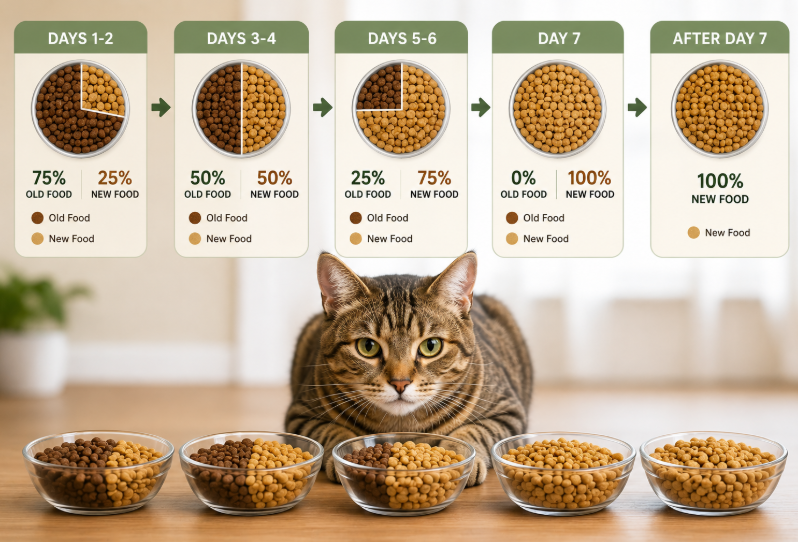
For most healthy adult cats, a seven-day transition works well. This schedule introduces new food slowly while maintaining digestive stability.
During days one and two, a common cat food mixing ratio consists of 75 percent current food and 25 percent new food. This small introduction allows the digestive system to encounter the new ingredients without becoming overwhelmed.
If no problems occur, days three and four can shift to a 50-50 mixture. At this stage, the digestive tract begins adapting more significantly to the new formula. Many cats continue eating normally without any noticeable symptoms.
Days five and six typically involve 25 percent old food and 75 percent new food. By now, most digestive adaptation has already begun. Therefore, many cats tolerate this stage comfortably.
On day seven, owners can usually transition completely to the new diet. However, flexibility remains important. Some cats require additional time, especially if mild digestive changes occur during the process.
Following a structured cat food mixing ratio schedule reduces stress and supports smoother dietary changes. Rather than rushing, owners should allow their cats to progress at a pace that feels comfortable.
When a Longer Transition Is Necessary
Not every cat adapts within a week. Some require additional time due to age, health conditions, or digestive sensitivity. In these situations, extending the transition period often produces better results.
Senior cats frequently benefit from a slower cat food mixing ratio schedule. Aging digestive systems may process dietary changes less efficiently, making gradual adaptation especially important. Likewise, kittens can sometimes require careful monitoring during food transitions.
Cats with previous digestive issues deserve extra attention. Animals with sensitive stomachs, inflammatory bowel conditions, or food intolerances often benefit from transitions lasting two to three weeks. Slower adjustments help minimize symptoms and improve comfort.
Significant ingredient changes may also require more time. For example, switching from a chicken-based food to a fish-based formula introduces different protein structures and nutrient profiles. Consequently, digestive adaptation may occur more slowly.
Transitions between dry and wet food can present unique challenges as well. Since moisture content changes dramatically, the digestive tract may need additional time to adjust. Therefore, extending the cat food mixing ratio schedule often improves success rates.
Patience remains one of the most effective tools during dietary changes. Moving slowly rarely causes problems, while rushing frequently creates unnecessary setbacks.
Common Mistakes During Food Transitions
Many feeding problems result from avoidable mistakes. Understanding these common errors helps owners achieve better outcomes while following an appropriate cat food mixing ratio plan.
One of the most frequent mistakes involves switching foods overnight. Although the new food may offer nutritional benefits, sudden changes often trigger diarrhea or vomiting. Consequently, digestive upset becomes much more likely.
Another mistake involves changing multiple variables simultaneously. Introducing a new food while adding different treats or supplements can make it difficult to identify the cause of any digestive symptoms. Therefore, maintaining consistency during transitions is beneficial.
Overfeeding can also create problems. Some owners provide extra portions because their cats appear enthusiastic about the new food. However, larger meals may increase digestive stress and interfere with adaptation.
Ignoring subtle symptoms is another concern. Mild changes in stool consistency, appetite, or energy levels provide useful information about how the cat is responding. Monitoring these indicators helps owners adjust the cat food mixing ratio when necessary.
Consistency, observation, and patience remain essential throughout the transition process. Together, these habits significantly improve the likelihood of success.
Signs the Transition Is Going Well
Most successful transitions occur with minimal digestive disruption. Monitoring a cat’s behavior and physical condition provides valuable feedback throughout the process.
Normal stool quality is one of the clearest indicators that the chosen cat food mixing ratio is working. While minor changes may occur temporarily, persistent diarrhea suggests that the transition should slow down.
A healthy appetite is another positive sign. Cats that continue eating consistently often adapt more comfortably to dietary changes. Likewise, normal energy levels indicate that the digestive system is functioning well.
Hydration remains important during food transitions. Cats should continue drinking water normally, especially when moving between dry and wet diets. Proper hydration supports digestion and overall health.
Many owners also notice gradual improvements after switching to higher-quality foods. A shinier coat, healthier skin, and more consistent stool quality often develop over time. Although these benefits may not appear immediately, they frequently emerge once the transition is complete.
Careful observation allows owners to evaluate whether the current cat food mixing ratio remains appropriate or requires adjustment.
Special Considerations for Sensitive Cats
Some cats require extra care during dietary changes. Food sensitivities, digestive disorders, and previous negative experiences can make transitions more challenging.
For these cats, an even slower cat food mixing ratio may be beneficial. Instead of increasing new food every two days, owners may choose to maintain each stage for three or four days. This approach provides additional time for digestive adaptation.
Limited-ingredient diets can also help sensitive cats. By reducing the number of potential triggers, these foods simplify the digestive process and make it easier to identify problem ingredients.
Environmental stress should not be overlooked. Changes in routine, new pets, travel, or household disruptions can affect appetite and digestion. Therefore, scheduling dietary changes during relatively calm periods often improves success.
Veterinary guidance becomes especially valuable when chronic digestive symptoms are present. Professional recommendations help ensure that nutritional needs remain balanced while addressing specific health concerns.
Although sensitive cats may require more patience, proper management usually leads to successful outcomes.
Wet Food and Dry Food Transition Ratios
Transitioning between food types often raises additional questions. Fortunately, the same principles generally apply regardless of whether the new food is wet or dry.
When moving from kibble to canned food, a gradual cat food mixing ratio remains important. Since wet food contains significantly more moisture, digestive adaptation may take longer than expected. Mixing small amounts initially helps reduce the likelihood of loose stools.
The reverse transition also requires care. Cats accustomed to wet food may be hesitant to accept dry kibble immediately. Gradual introduction improves acceptance while minimizing digestive disruption.
Some owners choose combination feeding. In these cases, the transition process involves adjusting proportions carefully while maintaining consistent calorie intake. Monitoring weight and body condition helps ensure that nutritional needs continue to be met.
Regardless of food format, gradual transitions remain the safest approach. The digestive system responds best when changes occur slowly and predictably.
Conclusion
The proper cat food mixing ratio plays a crucial role in successful dietary transitions. By introducing new foods gradually, owners can reduce digestive upset, improve acceptance, and support overall health. Most healthy cats adapt well using a seven-to-fourteen-day transition schedule, although sensitive individuals may require additional time.
Patience remains the key to success. Rather than rushing the process, allow your cat’s digestive system and taste preferences to adjust naturally. Monitoring appetite, stool quality, hydration, and behavior provides valuable guidance throughout the transition.
Every cat responds differently to dietary changes. However, when owners follow a thoughtful cat food mixing ratio plan, the chances of a smooth and comfortable transition increase dramatically. With careful observation and a gradual approach, dietary changes can become a positive step toward better nutrition and long-term feline wellness.
FAQ
1. How long should a food transition usually take?
Most healthy cats adjust within seven to fourteen days, although sensitive cats may require longer.
2. Can I switch foods immediately if my cat likes the new food?
No. Even if your cat enjoys the new food, a gradual transition helps prevent digestive upset.
3. What should I do if diarrhea develops during the process?
Slow the transition and maintain the current mixture for several days before increasing the amount of new food.
4. Is it normal for appetite to change slightly during a transition?
Yes. Some cats show temporary changes in appetite as they adapt to new flavors and textures.
5. Should wet and dry food changes follow the same process?
Generally yes. Both transitions benefit from gradual introduction and careful monitoring.