
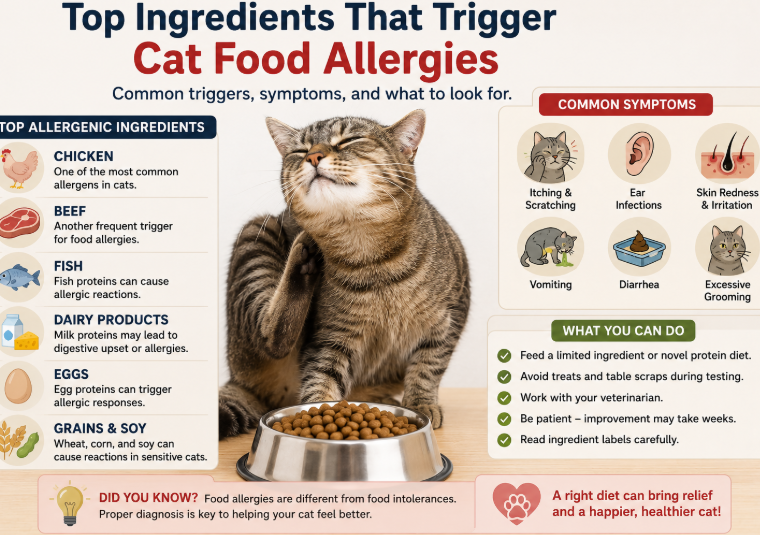
Food allergies are among the most frustrating health issues cat owners face. Symptoms often appear gradually, making them difficult to identify at first. Many owners spend months trying different foods before discovering the real cause of the problem. Understanding common cat food allergy ingredients can help simplify the process and improve your cat’s comfort and well-being.
Unlike food intolerances, true food allergies involve the immune system. When a cat consumes an ingredient that triggers an allergic response, the body mistakenly identifies that substance as harmful. Consequently, inflammation develops and symptoms begin to appear. These reactions can affect the skin, digestive system, ears, and overall health.
Cats can develop allergies at almost any age. Some reactions occur after years of eating the same food without problems. Therefore, a previously tolerated ingredient may suddenly become a concern. While any food component has the potential to trigger a reaction, certain ingredients appear more frequently than others.
Recognizing the most common cat food allergy ingredients allows owners to work more effectively with veterinarians and make informed dietary choices. Although diagnosis requires patience, understanding potential triggers is an important first step.
How Food Allergies Develop in Cats
Food allergies occur when the immune system overreacts to a specific protein or ingredient. Rather than treating the substance as harmless, the body launches an immune response. As a result, symptoms such as itching, digestive upset, and inflammation may develop.
Many people assume grain ingredients are the primary cause of allergies. However, proteins are often responsible for most cases involving cat food allergy ingredients. Because proteins stimulate immune responses, they are more likely to trigger allergic reactions than carbohydrates.
Repeated exposure can contribute to the development of allergies. Over time, a cat’s immune system may become sensitized to a particular ingredient. Consequently, symptoms may emerge even after years of consuming the same food.
The severity of reactions varies significantly. Some cats experience mild itching, while others develop chronic skin infections, digestive disturbances, or recurring ear problems. Therefore, identifying the specific trigger remains essential for long-term management.
Veterinarians often recommend elimination diets to determine which ingredient causes symptoms. Although this process requires patience, it remains one of the most reliable diagnostic tools available.
Chicken: A Surprisingly Common Trigger
Many owners are surprised to learn that chicken often appears on lists of common cat food allergy ingredients. Because chicken is widely used in commercial cat food, cats are frequently exposed to it throughout their lives.
Continuous exposure increases the likelihood of sensitivity developing over time. Consequently, some cats begin experiencing allergic symptoms despite eating chicken-based diets for years without obvious problems.
Symptoms linked to chicken allergies often include excessive scratching, skin irritation, hair loss, and recurring ear infections. Digestive issues may also occur in certain cases. Because chicken appears in many treats and supplements, identifying and eliminating exposure can be challenging.
Fortunately, alternative protein sources are widely available. Foods containing rabbit, duck, venison, or novel proteins may help reduce symptoms when chicken is the underlying cause.
However, owners should avoid making assumptions without proper evaluation. Many conditions mimic food allergies, so professional guidance remains valuable.
Beef and Its Role in Food Reactions
Beef is another frequently reported trigger among cat food allergy ingredients. Like chicken, beef appears in many commercial diets and treats. This widespread use increases long-term exposure and may contribute to sensitization.
Cats with beef allergies often develop skin-related symptoms. Persistent itching, facial scratching, and inflamed skin commonly occur. In addition, digestive disturbances such as vomiting or diarrhea may accompany allergic reactions.
The challenge with beef allergies lies in hidden ingredients. Beef derivatives can appear in unexpected products, making elimination more difficult than owners anticipate. Therefore, careful label reading becomes essential.
Many cats improve significantly when switched to diets containing alternative protein sources. However, dietary changes should always be implemented gradually and under veterinary supervision whenever possible.
Since beef remains one of the most recognized cat food allergy ingredients, it is often considered during elimination diet trials.
Fish Allergies in Cats
Fish frequently appears in cat food because many cats enjoy its taste and aroma. However, fish can also trigger allergic reactions in sensitive individuals.
Among common cat food allergy ingredients, fish presents a unique challenge because it is often used in both wet and dry formulations. Additionally, fish oils and fish-derived ingredients may appear in products that do not prominently advertise fish as a primary ingredient.
Cats with fish allergies may experience itchy skin, excessive grooming, digestive upset, or chronic ear inflammation. Since fish is often considered a healthy ingredient, owners sometimes overlook it as a potential allergen.
Eliminating fish requires careful attention to labels. Even small amounts can trigger symptoms in highly sensitive cats. Therefore, selecting foods with clearly identified ingredients becomes especially important.
Novel protein diets often help determine whether fish contributes to allergic reactions. With patience and proper management, many affected cats experience substantial improvement.
Dairy Products and Digestive Problems
Although dairy products are often associated with cats, many felines struggle to digest them properly. While lactose intolerance differs from a true allergy, dairy proteins can also contribute to allergic reactions in some cats.
Discussions about cat food allergy ingredients frequently include dairy because symptoms can resemble those of other food-related conditions. Vomiting, diarrhea, bloating, and digestive discomfort may occur after dairy consumption.
Milk, cheese, and dairy-derived ingredients sometimes appear in treats and specialty foods. Consequently, exposure may continue even when owners believe dairy has been removed from the diet.
Many adult cats produce lower levels of lactase, the enzyme required to digest lactose. As a result, digestive symptoms often develop after consuming dairy products. Although not always an allergy, these reactions can significantly affect comfort and quality of life.
Removing dairy ingredients often leads to noticeable improvements in sensitive cats. Therefore, veterinarians frequently consider dairy during dietary investigations.
Eggs as Potential Allergens
Eggs provide high-quality protein and appear in many pet foods. However, they can occasionally trigger allergic responses in susceptible cats.
When evaluating cat food allergy ingredients, eggs deserve consideration because they contain proteins capable of stimulating immune reactions. While egg allergies occur less frequently than chicken or beef allergies, they remain possible.
Affected cats may develop itching, skin irritation, digestive upset, or ear infections. Because eggs often appear in limited quantities, identifying them as the cause can sometimes be difficult.
Careful elimination diets help determine whether eggs contribute to symptoms. Once identified, avoiding egg-containing products generally leads to improvement.
Although eggs offer nutritional benefits for many cats, individual sensitivities highlight the importance of personalized dietary management.
Grains and Carbohydrate Ingredients
Grains receive considerable attention in discussions about pet food allergies. However, true grain allergies are less common than many people believe.
Nevertheless, certain cat food allergy ingredients may include grain-based components such as wheat, corn, or soy. In sensitive cats, these ingredients can contribute to allergic symptoms.
Soy deserves particular attention because it contains proteins capable of triggering immune responses. Likewise, wheat occasionally causes reactions in susceptible individuals. While these allergies occur less frequently than animal protein allergies, they remain possible.
Some grain-free diets help reduce symptoms in specific cases. However, removing grains without identifying the actual allergen may not solve the problem. Therefore, evidence-based diagnosis remains important.
Owners should avoid assuming that grain-free automatically means allergy-friendly. Ingredient quality and individual sensitivities matter far more than marketing claims.
Recognizing Allergy Symptoms
Understanding symptoms helps identify potential cat food allergy ingredients more quickly. Itching remains one of the most common signs. Cats may scratch excessively around the face, neck, ears, and body.
Chronic ear infections often accompany food allergies. Likewise, excessive grooming may lead to hair loss or bald patches. Skin redness, inflammation, and recurrent infections frequently occur as well.
Digestive symptoms can include vomiting, diarrhea, gas, and changes in appetite. While these signs may result from other conditions, food allergies should remain a consideration when symptoms persist.
Some cats display multiple symptoms simultaneously. Consequently, diagnosis can become complicated without professional guidance. Veterinary evaluation helps rule out parasites, infections, and environmental allergies that may produce similar signs.
Early recognition improves the chances of successful management and reduces unnecessary discomfort.
How To Identify Problem Ingredients
The most reliable method for identifying cat food allergy ingredients is an elimination diet. During this process, cats consume a limited diet containing proteins and ingredients they have not previously eaten.
After symptoms improve, individual ingredients may be reintroduced systematically. This approach helps identify specific triggers while minimizing confusion.
Patience is essential because improvement may take several weeks. Owners should avoid introducing treats, supplements, or table scraps during the trial period. Even small amounts of a trigger ingredient can interfere with results.
Veterinarians often recommend prescription or carefully selected limited-ingredient diets for these evaluations. Following instructions closely increases diagnostic accuracy and improves long-term outcomes.
Once the allergen is identified, managing the condition becomes significantly easier.
Conclusion
Food allergies can affect a cat’s comfort, health, and quality of life. Fortunately, understanding common cat food allergy ingredients helps owners recognize potential problems and take appropriate action. Chicken, beef, fish, dairy, eggs, soy, wheat, and other ingredients may trigger symptoms in sensitive cats.
Although identifying the exact cause requires patience, elimination diets and veterinary guidance often lead to successful results. By focusing on ingredient quality and carefully monitoring symptoms, owners can create a nutrition plan that supports long-term health.
Every cat is unique, and what triggers one animal may be completely harmless to another. Therefore, personalized evaluation remains the most effective approach. With proper management, cats with food allergies can enjoy comfortable, healthy lives and continue thriving for years to come.
FAQ
1. What is the most common dietary trigger for feline allergies?
Chicken and beef are frequently reported causes because cats are often exposed to them throughout their lives.
2. How can I tell if my cat has a food allergy?
Common signs include itching, ear infections, excessive grooming, vomiting, diarrhea, and skin irritation.
3. Are grain allergies common in cats?
No. Protein sources are generally more likely to cause allergic reactions than grains.
4. How long does an elimination diet usually take?
Most elimination trials last several weeks before reliable results become apparent.
5. Can food allergies be cured permanently?
Food allergies cannot usually be cured, but symptoms can often be controlled by avoiding trigger ingredients.