When you notice your cat vomiting after eating, it can be both alarming and confusing. While occasional vomiting may not always signal a serious issue, frequent episodes should never be ignored. Understanding why your cat vomiting after eating happens is the first step toward identifying the cause and finding the right solution. In many cases, the issue is linked to feeding habits, food quality, or underlying health conditions that require attention.
Cats have sensitive digestive systems, so even small changes can trigger discomfort. Because of this, it is important to observe patterns and identify possible triggers. By taking a closer look at behavior, diet, and environment, you can better understand what is causing your cat vomiting after eating and how to address it effectively.
Common Reasons Behind Cat Vomiting After Eating
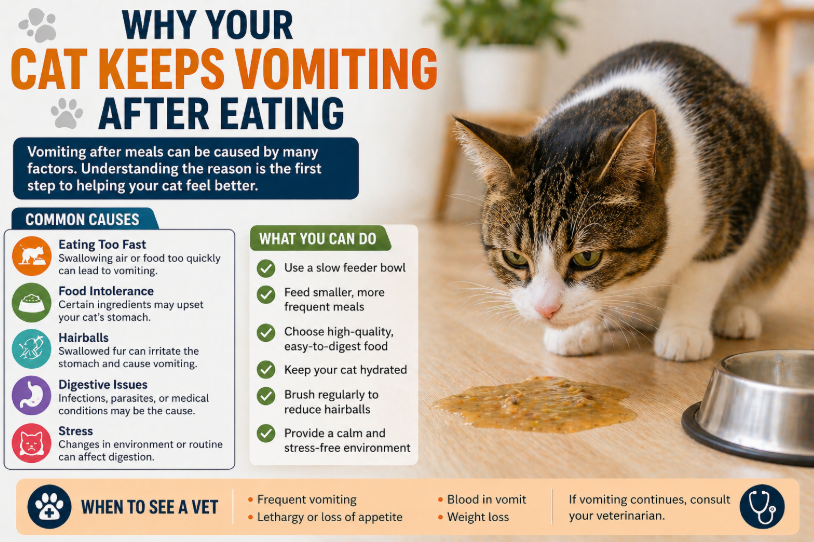
There are several common causes that explain why cat vomiting after eating occurs. One of the most frequent reasons is eating too quickly. Cats that consume food rapidly may swallow air along with their meal, which can lead to regurgitation shortly after eating.
Another cause involves food intolerance. Some cats react poorly to certain ingredients, especially fillers or artificial additives. This can irritate the stomach and result in vomiting. In addition, sudden changes in diet can disrupt digestion and trigger similar reactions.
Hairballs can also contribute to the problem. When combined with food in the stomach, they may lead to vomiting episodes. Identifying which of these factors applies to your cat is essential for proper treatment.
Difference Between Vomiting And Regurgitation
Understanding the difference between vomiting and regurgitation helps clarify the issue of cat vomiting after eating. Vomiting usually involves active abdominal contractions and may include partially digested food along with bile. It often indicates irritation or illness.
Regurgitation, on the other hand, happens more passively. Food may come up shortly after eating and often appears undigested. This is commonly linked to eating too fast or swallowing improperly.
Recognizing this difference allows you to respond more accurately. While both situations require attention, their causes and solutions may differ.
How Eating Speed Affects Digestion
Eating speed plays a major role in cat vomiting after eating. Cats that rush through meals often fail to chew properly, which can overwhelm the digestive system. As a result, the body may reject the food shortly after consumption.
Using slow feeder bowls can help manage this behavior. These bowls are designed to make eating more gradual, which improves digestion. In addition, dividing meals into smaller portions throughout the day reduces the likelihood of overeating.
Creating a calm feeding environment also helps. When cats feel relaxed, they are less likely to rush their meals. These simple changes can significantly reduce the occurrence of cat vomiting after eating.
Impact Of Food Quality On Your Cat’s Stomach
Food quality is another important factor in cat vomiting after eating. Low-quality food often contains fillers, artificial additives, and unclear protein sources. These ingredients can irritate the stomach and lead to digestive issues.
Switching to higher-quality food with clear ingredient lists may improve tolerance. Foods that focus on real animal protein and minimal processing are often easier to digest. However, any dietary change should be introduced gradually.
For more guidance on improving your cat’s diet, you can explore helpful resources at https://www.wellnessonthegreen.com/ for feeding strategies and nutritional insights.
Role Of Food Allergies And Sensitivities
Food allergies and sensitivities can also explain cat vomiting after eating. Some cats develop reactions to specific proteins or ingredients, which can trigger vomiting along with other symptoms such as itching or diarrhea.
Identifying these triggers often requires careful observation. Eliminating suspected ingredients one at a time can help determine the cause. In some cases, a veterinarian may recommend specialized diets.
Because sensitivities vary between cats, finding the right food may take time. However, once the trigger is removed, symptoms often improve significantly.
Hairballs And Their Connection To Vomiting
Hairballs are a natural part of a cat’s grooming process, but they can contribute to cat vomiting after eating. When cats swallow loose fur, it can accumulate in the stomach and mix with food. This combination may lead to vomiting.
Regular grooming helps reduce hairball formation. Brushing your cat frequently removes loose fur before it can be swallowed. In addition, certain diets are designed to support hairball control.
Ensuring proper hydration also helps move hair through the digestive system. These steps can minimize the impact of hairballs on your cat’s digestion.
Stress And Environmental Factors
Stress can influence digestion more than many owners realize. Changes in environment, routine, or household dynamics may contribute to cat vomiting after eating. Cats are sensitive animals, and even minor disruptions can affect their appetite and digestion.
Providing a stable and quiet feeding area helps reduce stress. Consistency in feeding times also supports better habits. In addition, ensuring that your cat feels safe during meals can improve overall digestion.
Addressing stress-related factors often leads to noticeable improvements. This highlights the importance of environment in managing cat vomiting after eating.
When To Seek Veterinary Help
While occasional vomiting may not be serious, frequent cat vomiting after eating requires professional attention. If vomiting occurs regularly, or if it is accompanied by weight loss, lethargy, or changes in behavior, it is important to consult a veterinarian.
Underlying conditions such as gastrointestinal disorders, infections, or organ issues may be involved. Early diagnosis helps prevent complications and ensures proper treatment.
Reliable resources like https://www.petmd.com/ and https://www.aafco.org/ can provide additional information about cat health and nutrition, but professional evaluation remains essential for accurate diagnosis.
Practical Solutions To Reduce Vomiting
Managing cat vomiting after eating involves a combination of dietary and behavioral adjustments. Feeding smaller portions more frequently can improve digestion and reduce strain on the stomach.
Using slow feeders helps control eating speed, while choosing high-quality food supports better tolerance. In addition, maintaining a consistent routine creates a stable environment for your cat.
Monitoring your cat’s response to these changes is important. Improvements in behavior and digestion indicate that the approach is working. With time and consistency, these solutions can reduce vomiting episodes.
Long Term Prevention Strategies
Preventing cat vomiting after eating requires a long-term approach. Consistent feeding habits, balanced nutrition, and regular grooming all play a role. These practices support digestive health and reduce common triggers.
In addition, regular veterinary checkups help identify potential issues early. This proactive approach ensures that your cat remains healthy over time.
By focusing on prevention, you can create a stable and supportive environment. This reduces the likelihood of recurring problems and improves your cat’s quality of life.
Conclusion
Cat vomiting after eating can be caused by a variety of factors, ranging from simple habits to more complex health issues. By understanding the underlying causes, you can take steps to address the problem effectively. Whether it involves adjusting feeding routines, improving food quality, or seeking veterinary advice, each action contributes to better health.
Consistency and observation are key. Small changes can lead to significant improvements over time. By staying attentive and proactive, you can help your cat maintain a healthy digestive system and enjoy a more comfortable life.
FAQ
- Why does my cat throw up right after eating?
It is often due to eating too quickly or regurgitation rather than true vomiting. - Is occasional vomiting normal for cats?
Occasional episodes may happen, but frequent vomiting should be checked by a vet. - Can food changes cause digestive problems?
Yes, sudden changes can upset the stomach and lead to vomiting. - Do hairballs cause vomiting after meals?
Yes, hairballs can mix with food and trigger vomiting. - When should I be concerned about vomiting?
If it happens often or includes other symptoms, consult a veterinarian.