
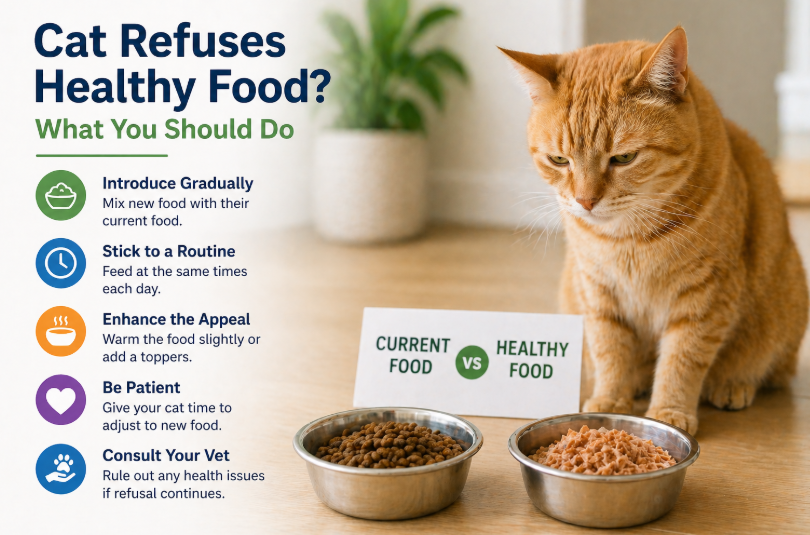
When your cat refuses healthy food, it can quickly become frustrating and worrying. You may invest in better nutrition, only to watch your cat walk away from the bowl. While this behavior is common, it often points to habits, preferences, or environmental factors rather than the food itself. Understanding why your cat refuses healthy food is the first step toward fixing the issue and building a consistent routine.
Cats are naturally cautious eaters, so sudden changes can disrupt their comfort. Because of this, even high-quality meals may be rejected at first. However, with patience and the right strategy, you can guide your cat toward healthier choices without stress or force.
Why Cats Reject New And Healthier Food Options
There are several reasons why cats resist better food choices. In many cases, familiarity plays the biggest role. Cats prefer what they already know, especially when it comes to smell and texture. If the new food differs too much, hesitation is expected.
Previous feeding habits also matter. Cats that were fed highly processed food may find natural meals less appealing. This does not mean the healthier option is wrong. Instead, it simply requires a gradual adjustment period.
In addition, stress can influence appetite. Changes in routine, environment, or feeding location can reduce interest in food. Understanding these triggers helps you respond more effectively when your cat refuses healthy food.
How To Transition Food Without Resistance
A gradual transition is one of the most effective solutions. Instead of switching food instantly, mix a small amount of the new option with the current one. Over several days, slowly increase the healthier portion.
This method allows your cat to adapt without feeling overwhelmed. It also helps prevent digestive upset, which can happen with sudden changes. Consistency during this process is essential for success.
Maintaining a fixed feeding schedule also improves results. When meals happen at the same time each day, your cat feels more secure and becomes more willing to try new food. This structured approach reduces resistance over time.
Ways To Make Healthy Food More Appealing
If your cat shows little interest in new meals, improving the appeal can help. Cats rely heavily on scent, so slightly warming the food enhances aroma and increases curiosity. This small adjustment often leads to better acceptance.
Another option is adding a small amount of familiar food on top. This creates a gradual flavor shift instead of a sudden change. Over time, your cat becomes more comfortable with the healthier option.
Texture also matters. Some cats prefer wet food, while others prefer dry. Trying different textures helps you find the right match. These adjustments make it easier to introduce healthier meals successfully.
Creating A Structured Feeding Routine
A consistent feeding routine plays a major role in improving eating habits. Cats respond well to structure, so feeding at the same times daily helps regulate appetite. This reduces picky behavior and improves overall consistency.
Avoid leaving food out all day, as it encourages grazing and lowers interest during meals. Instead, offer food at set times and remove leftovers after a short period. This helps your cat understand when it is time to eat.
A quiet feeding environment also makes a difference. Reducing noise and distractions allows your cat to focus on eating. These changes support better habits and reduce resistance to healthier options.
Managing Treats And Extra Feeding
Treats can easily disrupt progress if not controlled. When your cat receives frequent snacks, they may ignore regular meals. This creates a cycle where your cat waits for more appealing options.
Limiting treats helps restore balance. You do not need to remove them entirely, but keeping them structured prevents overuse. In addition, replacing treats with playtime or attention can meet your cat’s needs without affecting appetite.
For more guidance on feeding habits and routines, you can explore helpful resources at https://www.wellnessonthegreen.com/.
Understanding Behavioral Triggers Around Food
Behavior often plays a larger role than expected. Cats are sensitive to routine changes, and even small disruptions can affect eating patterns. For example, moving the food bowl or changing feeding times may cause hesitation.
Negative associations can also develop. If your cat experiences discomfort after eating, they may link that feeling to the food itself. Identifying these patterns helps you adjust your approach.
Providing a calm and stable environment during meals supports better behavior. When your cat feels relaxed, they are more likely to eat consistently. Addressing these triggers improves long-term results.
When To Seek Professional Advice
If your cat continues to avoid food, professional guidance may be necessary. Persistent refusal can sometimes signal underlying health issues. Dental problems, digestive discomfort, or illness can all affect appetite.
A veterinarian can evaluate your cat and recommend appropriate dietary solutions. They may also suggest specific products that meet nutritional standards. Trusted references such as https://www.petmd.com/ and https://www.aafco.org/ provide additional insights into proper pet nutrition.
Early intervention prevents more serious complications. Monitoring your cat closely ensures that any issues are addressed promptly.
Building Long Term Healthy Eating Habits
Improving your cat’s diet takes time, but consistency leads to lasting results. Small changes, such as adjusting portions and maintaining routine, create a strong foundation. Over time, your cat adapts and becomes more open to healthier options.
Encouraging gradual progress is more effective than forcing change. Each positive step builds trust and reduces resistance. This approach supports both physical health and emotional well-being.
In addition, maintaining a balanced diet helps prevent long-term issues. Proper nutrition supports energy levels, coat condition, and overall health. These benefits make the effort worthwhile.
Conclusion
When your cat refuses healthy food, patience and strategy are essential. By understanding the reasons behind picky eating, you can make adjustments that support better habits. Gradual transitions, consistent routines, and improved food appeal all contribute to success.
Although the process may take time, the long-term benefits are significant. A healthier diet leads to better digestion, increased energy, and improved quality of life. With the right approach, you can turn mealtime into a positive and consistent experience for your cat.
FAQ
- Why does my cat reject new food immediately?
Cats prefer familiar smells and textures, so sudden changes often cause resistance. - How long should I take to switch food?
A gradual transition over one to two weeks usually works best. - Can treats affect my cat’s appetite?
Yes, frequent treats can reduce interest in regular meals. - What if my cat skips meals completely?
If refusal lasts more than a day, consult a veterinarian for advice. - Is it okay to mix different foods together?
Yes, mixing helps your cat adjust to new flavors more easily.