Learning how to read cat food labels is one of the most important skills you can develop as a cat owner. While packaging often highlights appealing words like “natural” or “premium,” the real value lies in the details printed on the label. Many products use marketing language that sounds healthy but does not always reflect true nutritional quality. Because of this, understanding how to evaluate ingredients and nutritional content helps you make better decisions for your cat’s health.
When you take the time to read cat food labels properly, you gain control over what your cat eats daily. This awareness allows you to avoid low-quality ingredients, balance nutrients, and support long-term wellness. Instead of guessing, you rely on clear information to guide your choices.
Why Understanding Labels Matters For Cat Health
Knowing how to read cat food labels can directly impact your cat’s overall health and quality of life. Cats require specific nutrients, including high-quality protein, essential fats, and certain amino acids. Without proper balance, even a seemingly good product can fall short.
Additionally, many labels include ingredients that may not benefit your cat. Fillers, artificial additives, and vague ingredient names can reduce nutritional value. By learning to identify these elements, you can avoid unnecessary risks.
Another reason this knowledge matters is consistency. When you read cat food labels regularly, you begin to recognize patterns and compare products more effectively. This helps you choose food that aligns with your cat’s needs and lifestyle.
Breaking Down The Ingredient List
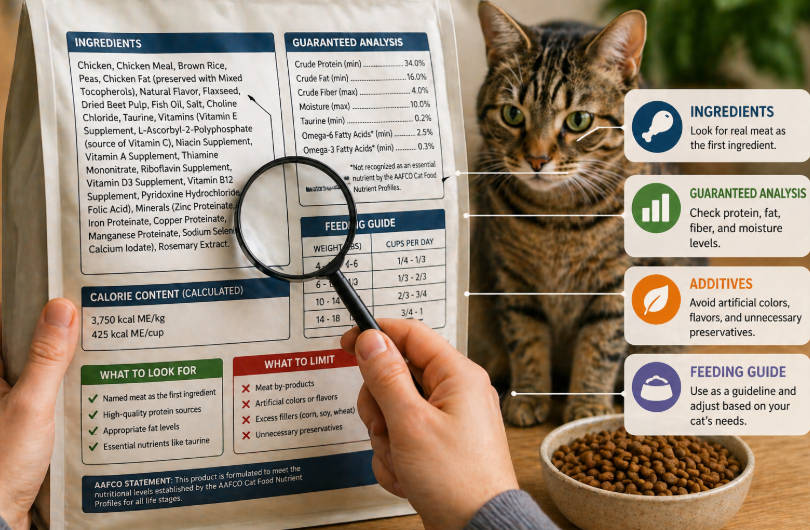
The ingredient list is one of the first things to examine when you read cat food labels. Ingredients are listed in order of weight, which means the first few items are the most important. Ideally, high-quality animal protein should appear at the top.
However, some labels use vague terms like “meat by-products” or “animal meal.” While these are not always harmful, they can indicate lower-quality sources. Clear ingredient names such as chicken, salmon, or turkey are generally more reliable.
In addition, watch for fillers like corn, wheat, or soy. While small amounts may be acceptable, excessive use can reduce nutritional quality. Understanding how to read cat food labels helps you identify these differences and make informed choices.
Understanding Protein And Nutrient Content
Protein is essential for cats, which is why it plays a central role when you read cat food labels. Cats are obligate carnivores, meaning they rely heavily on animal-based protein for survival. A high protein percentage is usually a good sign, especially when it comes from quality sources.
However, protein content alone is not enough. The source of protein matters just as much as the quantity. Animal-based proteins are more beneficial than plant-based alternatives, as they provide essential amino acids like taurine.
In addition, fat content should be balanced. Healthy fats support energy and coat condition, while excessive fat can lead to weight gain. By analyzing these details, you can better understand how to read cat food labels and choose balanced nutrition.
Decoding Guaranteed Analysis
The guaranteed analysis section provides a breakdown of key nutrients. When you read cat food labels, this section shows minimum levels of protein and fat, as well as maximum levels of fiber and moisture. While it may seem technical, it offers valuable insights into the food’s composition.
For example, higher protein levels typically indicate better suitability for cats. Meanwhile, fiber content should remain moderate, as excessive fiber is not ideal for carnivorous diets. Moisture content is also important, especially for hydration.
Understanding these numbers helps you compare products more effectively. Over time, this knowledge makes it easier to select food that supports your cat’s health and lifestyle.
Identifying Additives And Preservatives
Another important step when you read cat food labels is identifying additives and preservatives. Some ingredients are included to enhance flavor, color, or shelf life, but they may not provide nutritional benefits.
Artificial preservatives and colors are often unnecessary. While they may not always be harmful, they do not contribute to your cat’s health. Natural preservatives, such as vitamin E, are generally preferred.
Flavor enhancers can also influence your cat’s eating habits. While they make food more appealing, they may encourage overeating or picky behavior. By recognizing these additives, you can make more informed decisions when you read cat food labels.
Understanding Label Claims And Marketing Terms
Labels often include phrases like “grain-free,” “holistic,” or “natural.” While these terms can be helpful, they are not always regulated strictly. When you read cat food labels, it is important to look beyond these claims and focus on actual ingredients.
For example, “grain-free” does not automatically mean healthier. Some grain-free products still include fillers or low-quality ingredients. Similarly, “natural” may not guarantee complete nutritional balance.
Instead of relying on marketing language, use the ingredient list and nutrient analysis as your primary guide. This approach ensures that your decisions are based on facts rather than promotional claims.
Portion Guidelines And Feeding Instructions
Feeding instructions provide guidance on portion sizes, which is another key aspect when you read cat food labels. These recommendations are usually based on weight and activity level. However, they should be adjusted according to your cat’s specific needs.
Overfeeding can lead to weight gain, while underfeeding may reduce energy levels. Monitoring your cat’s condition helps you determine whether adjustments are needed. In addition, dividing meals into consistent portions supports better digestion.
By combining label instructions with observation, you create a balanced feeding routine. This ensures that your cat receives the right amount of food without excess.
How To Compare Different Brands Effectively
Comparing brands becomes easier when you know how to read cat food labels. Start by examining the first few ingredients and identifying the primary protein source. Then, review the guaranteed analysis to understand nutrient balance.
Next, consider the presence of fillers and additives. Products with fewer unnecessary ingredients are often better choices. Price can also be a factor, but it should not be the only consideration.
Consistency is important as well. Switching between brands frequently can disrupt your cat’s digestion. By choosing a reliable product and sticking with it, you support long-term health and stability.
Common Mistakes To Avoid When Reading Labels
Even experienced owners can make mistakes when trying to read cat food labels. One common error is focusing only on protein percentage without considering quality. High numbers do not always mean better nutrition.
Another mistake is ignoring ingredient order. The first few ingredients have the greatest impact on nutritional value, so they should be examined carefully. In addition, relying solely on marketing claims can lead to poor choices.
Skipping the guaranteed analysis is also a mistake. This section provides essential information that helps you understand the food’s composition. By avoiding these errors, you improve your ability to read cat food labels accurately.
Conclusion
Learning to read cat food labels like an expert empowers you to make better decisions for your cat’s health. By focusing on ingredient quality, nutrient balance, and accurate information, you can avoid common pitfalls and choose food that supports long-term wellness. This knowledge allows you to move beyond marketing claims and rely on facts.
Over time, reading labels becomes easier and more intuitive. With practice, you will quickly identify high-quality options and create a consistent feeding routine. Ultimately, understanding how to read cat food labels is one of the most effective ways to ensure your cat lives a healthy and balanced life.
FAQ
- What is the most important part of a cat food label?
The ingredient list is crucial because it shows the quality and source of the main components. - How can I tell if the protein source is good?
Look for specific animal names like chicken or salmon instead of vague terms. - Are grain-free foods always better for cats?
Not always, as quality depends on overall ingredients and nutritional balance. - What does guaranteed analysis mean?
It shows the minimum and maximum levels of key nutrients in the food. - Should I trust marketing claims on packaging?
Use them as a guide, but always verify details by checking the ingredient list and nutrition facts.