Learning how to read cat food labels is one of the most valuable skills any cat owner can develop. With so many products claiming to be healthy, natural, or premium, it becomes easy to feel overwhelmed. However, once you understand what to look for, you can quickly identify which options truly support your cat’s health.
At first, labels may seem complicated because they include technical terms and long ingredient lists. Yet, when you break them down step by step, the process becomes much simpler. When you read cat food labels properly, you gain control over your cat’s diet and avoid misleading marketing claims.
Why Cat Food Labels Can Be Misleading
Many pet food companies use attractive words and images to catch your attention. While these designs look appealing, they often distract from what really matters. That is why learning to read cat food labels carefully helps you see beyond the packaging.
For example, terms like “premium” or “gourmet” do not always guarantee quality. In fact, these words are often used for marketing purposes only. Therefore, relying on them can lead to poor choices.
Additionally, ingredient names can be confusing. Some labels use scientific or vague terms that make low-quality ingredients appear better than they are. By understanding these tactics, you can make smarter decisions when selecting food.
Start With the Ingredient List
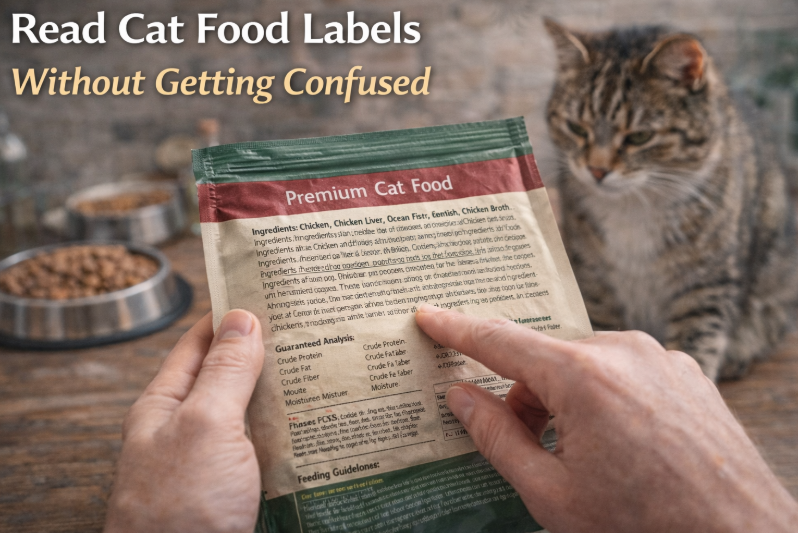
The ingredient list is the most important part when you read cat food labels. Ingredients are listed in order of weight, which means the first few items make up the majority of the food.
Ideally, high-quality animal protein should appear at the top. Look for specific names like chicken, turkey, or salmon. These provide essential nutrients that cats need for energy and muscle health.
On the other hand, vague terms such as “meat meal” or “animal by-products” can indicate lower quality. While not always harmful, they lack clarity. Therefore, choosing clearly labeled ingredients is a safer option.
Understanding Protein Sources
Protein is the foundation of a cat’s diet, so it deserves special attention when you read cat food labels. Cats are obligate carnivores, which means they rely heavily on animal-based protein.
Look for foods where real meat is the primary ingredient. This ensures your cat receives the amino acids needed for proper health. In contrast, plant-based proteins should not dominate the formula.
In addition, variety in protein sources can be beneficial. However, introducing too many at once may cause digestive issues. Therefore, balance and simplicity are key.
Watch Out for Fillers and Unnecessary Additives
Another critical step when you read cat food labels is identifying fillers. Ingredients like corn, wheat, and soy are often used to bulk up food at a lower cost. While they are not always harmful, excessive amounts reduce nutritional value.
Moreover, artificial additives such as colors and preservatives should be avoided when possible. These ingredients provide no real benefit and may cause sensitivities in some cats.
Instead, look for natural alternatives. Foods that use simple, recognizable ingredients are usually a better choice. This approach supports digestion and overall health.
Decoding Nutritional Information
Beyond ingredients, nutritional information plays a key role when you read cat food labels. This section includes protein, fat, fiber, and moisture levels, which help you understand the food’s balance.
High protein content is essential for cats. At the same time, healthy fats provide energy and support coat quality. Fiber should remain moderate, as too much can affect digestion.
Additionally, moisture content matters. Wet food typically contains more water, which helps with hydration. Dry food, on the other hand, may require extra water intake.
Understanding these numbers helps you compare products more effectively and choose the best option.
Recognizing Hidden Ingredients
Hidden ingredients can make it difficult to read cat food labels accurately. Some additives appear under unfamiliar names, which can make them easy to overlook.
For example, sugars may be listed as corn syrup or other sweeteners. While cats do not need sugar, these ingredients are sometimes added to improve taste. Avoiding them supports better long-term health.
Similarly, artificial preservatives may appear under chemical names. Learning to recognize these helps you avoid unnecessary risks. Over time, this knowledge becomes second nature.
Understanding Label Claims and Certifications
Labels often include claims such as “natural,” “organic,” or “grain-free.” While these terms can be helpful, they should not replace a thorough evaluation. When you read cat food labels, always verify these claims by checking the ingredient list.
For instance, organic certification usually indicates stricter production standards. However, not all natural foods meet the same criteria. Therefore, understanding these differences helps you make informed choices.
In addition, look for certifications from trusted organizations. These can provide reassurance about quality and safety. However, they should still be combined with your own evaluation.
How to Compare Different Brands
Comparing brands becomes easier once you know how to read cat food labels. Start by examining the ingredient list and nutritional values side by side. This allows you to identify which product offers better quality.
Focus on protein sources, ingredient clarity, and overall balance. Avoid being influenced solely by price or packaging. While cost matters, quality should remain the priority.
In addition, consider your cat’s specific needs. Age, activity level, and health conditions all play a role in determining the best food. Tailoring your choice ensures better results.
Common Mistakes to Avoid
Even experienced pet owners can make mistakes when trying to read cat food labels. One common error is focusing only on the front of the package. This often leads to overlooking important details.
Another mistake involves ignoring portion sizes. Even high-quality food can cause issues if fed in excess. Therefore, always follow recommended guidelines and adjust as needed.
Additionally, switching foods too frequently can create confusion. Consistency is important, so make changes gradually. This helps your cat adapt without stress.
Building Confidence in Your Choices
As you practice how to read cat food labels, your confidence will grow. What once seemed complicated becomes easier with experience. Over time, you will quickly recognize high-quality options.
This confidence allows you to make decisions without relying on marketing claims. Instead, you base your choices on facts and understanding. As a result, your cat benefits from better nutrition.
Moreover, being informed helps you avoid unnecessary expenses. Investing in quality food pays off through improved health and fewer issues in the long run.
Conclusion
Learning to read cat food labels without getting confused is a powerful step toward better pet care. By focusing on ingredients, understanding nutritional values, and recognizing misleading claims, you can make smarter decisions with confidence.
Although the process may seem complex at first, it becomes easier with practice. Each label you examine builds your knowledge and improves your ability to choose wisely. In the end, your efforts lead to better health, more energy, and a happier life for your cat.
FAQ
- What should I look for first on a cat food label?
Start with the ingredient list and ensure real meat is the primary ingredient. - Are by-products always bad for cats?
Not always, but unclear sources can indicate lower quality and should be evaluated carefully. - How can I avoid artificial additives?
Check for chemical names and choose products with natural preservatives instead. - Is grain-free food better for all cats?
Not necessarily, as each cat has different dietary needs and sensitivities. - How often should I change my cat’s food?
Only change when necessary, and always do so gradually to avoid digestive issues.