Understanding harmful cat food ingredients is one of the most important steps you can take to protect your cat’s health. Many products on the market appear nutritious, yet they often contain additives and fillers that may cause long-term problems. When you learn to identify harmful cat food ingredients, you gain control over what your cat consumes every day.
Cats rely on high-quality nutrition to maintain energy, digestion, and organ function. However, not all commercial foods meet these standards. Because of this, being aware of harmful cat food ingredients helps you avoid hidden risks and make better feeding decisions. Over time, these choices can significantly improve your cat’s quality of life.
Why Some Ingredients Can Harm Your Cat
Not all ingredients are created equal, and some can negatively affect your cat’s health over time. Harmful cat food ingredients often provide little nutritional value while adding unnecessary strain on the digestive system. These substances may lead to allergies, weight issues, or chronic conditions.
In addition, many of these ingredients are included to reduce production costs rather than improve nutrition. As a result, they may compromise the overall quality of the food. By recognizing harmful cat food ingredients, you can focus on options that truly support your cat’s needs.
Long-term exposure to poor-quality ingredients can gradually impact organ health. This is why early awareness is essential for preventing future problems.
Artificial Additives And Preservatives To Avoid
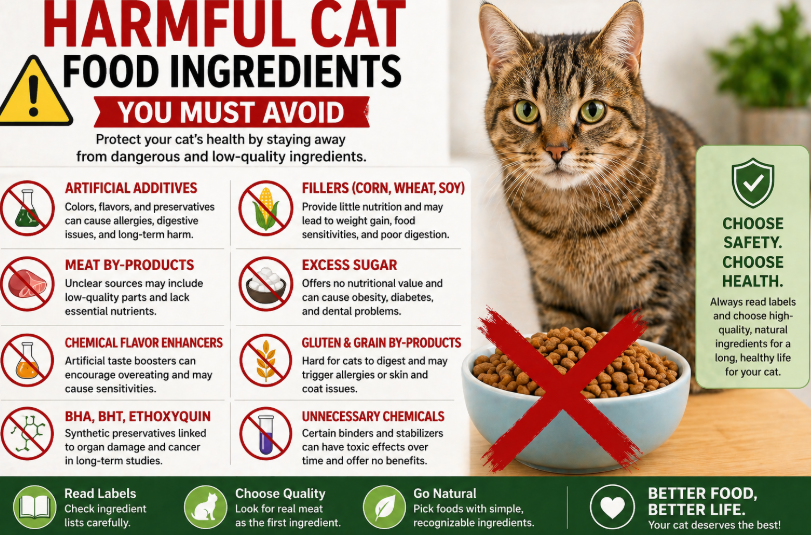
Artificial additives are among the most common harmful cat food ingredients found in commercial products. These include synthetic colors, flavors, and preservatives designed to enhance appearance and shelf life. While they may make food more appealing, they do not provide nutritional benefits.
Some preservatives have been linked to potential health concerns when consumed over long periods. Cats may also develop sensitivities to certain artificial compounds, leading to digestive or skin issues.
Choosing food with natural preservation methods is a safer alternative. By avoiding artificial additives, you reduce unnecessary exposure to harmful cat food ingredients and support better health.
Low Quality Fillers And Their Impact
Fillers such as corn, wheat, and soy are often used to bulk up cat food. While not always toxic, they offer limited nutritional value for carnivorous animals. These fillers are considered harmful cat food ingredients when they replace essential nutrients.
Cats do not require large amounts of carbohydrates, so excessive fillers can lead to weight gain and digestive problems. Over time, this imbalance may contribute to more serious conditions.
Instead, look for foods that prioritize animal protein as the main ingredient. This ensures that your cat receives the nutrients it truly needs for optimal health.
Unclear Meat Sources And By Products
One of the most concerning harmful cat food ingredients is the use of vague meat descriptions. Labels that list “meat by-products” or “animal meal” without specifying the source can make it difficult to assess quality.
While some by-products can be nutritious, lack of transparency raises concerns about consistency and safety. These ingredients may include lower-quality parts that do not provide balanced nutrition.
Choosing products with clearly identified protein sources improves confidence in the food you select. Transparency is key when avoiding harmful cat food ingredients and ensuring better quality.
Excess Sugar And Unnecessary Carbohydrates
Sugar is another ingredient that has no place in a cat’s diet. Although it may enhance flavor, it offers no nutritional value. Over time, excess sugar can contribute to obesity and other metabolic issues.
Many commercial foods include hidden sugars under different names. These can be difficult to identify without careful label reading. Because of this, sugar is considered one of the more subtle harmful cat food ingredients.
Limiting carbohydrates also supports better digestion and energy levels. A diet focused on protein and healthy fats aligns more closely with a cat’s natural needs.
Chemical Flavor Enhancers And Appetite Stimulants
Flavor enhancers are often added to make low-quality food more appealing. These substances can encourage overeating and create dependency on certain flavors. While they may improve taste, they do not contribute to nutrition.
Over time, reliance on these additives can make it difficult to switch to healthier options. Cats may reject natural food because they are accustomed to enhanced flavors.
Avoiding these harmful cat food ingredients helps reset your cat’s preferences. This allows them to appreciate more natural and balanced meals.
How To Read Labels More Effectively
Reading labels is one of the best ways to identify harmful cat food ingredients. Start by examining the ingredient list, which is usually ordered by weight. High-quality foods list real meat as the first ingredient.
Look for clear and specific names rather than vague terms. This provides better insight into what the food contains. In addition, check for unnecessary additives or fillers that may reduce quality.
For more guidance on choosing better food options, you can visit https://www.wellnessonthegreen.com/ to explore helpful feeding strategies and insights.
Signs Your Cat May Be Affected By Poor Ingredients
Cats may show signs when they are affected by harmful cat food ingredients. Common indicators include digestive issues, dull coat, or changes in energy levels. These symptoms often develop gradually.
In some cases, cats may also experience itching or food sensitivities. These reactions can be linked to specific ingredients in their diet. Monitoring your cat’s behavior helps you identify potential problems early.
If symptoms persist, it may be necessary to adjust the diet or consult a professional. Early action helps prevent more serious health issues.
Choosing Safer And Healthier Alternatives
Replacing harmful cat food ingredients with better options is a key step toward improving your cat’s diet. Look for foods that focus on natural, high-quality ingredients and balanced nutrition.
Products that meet established guidelines often provide more reliable nutrition. Resources such as https://www.aafco.org/ and https://www.petmd.com/ can help you understand these standards.
Transitioning to healthier food should be done gradually to avoid digestive upset. Over time, your cat will adapt to the new diet and benefit from improved nutrition.
Building Long Term Healthy Feeding Habits
Avoiding harmful cat food ingredients is not just a one-time change. It requires consistent effort and attention to detail. Establishing a routine with high-quality food supports long-term health.
Feeding at regular times and maintaining proper portions helps stabilize digestion. Monitoring your cat’s weight and behavior provides valuable feedback on the diet’s effectiveness.
Consistency is essential for achieving lasting results. By focusing on quality and balance, you can create a feeding plan that supports your cat’s well-being.
Conclusion
Harmful cat food ingredients can have a significant impact on your cat’s health if left unchecked. By learning to identify and avoid these substances, you can make better decisions that support long-term wellness. From artificial additives to low-quality fillers, each ingredient plays a role in overall nutrition.
Taking a proactive approach to your cat’s diet helps prevent potential health issues and improves quality of life. With careful label reading and consistent habits, you can provide a safer and more balanced feeding routine. Over time, these efforts lead to a healthier, happier cat.
FAQ
- What are the most common harmful ingredients in cat food?
Artificial additives, fillers, and unclear meat sources are among the most common concerns. - Are by-products always bad for cats?
Not always, but lack of transparency can make it difficult to assess their quality. - How can I tell if my cat’s food is low quality?
Look for vague ingredient names and excessive fillers in the label. - Can poor ingredients cause long-term health issues?
Yes, they may contribute to digestive problems and chronic conditions over time. - How do I switch to better food safely?
Introduce new food gradually to avoid digestive upset and allow your cat to adjust.