
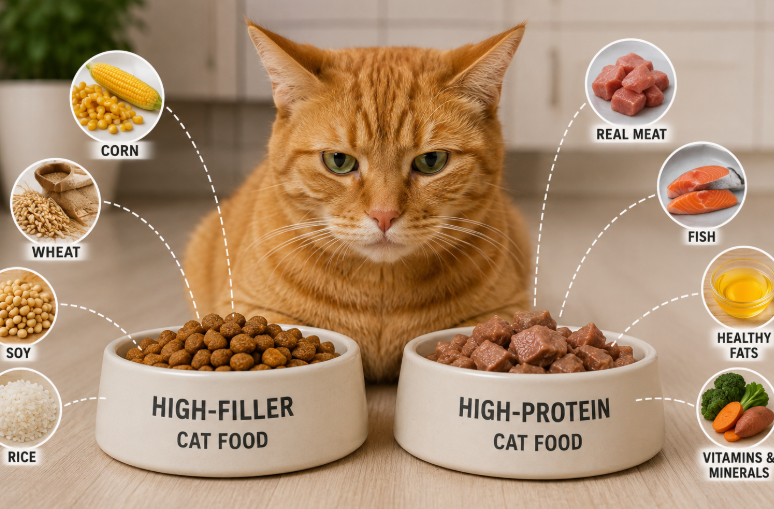
Many cat owners spend time comparing protein sources, ingredient lists, and nutrition labels. However, one topic often creates confusion: fillers in cat food. Some people believe fillers are completely harmful, while others see them as harmless ingredients that help create balanced diets. The truth usually falls somewhere in the middle. Understanding what these ingredients are, why manufacturers use them, and how they may affect your cat can help you make more informed decisions when selecting a food.
The word “filler” does not have a strict regulatory definition in pet nutrition. Instead, it is commonly used to describe ingredients that add bulk, texture, or calories while contributing less nutritional value than primary animal-based ingredients. These ingredients may include corn, wheat, soy, rice, barley, pea products, or other carbohydrate sources. Although many pet owners view them negatively, not all of these ingredients are automatically bad.
Cats are obligate carnivores. Their bodies evolved to rely heavily on nutrients from animal protein. Because of this biological requirement, many owners prefer foods with meat-based ingredients appearing at the top of the label. When evaluating fillers in cat food, it is important to remember that the overall nutritional balance matters more than a single ingredient alone.
A quality cat food should provide complete and balanced nutrition. Therefore, the presence of a carbohydrate ingredient does not necessarily indicate poor quality. What matters is how the ingredient contributes to the formula and whether it supports your cat’s health goals. Some foods use plant ingredients strategically, while others may rely on them too heavily.
Many misconceptions exist because marketing messages often simplify a complex subject. As a result, owners may assume every grain or carbohydrate serves no purpose. In reality, nutrition involves much more than broad labels. Looking at the entire formula provides a clearer picture of what your cat is actually eating.
Why Manufacturers Use These Ingredients
Pet food companies include various plant-based ingredients for several practical reasons. First, these ingredients can help create the structure and texture of dry kibble. Without them, manufacturing certain products would become more difficult and expensive.
In addition, some ingredients commonly described as fillers in cat food provide digestible energy. Cats primarily require protein and fat, yet carbohydrates can still contribute calories. Certain ingredients also supply fiber, which may support digestive function when used appropriately.
Cost is another factor. Animal protein ingredients generally cost more than plant-based alternatives. Consequently, some manufacturers use larger amounts of lower-cost ingredients to reduce production expenses. This practice explains why ingredient quality can vary significantly between brands.
Fiber deserves special attention. While cats do not require large amounts of carbohydrates, moderate fiber can support healthy digestion and stool quality. Certain plant ingredients contribute valuable fiber that may help some cats maintain gastrointestinal comfort.
The manufacturing process also influences ingredient selection. Dry foods require specific characteristics to maintain consistency, shelf stability, and texture. Therefore, plant-based components often play a functional role beyond simply adding volume.
That said, balance remains essential. Excessive reliance on low-value ingredients may reduce the overall nutritional quality of a diet. For this reason, examining the proportion and purpose of ingredients becomes more useful than focusing solely on their presence.
Owners should also understand that ingredient lists are organized by weight before cooking. Moisture content can influence ingredient placement. Consequently, a food that appears meat-heavy on the label may not always contain as much protein as expected after processing.
Understanding why companies use fillers in cat food helps separate facts from assumptions. Not every inclusion reflects poor nutrition. However, ingredient quality and formulation choices still deserve careful consideration.
How These Ingredients Affect Digestion
Digestive health is one of the biggest concerns among cat owners evaluating food options. The digestive impact of fillers in cat food depends largely on the type of ingredient, the amount included, and the individual cat consuming it.
Some cats tolerate grains and plant ingredients without any issues. They maintain healthy stools, stable energy levels, and good body condition. Others may experience digestive discomfort when consuming certain ingredients. In these situations, identifying the specific trigger becomes important.
Food sensitivities can develop for various reasons. Although many owners blame grains immediately, protein sources are actually among the most common causes of food-related reactions. Therefore, digestive symptoms do not automatically mean a filler ingredient is responsible.
Certain ingredients contribute beneficial fiber that supports intestinal health. Fiber may help regulate bowel movements and promote healthy stool consistency. Additionally, some fermentable fibers support beneficial gut bacteria, which play an important role in digestive wellness.
Problems often arise when diets contain excessive amounts of low-quality ingredients. When fillers in cat food occupy a large portion of the formula, cats may consume fewer animal-derived nutrients than they ideally need. Over time, this imbalance could affect overall nutrition.
Digestibility is another important factor. Highly digestible ingredients allow the body to absorb nutrients more efficiently. Conversely, poorly digestible ingredients may contribute to larger stool volume because more material passes through the digestive tract unused.
Owners sometimes notice increased stool production when feeding diets with higher amounts of plant-based material. While this does not always indicate a problem, it can suggest that a greater percentage of the food is not being utilized for nutrition.
Hydration also influences digestive outcomes. Wet foods generally contain much more moisture than dry kibble. Consequently, they often support hydration regardless of whether certain carbohydrate ingredients are present.
The key point is that digestive responses vary. A food that works perfectly for one cat may not suit another. Careful observation remains the best way to evaluate how a particular diet affects your pet.
The Nutritional Value Behind the Label
Not all ingredients commonly labeled as fillers offer the same nutritional value. Some provide vitamins, minerals, antioxidants, and fiber that contribute positively to overall health. Therefore, evaluating fillers in cat food requires a closer look at each ingredient rather than broad assumptions.
For example, certain grains supply energy and nutrients that complement animal protein sources. Likewise, vegetables and legumes may contain beneficial compounds that support normal bodily functions. Their value depends on how they are used within the complete formula.
The term filler often creates the impression that an ingredient serves no purpose. In reality, many ingredients perform multiple functions. They may contribute texture, nutrient content, digestive support, or manufacturing stability simultaneously.
Protein quality remains a major consideration. Cats need adequate amounts of highly digestible animal protein to maintain muscle mass and overall health. If a food contains large amounts of plant material while providing insufficient animal protein, nutritional concerns become more relevant.
Reading guaranteed analysis information can provide additional context. Protein percentages, fat levels, and calorie content offer insight into the overall composition of the food. These figures often reveal more than marketing claims alone.
When assessing fillers in cat food, ingredient sourcing matters as well. Higher-quality ingredients generally provide more consistent nutritional value than lower-grade alternatives. Reputable manufacturers typically invest more heavily in quality control and ingredient testing.
Marketing terms can sometimes distract consumers from the bigger picture. Labels emphasizing grain-free or filler-free claims may attract attention, yet nutritional adequacy remains the most important factor. A food should meet your cat’s needs regardless of the specific marketing language used.
Owners benefit from focusing on evidence-based nutrition rather than trends alone. Evaluating the complete formula helps ensure that feeding decisions support long-term wellness rather than short-term marketing appeal.
When Fillers Become a Problem
There are situations where ingredient composition deserves closer scrutiny. Although many plant-based ingredients can fit within balanced diets, excessive use of fillers in cat food may create concerns.
One issue involves nutrient dilution. If lower-value ingredients occupy too much space within a formula, the concentration of animal-based nutrients may decline. Since cats depend heavily on animal-derived nutrition, this imbalance can affect dietary quality.
Weight management may also become challenging. Some lower-quality foods contain calorie-dense ingredients while providing limited nutritional satisfaction. Consequently, cats may consume more food without receiving optimal nourishment.
Food allergies and sensitivities represent another concern. While specific proteins often trigger reactions, certain cats may respond poorly to individual plant ingredients. Symptoms can include digestive upset, itching, or skin irritation. Veterinary guidance can help identify the underlying cause.
The reputation of fillers in cat food often suffers because some budget products rely heavily on inexpensive ingredients. These formulas may prioritize cost reduction over nutritional excellence. However, it is important not to assume every food containing grains or plant ingredients belongs in this category.
Age and health status also influence dietary needs. Kittens require nutrient-dense diets that support growth. Senior cats may benefit from specialized formulations tailored to changing metabolic needs. Therefore, evaluating a food within the context of your cat’s life stage remains essential.
Owners should pay attention to practical signs. A healthy coat, consistent energy, good muscle condition, and normal digestion often indicate that a diet is working well. Conversely, persistent health concerns may justify reviewing ingredient quality and overall nutrition.
Because every cat is unique, no single formula suits all pets. The best diet supports individual health requirements while providing balanced nutrition from reliable sources.
Choosing a Better Food for Your Cat
Selecting the right food involves more than avoiding certain ingredients. Instead of focusing exclusively on fillers in cat food, evaluate the overall nutritional profile. This broader approach often leads to better feeding decisions.
Start by examining the primary protein sources. Clearly identified animal proteins should appear prominently within the ingredient list. High-quality protein supports muscle maintenance, immune function, and overall vitality.
Next, review the company’s reputation. Brands that invest in nutritional research, quality control, and transparency often provide more reliable products. Although no company is perfect, strong manufacturing standards contribute to consistency.
When comparing foods, consider your cat’s individual needs. Active cats, indoor cats, seniors, and kittens all have different nutritional requirements. Consequently, the ideal formula varies depending on age, lifestyle, and health status.
Owners concerned about fillers in cat food should also discuss nutrition with their veterinarian. Professional guidance can help identify appropriate diets based on medical history, body condition, and specific health goals.
Gradual transitions are important when changing foods. Sudden dietary changes may upset digestion regardless of ingredient quality. Introducing new foods slowly helps the digestive system adapt more comfortably.
Ingredient transparency offers additional reassurance. Foods with clear labeling and detailed nutritional information make it easier to understand what your cat consumes. This transparency supports more confident decision-making.
Ultimately, nutrition should focus on supporting long-term health. A balanced formula with quality ingredients often delivers better results than chasing trends or reacting to marketing claims alone.
The discussion surrounding fillers in cat food often becomes more emotional than scientific. While some products rely too heavily on low-value ingredients, many commonly criticized ingredients can serve useful nutritional or functional purposes. The most important factor is not whether a food contains plant-based ingredients but whether the overall formula supports your cat’s health. By evaluating protein quality, nutritional balance, digestibility, and ingredient transparency, owners can make informed choices that align with their cat’s needs. Understanding fillers in cat food allows you to look beyond marketing messages and focus on what truly matters: providing safe, balanced, and appropriate nutrition for your feline companion.
FAQ
1. Are grains always harmful to cats?
No. Many cats digest grains without difficulty. The overall quality and balance of the diet matter more than the presence of grains alone.
2. How can I tell if my cat’s food is high quality?
Look for clearly identified animal proteins, balanced nutrition, reputable manufacturing practices, and ingredients that support your cat’s life stage.
3. Do plant ingredients have any nutritional value?
Yes. Some provide fiber, vitamins, minerals, and energy that can contribute positively to a balanced formula.
4. Can certain ingredients cause digestive problems?
Yes. Individual cats may react differently to specific ingredients. Monitoring symptoms and consulting a veterinarian can help identify potential triggers.
5. Should I switch to a grain-free diet?
Not necessarily. Grain-free foods are not automatically superior. Choose a diet based on your cat’s individual needs and overall nutritional quality.