Understanding cat food additives dangers is essential if you want to protect your cat’s long-term health. While many commercial cat foods appear safe and nutritious, hidden additives often tell a different story. These ingredients are commonly used to improve shelf life, color, and taste, yet they may have negative effects over time.
At first, additives may seem harmless because they are widely used. However, repeated exposure can slowly affect your cat’s digestion, behavior, and overall wellness. That is why learning about cat food additives dangers helps you make better choices every day. With the right knowledge, you can avoid unnecessary risks and support a healthier lifestyle for your cat.
Why Additives Are Used in Cat Food
Manufacturers include additives in cat food for several reasons. Most commonly, they aim to extend shelf life, enhance flavor, and improve appearance. These factors make the product more appealing to buyers, even though cats rely more on smell than visuals.
While some additives serve a practical purpose, not all are beneficial. In fact, certain chemicals offer no nutritional value at all. Because of this, understanding cat food additives dangers becomes critical when selecting the right food.
Additionally, lower-quality brands often rely more heavily on additives. These ingredients can mask poor-quality components and make the food seem more attractive. Therefore, paying attention to ingredient lists helps you avoid hidden problems.
Artificial Preservatives and Their Effects
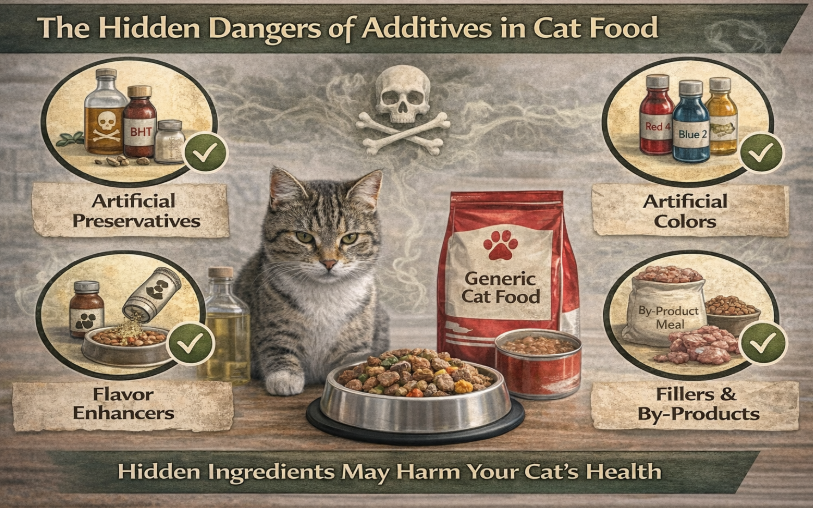
Artificial preservatives are among the most concerning cat food additives dangers. Ingredients such as BHA, BHT, and ethoxyquin are commonly used to prevent spoilage. Although they keep food fresh longer, they may also carry health risks.
Over time, these preservatives can impact your cat’s internal systems. Some studies suggest they may affect organ function or contribute to long-term health issues. While research continues, many pet owners choose to avoid them as a precaution.
Natural alternatives like vitamin E and vitamin C provide safer preservation. As a result, choosing products with natural preservatives reduces exposure to unnecessary chemicals.
Artificial Colors and Why They Matter
Artificial colors are another example of cat food additives dangers that provide no real benefit. These dyes are added to make food look more appealing to humans. However, cats do not rely on color when choosing food.
Because of this, artificial dyes are completely unnecessary. In some cases, they may even trigger sensitivities or allergic reactions. Although not every cat reacts the same way, avoiding these additives is a safer approach.
Furthermore, brightly colored food often signals heavy processing. Natural diets, on the other hand, tend to have more neutral tones. This difference can help you identify higher-quality options.
Flavor Enhancers That Mask Poor Quality
Flavor enhancers play a significant role in cat food additives dangers. These substances are designed to make food taste better, especially when the base ingredients are low quality. Common examples include artificial flavors and chemical additives.
While these enhancers may encourage eating, they can create dependency. Cats may become less willing to accept natural food without these added flavors. As a result, transitioning to healthier options becomes more difficult.
In addition, flavor enhancers do not contribute to nutrition. They simply mask the lack of real, high-quality ingredients. Choosing foods with natural flavors helps your cat develop better eating habits over time.
Hidden Sugars and Sweeteners
Many cat owners are unaware that sugar can appear in cat food. Although cats do not need sugar, manufacturers sometimes add it to improve taste. This makes it one of the more overlooked cat food additives dangers.
Excess sugar can lead to weight gain and dental problems. Over time, it may also disrupt your cat’s metabolism. Since cats naturally prefer protein-rich foods, added sweetness is unnecessary.
Reading labels carefully helps you identify hidden sugars such as corn syrup or other sweeteners. Avoiding these ingredients supports better long-term health.
Thickeners and Fillers in Processed Foods
Thickeners and fillers are commonly used to improve texture and reduce costs. While some are harmless in small amounts, excessive use can become part of cat food additives dangers.
Ingredients like carrageenan or certain gums are often added to wet food. Although they create a desirable texture, they may cause digestive discomfort in sensitive cats. In some cases, these additives can lead to inflammation or stomach issues.
Similarly, fillers such as corn or soy provide little nutritional value. They may increase calorie intake without supporting your cat’s dietary needs. Choosing food with minimal fillers ensures a more balanced diet.
Long-Term Impact on Your Cat’s Health
The effects of cat food additives dangers often develop gradually. At first, symptoms may be subtle, such as minor digestive changes or reduced energy. However, over time, these issues can become more noticeable.
For example, repeated exposure to certain additives may weaken the immune system. This can make your cat more vulnerable to illness. In addition, poor-quality ingredients can affect coat condition and overall vitality.
Therefore, addressing these risks early is important. By reducing exposure to harmful additives, you help maintain your cat’s health in the long run. Prevention always remains the best strategy.
How to Identify Problematic Ingredients
Learning to read labels is one of the best ways to avoid cat food additives dangers. Start by examining the ingredient list carefully. Ingredients are listed in order of quantity, so the first few items are the most important.
Look for recognizable, natural ingredients. Avoid products with long lists of chemical names or vague descriptions. Transparency is a strong indicator of quality.
In addition, watch for specific warning signs such as artificial preservatives, dyes, and flavor enhancers. If you see these frequently, it may be time to consider a better option.
Choosing Safer Alternatives for Your Cat
Avoiding cat food additives dangers does not mean sacrificing convenience. Many brands now offer natural and minimally processed options that meet high standards. These products focus on real ingredients and balanced nutrition.
When selecting food, prioritize high-quality protein sources. Combine this with natural fats and essential nutrients for a complete diet. Over time, your cat will benefit from improved digestion and energy.
Transitioning to a better diet should be done gradually. Mixing new food with the current diet allows your cat to adjust comfortably. This approach reduces resistance and supports a smoother change.
Conclusion
Understanding cat food additives dangers empowers you to make better decisions for your cat’s health. While additives may seem harmless at first, their long-term effects can add up. By learning to identify and avoid these ingredients, you create a safer and more balanced diet.
Although the process requires attention and effort, the benefits are clear. A cleaner diet supports better digestion, improved energy, and overall well-being. In the end, every informed choice contributes to a healthier and happier life for your cat.
FAQ
- What are the most harmful additives in cat food?
Artificial preservatives, colors, and flavor enhancers are among the most concerning. - Are all additives bad for cats?
Not all additives are harmful, but many provide no nutritional value and should be limited. - How can I avoid low-quality ingredients?
Read labels carefully and choose products with simple, natural ingredients. - Do natural preservatives work as well as artificial ones?
Yes, natural preservatives can effectively maintain freshness without added risks. - Should I switch my cat’s food immediately?
No, gradual transitions help prevent digestive issues and make the change easier.