Artificial additives in cat food are more common than many pet owners realize, and they can have a significant impact on your cat’s overall health. While these ingredients are often used to improve shelf life, color, or flavor, they do not always contribute to your cat’s well-being. Because cats rely on clean, nutrient-rich diets, understanding what goes into their food is essential for making better feeding choices.
To begin with, many commercial cat foods include additives to enhance appearance or taste. However, these ingredients may not provide nutritional value. In some cases, they can even disrupt digestion or trigger sensitivities. Therefore, learning about artificial additives in cat food allows you to make more informed decisions that support your cat’s long term health.
What Artificial Additives Are In Cat Food
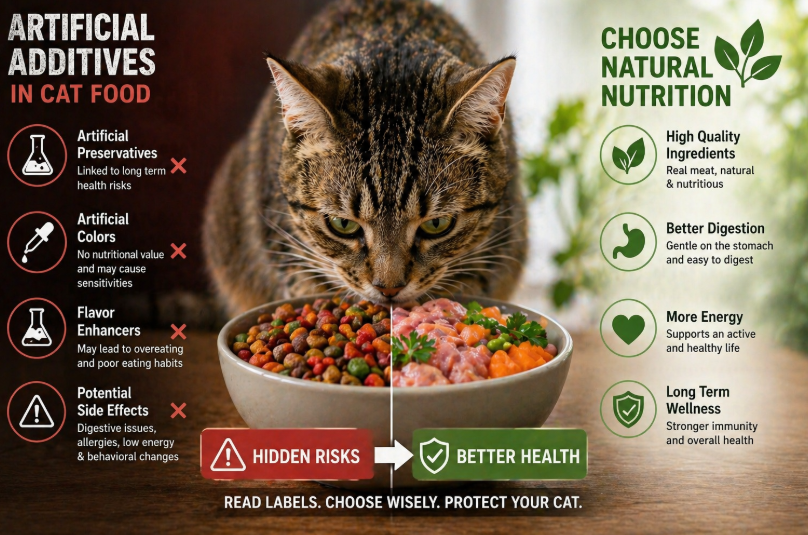
Artificial additives in cat food refer to synthetic ingredients added during processing. These may include preservatives, flavor enhancers, and coloring agents. While they serve specific purposes, they are not always beneficial for your cat.
For example, preservatives such as BHA and BHT are used to extend shelf life. Although they prevent spoilage, they may not align with a natural diet. Similarly, artificial colors are added to make food visually appealing to humans, not cats. Since cats rely more on smell than sight, these colors serve little purpose.
Flavor enhancers are another common type of additive. These are designed to make food more appealing, especially if the base ingredients are not as flavorful. As a result, cats may become dependent on artificially enhanced food and reject healthier options.
Understanding artificial additives in cat food helps you identify which ingredients are necessary and which ones can be avoided.
How Additives Affect Digestion And Gut Health
One of the main concerns with artificial additives in cat food is their effect on digestion. Cats have sensitive digestive systems, and synthetic ingredients can sometimes cause irritation. As a result, issues such as vomiting, diarrhea, or inconsistent bowel movements may occur.
In addition, certain additives can disrupt the balance of gut bacteria. A healthy gut is essential for nutrient absorption and immune function. When this balance is affected, your cat may not fully benefit from the food they consume.
Moreover, long term exposure to artificial additives in cat food may lead to chronic digestive discomfort. While not all cats react the same way, those with sensitivities are more likely to experience problems. Therefore, choosing simpler, cleaner diets can support better digestion.
By reducing exposure to unnecessary additives, you help your cat maintain a healthier digestive system and overall comfort.
Impact On Behavior And Energy Levels
Artificial additives in cat food can also influence behavior and energy levels. While this connection may not always be obvious, certain ingredients can affect how your cat feels and acts.
For example, artificial flavor enhancers may encourage overeating. When food is made more appealing through additives, cats may consume more than they need. Consequently, this can lead to weight gain and reduced activity levels.
In addition, some additives may contribute to hyperactivity or restlessness in sensitive cats. Although this is less common, it highlights the importance of paying attention to how your cat responds to their diet.
Energy levels can also be affected. Cats that consume lower-quality food with artificial additives may experience energy spikes followed by fatigue. In contrast, a balanced diet with natural ingredients supports steady energy throughout the day.
Understanding how artificial additives in cat food impact behavior helps you recognize subtle changes and make better choices.
Long Term Health Risks To Consider
While occasional exposure may not cause immediate harm, long term consumption of artificial additives in cat food can raise concerns. Over time, these ingredients may contribute to various health issues, especially when combined with poor diet quality.
For instance, certain preservatives have been linked to potential health risks when consumed in large amounts over extended periods. Although research is ongoing, many pet owners prefer to avoid these ingredients as a precaution.
Weight-related issues are another concern. Additives that enhance flavor can lead to overeating, which increases the risk of obesity. This, in turn, can contribute to conditions such as diabetes and joint problems.
Additionally, prolonged exposure to artificial additives in cat food may affect organ health. While not every cat will experience these effects, minimizing unnecessary ingredients reduces potential risks.
Taking a proactive approach helps protect your cat’s long term health and quality of life.
How To Identify Additives On Labels
Reading labels is one of the most effective ways to reduce artificial additives in cat food. However, ingredient lists can sometimes be confusing. Learning what to look for makes the process easier.
Start by checking for recognizable ingredients. High-quality foods typically list real meat as the primary component. In contrast, long lists of unfamiliar chemical names may indicate the presence of additives.
Look for common additives such as artificial colors, preservatives, and flavor enhancers. While not all are harmful, limiting their presence is a good practice. In addition, choosing foods labeled as natural or minimally processed can help.
It is also helpful to research brands and their ingredient standards. Companies that prioritize transparency often provide better quality products. By staying informed, you can reduce exposure to artificial additives in cat food.
Switching To A Cleaner Diet For Your Cat
If you are concerned about artificial additives in cat food, transitioning to a cleaner diet can make a difference. However, changes should be made gradually to avoid digestive upset.
Begin by mixing a small amount of new food with your cat’s current diet. Over several days, increase the proportion of the new food. This allows your cat to adjust comfortably.
During the transition, observe your cat’s response. Improvements in digestion, energy, and coat condition are positive signs. If any issues arise, adjusting the pace of the transition may help.
Choosing high-quality, natural food options supports better health outcomes. While it may require some effort, the benefits often outweigh the challenges.
Reducing artificial additives in cat food is a step toward a healthier and more balanced diet.
Common Myths About Additives In Cat Food
There are several misconceptions about artificial additives in cat food that can create confusion. One common myth is that all additives are harmful. While some may be unnecessary, others serve functional purposes and are considered safe in small amounts.
Another misconception is that expensive food always means fewer additives. While premium brands often focus on quality, it is still important to read labels carefully. Price alone does not guarantee better ingredients.
Some cat owners also believe that cats cannot tell the difference. In reality, cats may become accustomed to certain flavors, which can influence their preferences. This highlights the importance of introducing healthier options early.
Understanding these myths helps you make more informed decisions about artificial additives in cat food.
The Long Term Benefits Of Avoiding Additives
Reducing artificial additives in cat food can lead to noticeable long term benefits. Cats that consume cleaner diets often experience improved digestion, better energy levels, and healthier coats.
In addition, avoiding unnecessary ingredients supports overall well-being. A balanced diet allows your cat’s body to function more efficiently, which can reduce the risk of health issues over time.
Behavioral improvements may also occur. Cats that receive proper nutrition are more likely to remain active and engaged. This contributes to a better quality of life.
Ultimately, minimizing artificial additives in cat food helps create a stronger foundation for your cat’s health. Small changes in diet can lead to meaningful improvements.
Conclusion
Artificial additives in cat food may seem harmless at first, but their long term impact can influence your cat’s health in several ways. From digestion and energy levels to overall well-being, these ingredients play a role in how your cat feels every day.
By understanding what additives are and how they affect your cat, you can make better choices when selecting food. While not all additives are harmful, reducing unnecessary ones supports a cleaner and more balanced diet.
In the end, providing high-quality nutrition is one of the most important responsibilities of a cat owner. By minimizing artificial additives in cat food, you help ensure that your cat lives a healthier, happier, and more comfortable life.
FAQ
1. Are all additives in cat food harmful?
Not all additives are harmful, but limiting unnecessary ones can support better overall health.
2. How can I tell if my cat is reacting to certain ingredients?
Watch for signs like digestive issues, changes in behavior, or skin irritation after eating.
3. Is natural cat food completely free of additives?
Some natural foods still include additives, but they are often fewer and more carefully selected.
4. Can switching food improve my cat’s health quickly?
Some improvements may appear within weeks, especially in digestion and energy levels.
5. What should I prioritize when choosing cat food?
Focus on high-quality protein, minimal processing, and fewer artificial ingredients for better nutrition.