Understanding veterinarians natural cat food opinions can help you make more confident decisions about your cat’s diet. Many pet owners are drawn to natural feeding because it sounds healthier and closer to what cats would eat in the wild. However, veterinarians often take a more balanced and evidence-based approach. While some natural options can be beneficial, others may fall short if they are not properly formulated.
Because cats have very specific nutritional needs, experts emphasize that diet quality matters more than labels alone. When you look at veterinarians natural cat food recommendations, you will notice that they focus on balance, safety, and long-term health. This perspective helps separate facts from marketing claims and ensures your cat receives proper nutrition.
Why Veterinarians Focus On Nutrition First
When discussing veterinarians natural cat food views, the primary concern is always nutritional balance. Cats are obligate carnivores, which means they rely on specific nutrients such as taurine, amino acids, and fatty acids. Without these elements, even a natural diet can become harmful.
Veterinarians often see cases where homemade or unbalanced diets lead to deficiencies. While the intention may be good, improper planning can result in serious health issues. Because of this, experts prioritize complete and balanced nutrition over the idea of “natural” alone.
In addition, veterinarians rely on scientific research and clinical experience. This approach ensures that recommendations are based on proven outcomes rather than trends. As a result, veterinarians natural cat food advice tends to be practical and focused on long-term wellness.
What Veterinarians Like About Natural Cat Food
Although cautious, many professionals acknowledge the potential benefits of veterinarians natural cat food approaches. High-quality natural diets often contain fewer artificial additives, which can support better digestion and reduce sensitivities.
In addition, natural foods that use clear and specific protein sources are easier to evaluate. This transparency aligns with veterinary recommendations for ingredient quality. When properly formulated, these diets can support energy levels, coat health, and overall well-being.
Another advantage involves ingredient control. Some natural diets allow owners to avoid fillers and unnecessary components. However, veterinarians emphasize that these benefits only apply when the diet remains balanced and complete.
Concerns Veterinarians Often Raise
Despite the advantages, veterinarians natural cat food discussions often include important concerns. One of the biggest issues is nutritional imbalance. Homemade or poorly formulated diets may lack essential nutrients, which can lead to long-term health problems.
Raw diets are another area of concern. While they are often considered natural, they can carry risks such as bacterial contamination. This can affect both cats and their owners, especially in households with children or individuals with weakened immune systems.
In addition, some natural products use misleading labels. Terms like “natural” or “holistic” are not always strictly regulated. Because of this, veterinarians encourage owners to look beyond marketing and focus on actual ingredients and nutrient content.
The Importance Of Complete And Balanced Diets
A key point in veterinarians natural cat food recommendations is the importance of complete and balanced nutrition. This means the diet must provide all essential nutrients in the correct proportions. Without this balance, even high-quality ingredients may not meet your cat’s needs.
Commercial diets that meet recognized standards often provide this balance more reliably. Organizations such as the American Association of Feed Control Officials (AAFCO) set guidelines that ensure nutritional adequacy. Veterinarians frequently recommend products that follow these standards.
However, natural diets can also meet these requirements if they are carefully formulated. Consulting a veterinarian or pet nutritionist helps ensure that the diet remains safe and effective.
How Veterinarians Evaluate Cat Food Quality
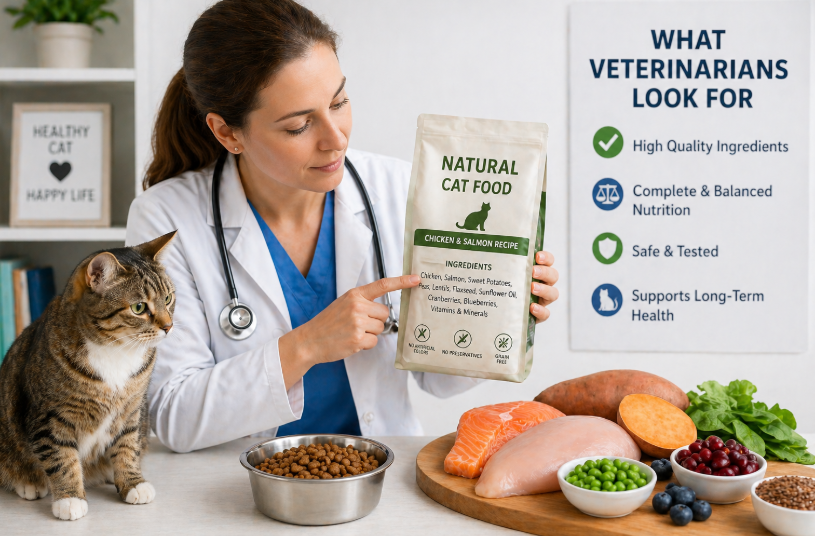
When assessing food options, veterinarians natural cat food experts look at several key factors. Ingredient quality is one of the most important. Clear protein sources and minimal fillers indicate a better product.
Nutritional analysis is also critical. This includes protein levels, fat content, and essential nutrients. These values must align with a cat’s biological needs.
In addition, safety and consistency matter. Reliable brands conduct testing and maintain quality control. This ensures that each batch meets the same standards. By considering these factors, veterinarians natural cat food recommendations become more precise and reliable.
Balancing Natural Feeding With Veterinary Guidance
Finding the right balance is essential when considering veterinarians natural cat food advice. While natural feeding can offer benefits, it should not replace professional guidance. Veterinarians can help you evaluate options and avoid common mistakes.
For example, if you prefer a natural diet, your vet can recommend products that meet nutritional standards. They can also guide you in creating a balanced homemade plan if needed. This collaboration ensures that your cat receives proper care.
In addition, regular checkups allow you to monitor your cat’s health. Adjustments can be made based on weight, energy levels, and overall condition. This ongoing support is key to maintaining a successful diet.
Common Myths About Natural Cat Food
Many misconceptions surround veterinarians natural cat food discussions. One common myth is that all natural diets are automatically healthier. In reality, quality and balance matter more than the label.
Another myth is that raw diets are always better. While they may mimic natural feeding, they also carry risks that should not be ignored. Veterinarians often recommend safer alternatives that provide similar benefits without the hazards.
Some owners also believe that commercial food is always inferior. However, many high-quality commercial products meet strict nutritional standards. Understanding these myths helps you make more informed decisions.
Practical Tips From Veterinarians
Veterinarians natural cat food advice often includes practical steps that owners can follow. First, always read ingredient labels carefully. Look for clear protein sources and avoid excessive fillers.
Second, ensure that the food meets recognized nutritional standards. This provides a baseline level of safety and balance. Third, introduce any diet changes gradually to prevent digestive issues.
In addition, monitor your cat’s response to the diet. Changes in weight, energy, or coat condition can indicate whether adjustments are needed. These simple steps help you apply veterinarians natural cat food guidance effectively.
Long Term Health Considerations
Long-term health is a major focus in veterinarians natural cat food recommendations. A consistent and balanced diet supports organ function, immune strength, and overall stability. Over time, this reduces the risk of chronic conditions.
Cats that receive proper nutrition are more likely to maintain energy and mobility as they age. This improves both lifespan and quality of life. In contrast, poor dietary choices can lead to complications that require ongoing care.
Consistency is key. Once you find a suitable diet, maintaining it helps create stability. Regular veterinary visits ensure that the diet continues to meet your cat’s needs.
Conclusion
Veterinarians natural cat food perspectives provide valuable insight into what truly matters for your cat’s health. While natural diets can offer benefits, they must be balanced, safe, and supported by proper nutrition. Experts emphasize that quality and completeness are more important than labels alone.
By combining natural feeding preferences with veterinary guidance, you can create a diet that supports long-term wellness. This approach allows you to avoid common mistakes while still exploring healthier options. Ultimately, understanding veterinarians natural cat food recommendations helps you make informed decisions that benefit your cat’s life.
FAQ
- Do veterinarians recommend natural diets for cats?
Some do, but only when the diet is complete, balanced, and safe for long-term use. - Are raw diets safe for cats?
They can carry risks such as bacteria, so many vets recommend caution or alternatives. - Is homemade food better than commercial options?
Not always, as homemade diets must be carefully balanced to meet nutritional needs. - What do vets prioritize in cat food?
They focus on nutrient balance, safety, and ingredient quality rather than labels. - Can I switch to a natural diet without consulting a vet?
It is best to seek professional advice to ensure the diet remains safe and complete.