Understanding harmful cat food ingredients is one of the most important steps you can take to protect your cat’s health. While many products claim to be nutritious, some contain hidden components that may cause long-term problems. Because cats rely entirely on their diet for essential nutrients, even small amounts of poor-quality ingredients can make a difference over time.
At first glance, most cat food labels look appealing and trustworthy. However, many brands use marketing language that hides what is really inside. That is why learning to identify harmful cat food ingredients gives you an advantage as a responsible pet owner. Once you know what to look for, choosing better food becomes much easier and more effective.
Why Ingredient Quality Matters More Than You Think
The quality of ingredients directly affects your cat’s digestion, energy, and overall health. Cats are obligate carnivores, so their bodies depend on high-quality animal protein. When low-quality or artificial ingredients replace real nutrition, problems often begin to develop slowly.
For example, poor ingredients can lead to digestive issues, dull coats, and reduced energy levels. Over time, they may even contribute to chronic health conditions. Because of this, avoiding harmful cat food ingredients is not just a preference but a necessity for long-term wellness.
Moreover, cats cannot easily process certain additives that are common in processed foods. Therefore, the closer a diet is to natural, high-quality nutrition, the better it supports your cat’s body. This principle forms the foundation of every smart feeding decision.
Artificial Preservatives That Can Harm Your Cat
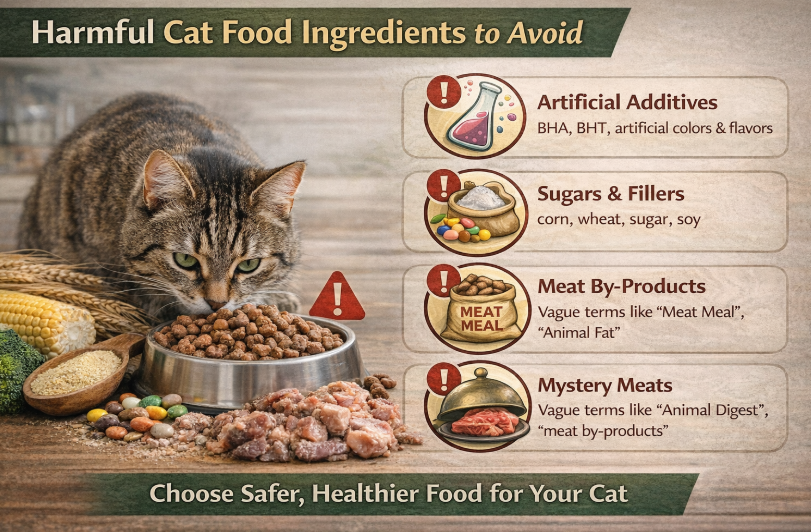
One of the most concerning harmful cat food ingredients includes artificial preservatives. These chemicals are often added to extend shelf life, but they may come with potential health risks. Common examples include BHA, BHT, and ethoxyquin.
While these substances help keep food stable, they do not provide any nutritional benefit. Instead, long-term exposure may negatively impact your cat’s health. Because of this, many pet owners now prefer natural preservatives like vitamin E or vitamin C.
In addition, artificial preservatives often appear in lower-quality foods. Therefore, avoiding them usually leads you toward better overall products. Reading labels carefully allows you to spot these ingredients and make safer choices.
Low-Quality Meat By-Products
Another category of harmful cat food ingredients includes vague or low-quality meat by-products. While not all by-products are harmful, unclear labeling raises concerns about quality and sourcing. Terms like “meat meal” or “animal digest” do not clearly indicate what your cat is eating.
Cats need specific nutrients found in high-quality animal protein. However, low-grade by-products may lack those essential components. As a result, your cat may not receive the nutrition it truly needs.
Instead, look for clearly labeled protein sources such as chicken, turkey, or fish. These ingredients provide more reliable nutrition and better support overall health. Transparency in labeling is always a positive sign.
Excessive Fillers and Carbohydrates
Fillers are often used to bulk up cat food while reducing production costs. Unfortunately, many of these fillers are considered harmful cat food ingredients when used excessively. Common examples include corn, wheat, and soy.
While small amounts may not be harmful, large quantities can disrupt your cat’s natural diet. Cats do not require high levels of carbohydrates, so these fillers often provide little nutritional value. Instead, they may contribute to weight gain and digestive issues.
Furthermore, some cats develop sensitivities to certain grains. This can lead to itching, stomach upset, or changes in behavior. Choosing food with minimal fillers helps maintain a more balanced and appropriate diet.
Artificial Colors and Flavors
Artificial colors and flavors are added to make food more appealing to humans, not cats. In reality, cats rely more on smell than appearance when choosing food. Therefore, these additives serve little purpose in a healthy diet.
Among harmful cat food ingredients, artificial dyes stand out because they offer no nutritional benefit. Some may even trigger sensitivities or allergic reactions in certain cats. While not all cats react the same way, avoiding unnecessary additives is always a safer approach.
Similarly, artificial flavors can mask low-quality ingredients. Instead of improving nutrition, they simply make inferior food more appealing. Choosing naturally flavored food ensures your cat gets genuine, high-quality nutrition.
Hidden Sugars and Sweeteners
Many cat owners are surprised to learn that sugar sometimes appears in cat food. Although cats do not need sugar, manufacturers may include it to enhance taste. Unfortunately, this makes it one of the more overlooked harmful cat food ingredients.
Excess sugar can contribute to weight gain and dental issues. Over time, it may also affect your cat’s metabolism. Since cats do not naturally crave sweetness, these additions are unnecessary and potentially harmful.
Checking labels for ingredients like corn syrup or added sugars helps you avoid this issue. A natural, balanced diet should not rely on sweetness to be appealing.
Unclear Animal Sources and Generic Ingredients
Another warning sign in harmful cat food ingredients is the use of vague terms. Labels that mention “animal fat” or “meat meal” without specifying the source can be problematic. This lack of clarity makes it difficult to assess quality.
Clear labeling shows that a brand is transparent and confident in its ingredients. On the other hand, generic descriptions may indicate inconsistent sourcing. This inconsistency can affect both quality and safety.
Choosing products with specific ingredient names ensures better control over what your cat consumes. It also helps you avoid potential allergens or unwanted components.
The Impact of Poor Ingredients Over Time
While some harmful cat food ingredients may not cause immediate problems, their effects can build over time. Gradual exposure to low-quality components often leads to subtle health changes that become more serious later.
For instance, poor nutrition can weaken the immune system. As a result, your cat may become more prone to illness. Additionally, long-term dietary issues can affect weight, coat quality, and energy levels.
Therefore, addressing these concerns early is essential. By avoiding harmful cat food ingredients now, you help prevent future health complications. Prevention always remains easier than treatment.
How to Read Cat Food Labels Effectively
Learning how to read labels is a key skill when avoiding harmful cat food ingredients. Start by focusing on the first few ingredients, as they make up the majority of the product. High-quality protein should always come first.
Next, scan for artificial additives or unclear terms. If something looks unfamiliar or vague, it may be worth researching further. In many cases, simple and recognizable ingredients are the best choice.
Additionally, check for balanced nutrition claims. A good product should meet established standards for complete and balanced diets. This ensures your cat receives all necessary nutrients.
Choosing Safer Alternatives for Your Cat
Replacing harmful cat food ingredients with better options does not have to be complicated. Many high-quality brands now offer natural formulas with clear labeling and minimal processing.
Look for foods that emphasize real meat, natural fats, and essential nutrients. These products often support better digestion and overall health. Over time, you may notice improvements in your cat’s coat, energy, and behavior.
Transitioning gradually is also important. Sudden changes can upset your cat’s digestive system. Therefore, introduce new food slowly while monitoring your cat’s response.
Conclusion
Avoiding harmful cat food ingredients is one of the most effective ways to support your cat’s long-term health. Although marketing claims can be misleading, understanding what to look for gives you the confidence to make better choices. By focusing on high-quality protein, avoiding artificial additives, and choosing transparent brands, you create a healthier foundation for your cat’s life.
While no diet is perfect, small improvements can lead to meaningful results over time. With consistent effort and attention, you can provide a diet that supports energy, digestion, and overall well-being. In the end, your cat benefits from every smart decision you make about their nutrition.
FAQ
- What are the worst ingredients commonly found in cat food?
Artificial preservatives, fillers, and vague meat sources are among the most concerning components. - Are grains always bad for cats?
Not always, but excessive grains can reduce nutritional quality and cause sensitivities in some cats. - How can I tell if my cat food is high quality?
Check for real meat as the first ingredient and avoid artificial additives or unclear labeling. - Do cats need carbohydrates in their diet?
Cats require very few carbohydrates, so diets should focus mainly on protein and healthy fats. - Should I switch my cat’s food immediately?
No, gradual changes help prevent digestive upset and allow your cat to adjust more comfortably.